Core topic 4: Who was to blame for the Cold War?
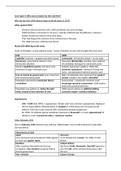
Why did the USA-USSR alliance begin to break down in 1945?
Allies against Hitler
- Wartime alliance between USA, USSR and Britain was only strategic
- USSR had been communist for 30 years- majority of British and US politicians + business
leaders heated and feared communist ideas
- They had helped the enemies of the Communists in the past
- The USSR was wary of Britain and the US
Rivals with differing world views
Clash of ideologies, strong national sense + sense of identity as each side thought they were best
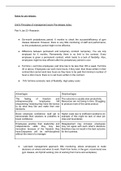
USA USSR
Capitalist- business + property privately owned Communist- all industry owned + run by state
Democracy- government chosen in free One-party dictatorship- elections were held but
democratic elections all candidates belonged to communist party
World’s wealthiest country- but there were Industry had grown rapidly in 1920s-30s,
extremes of super rich/super poor economic superpower. Standard of living was
lower, unemployment/extreme poverty rarer
Free of control by government more important Right of individuals less important than good of
than everyone being equal society- people’s lives tightly controlled
Population alarmed by communist theory Communism = communist countries must
(revolution) encourage spread of communism. USSR leaders
took more practical decisions
Population saw policies as ‘doing the right USSR saw US actions as selfishly building
thing’ instead of best interests of USA economic empire + political influence
Superpowers
- USA + USSR after WW2 = superpowers- Britain and France (former superpowers) displaced
- US felt responsibility; followed policy of isolation in 1930s (keep out of Europe/world
politics)- tried not to get involved with communism despite disapproval
- By 1940s, US attitude against isolationism because of Roosevelt- no more appeasement of
dictators; every communist action = American reaction
Yalta, February 1945
Clear in February 1945 that Germany will lose- Allied leaders met at Yalta (Ukraine) to plan after
German defeat
Agreements at Yalta
Japan Germany
Once Germany had surrendered, Stalin agreed To be divided into 4 zones: US, USSR, French,
to enter war against Japan British
Elections United Nations
After countries liberated from German Big Three (Stalin, Roosevelt, Churchill) agreed to
occupation, free elections would be held to join new UN, which aimed to keep peace after
choose government the war
War criminals Eastern Europe
, After horrors of Nazi concentration camps, Big USSR suffered during the war- 20 millions
Three decided to punish war criminals deaths. Stalin concerned about security of USSR,
responsible for genocide risk of invasion from Europe. Eastern Europe was
a barrier and sphere of influence for Soviets
Disagreements at Yalta
Poland
Stalin: border of USSR moves west into Poland, Polish border move west into Germany
Churchill: disapproved of Stalin’s plans, could not do anything because Stalin’s red Army
was in charge of Poland and Eastern Germany
Roosevelt: unhappy about plan, persuaded by Churchill to accept, as long as USSR agreed
not to interfere in Greece where British were attempting to prevent communist takeover.
Stalin agreed to this.
Poland’s border with Germany would lie along the rivers Oder and Neisse (Oder-Neisse line)
The Potsdam Conference, July 1945
In May 1945, allies had captured Berlin + won war
Changes since Yalta (5 months ago):
1) Stalin’s armies occupied most of Eastern Europe
- After liberating countries, Red Army stayed there.
- Refugees fled, fearing Communist takeover
- Poland had new communist government (against wishes of Poles)
- Stalin insisted control of Eastern Europe was purely a defensive measure
2) America had a new president
Roosevelt died on 12 April 1945- replaced by Harry Truman (Vice President)
Truman was more anti-communist, suspicious of Stalin
Truman + advisers saw Soviet actions in Eastern Europe as preparations for Soviet takeover
of whole of Europe
3) The Allies had tested a new atomic bomb
- Americans successfully tested atomic bomb on 16th July 1945
- Truman informed Stalin at beginning of conference
Stalin vs Truman
Potsdam Conference began on 17th July 1945- not as smooth as Yalta
There was an election in July in Britain: Churchill replaced by Clement Attlee halfway through
conference. Conference dominated by rivalry and suspicion between Stalin and Truman:
Disagreements at Potsdam
Germany Reparations Eastern Europe
Stalin wanted to cripple 20 million Russians dead, USSR At Yalta, all agreed to allow
Germany for protection badly damaged- Soviets pro-Soviet governments in
wanted compensation from Eastern Europe.
Truman didn’t want to repeat Germany
Treaty of Versailles mistake Truman unhappy with Soviet
Truman did not want to repeat intentions, adopted ‘get tough’
WW1 mistakes attitude towards Stalin
Why did the USA-USSR alliance begin to break down in 1945?
Allies against Hitler
- Wartime alliance between USA, USSR and Britain was only strategic
- USSR had been communist for 30 years- majority of British and US politicians + business
leaders heated and feared communist ideas
- They had helped the enemies of the Communists in the past
- The USSR was wary of Britain and the US
Rivals with differing world views
Clash of ideologies, strong national sense + sense of identity as each side thought they were best
USA USSR
Capitalist- business + property privately owned Communist- all industry owned + run by state
Democracy- government chosen in free One-party dictatorship- elections were held but
democratic elections all candidates belonged to communist party
World’s wealthiest country- but there were Industry had grown rapidly in 1920s-30s,
extremes of super rich/super poor economic superpower. Standard of living was
lower, unemployment/extreme poverty rarer
Free of control by government more important Right of individuals less important than good of
than everyone being equal society- people’s lives tightly controlled
Population alarmed by communist theory Communism = communist countries must
(revolution) encourage spread of communism. USSR leaders
took more practical decisions
Population saw policies as ‘doing the right USSR saw US actions as selfishly building
thing’ instead of best interests of USA economic empire + political influence
Superpowers
- USA + USSR after WW2 = superpowers- Britain and France (former superpowers) displaced
- US felt responsibility; followed policy of isolation in 1930s (keep out of Europe/world
politics)- tried not to get involved with communism despite disapproval
- By 1940s, US attitude against isolationism because of Roosevelt- no more appeasement of
dictators; every communist action = American reaction
Yalta, February 1945
Clear in February 1945 that Germany will lose- Allied leaders met at Yalta (Ukraine) to plan after
German defeat
Agreements at Yalta
Japan Germany
Once Germany had surrendered, Stalin agreed To be divided into 4 zones: US, USSR, French,
to enter war against Japan British
Elections United Nations
After countries liberated from German Big Three (Stalin, Roosevelt, Churchill) agreed to
occupation, free elections would be held to join new UN, which aimed to keep peace after
choose government the war
War criminals Eastern Europe
, After horrors of Nazi concentration camps, Big USSR suffered during the war- 20 millions
Three decided to punish war criminals deaths. Stalin concerned about security of USSR,
responsible for genocide risk of invasion from Europe. Eastern Europe was
a barrier and sphere of influence for Soviets
Disagreements at Yalta
Poland
Stalin: border of USSR moves west into Poland, Polish border move west into Germany
Churchill: disapproved of Stalin’s plans, could not do anything because Stalin’s red Army
was in charge of Poland and Eastern Germany
Roosevelt: unhappy about plan, persuaded by Churchill to accept, as long as USSR agreed
not to interfere in Greece where British were attempting to prevent communist takeover.
Stalin agreed to this.
Poland’s border with Germany would lie along the rivers Oder and Neisse (Oder-Neisse line)
The Potsdam Conference, July 1945
In May 1945, allies had captured Berlin + won war
Changes since Yalta (5 months ago):
1) Stalin’s armies occupied most of Eastern Europe
- After liberating countries, Red Army stayed there.
- Refugees fled, fearing Communist takeover
- Poland had new communist government (against wishes of Poles)
- Stalin insisted control of Eastern Europe was purely a defensive measure
2) America had a new president
Roosevelt died on 12 April 1945- replaced by Harry Truman (Vice President)
Truman was more anti-communist, suspicious of Stalin
Truman + advisers saw Soviet actions in Eastern Europe as preparations for Soviet takeover
of whole of Europe
3) The Allies had tested a new atomic bomb
- Americans successfully tested atomic bomb on 16th July 1945
- Truman informed Stalin at beginning of conference
Stalin vs Truman
Potsdam Conference began on 17th July 1945- not as smooth as Yalta
There was an election in July in Britain: Churchill replaced by Clement Attlee halfway through
conference. Conference dominated by rivalry and suspicion between Stalin and Truman:
Disagreements at Potsdam
Germany Reparations Eastern Europe
Stalin wanted to cripple 20 million Russians dead, USSR At Yalta, all agreed to allow
Germany for protection badly damaged- Soviets pro-Soviet governments in
wanted compensation from Eastern Europe.
Truman didn’t want to repeat Germany
Treaty of Versailles mistake Truman unhappy with Soviet
Truman did not want to repeat intentions, adopted ‘get tough’
WW1 mistakes attitude towards Stalin