Chapter 5: Mitotic Cell Cycle
Thursday, 28 April 2022 12:18 AM
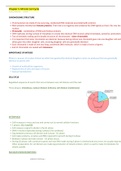
CHROMOSOME STRUCTURE
• Chromosomes are made of one very long, condensed DNA molecule associated with proteins
• Main proteins involved are histone proteins. Their role is to organise and condense the DNA tightly so that it fits into the
nucleus
• Chromatin - combination of DNA and histone proteins
• DNA replicates during S phase of interphase to create two identical DNA strands called chromatids, joined by centromere
• Two chromatids making up the double structure of chromosome - sister chromatids
• It is important that sister chromatids are identical, because during mitosis one chromatid goes into one daughter cell and
other goes into other daughter cells, ensuring daughter cells are genetically identical
• Each chromatid is made of one very long, condensed DNA molecule, which is made of series of genes
• End of chromatids are sealed with telomeres
IMPORTANCE OF MITOSIS
Mitosis is process of nuclear division by which two genetically identical daughter nuclei are produced that are genetically
identical to parent cells
• Growth of multicellular organisms
• Replacement of cells and repair of tissues
• Asexual reproduction
CELL CYCLE
Regulated sequence of events that occurs between one cell division and the next
Three phases: interphase, nuclear division (mitosis), cell division (cytokinesis)
INTERPHASE
• Cell increases in mass and size and carries out its normal cellular functions
• 3 phases: G1, S and G2
• Cell receives a signal to divide in the G1 phase
• DNA in nucleus replicates during S phase (S for synthesis)
• Gap between previous cell division and S phase - G1 phase
• Cell makes proteins, enzymes and RNA required for growth during G1 phase
• Between S phase and next nuclear - G2 phase occurs
• During G2 phase, cells continue to grow and new DNA made during S phase is checked and any errors are usually repaired
Other preparations for cell division are made (eg production of tubulin protein, which is used to make microtubules for
mitotic spindle
NUCLEAR DIVISION (MITOSIS)
AS BIOLOGY NOTES Page 1
, • Follows interphase
• Cell growth stops during M phase (M for mitosis)
CYTOKINESIS
• Follows M phase
• Whole cell divides and one nucleus moves into each cell to create two genetically identical daughter cells
• In animal cells, cytokinesis involves constriction of cytoplasm between two nuclei and in plant cell a new cell wall is forme
ROLE AND SIGNIFICANCE OF TELOMERES
Made of non-coding DNA that is made up of short base sequences that are repeated many times
The main function of telomeres is to ensure that the very ends of the DNA molecules are included in DNA replication durin
mitosis (the copying enzyme responsible for DNA replication is unable to run right to the very end of the DNA molecule an
stops a little short of the end)
If this end part of the DNA molecule contained an important gene, that piece of genetic information would be lost during
DNA replication
In each subsequent cell division, a little more genetic information would be lost
Telomeres therefore act as a ‘buffer’ region of non-essential DNA and ensure that no important coding sections near the
ends of the DNA molecules are left out of the replication process
This ensures no genes are lost during cell division (the loss of vital genes can even result in cell death) and allows for
continued replication of a cell
To avoid the risk of losing genes most cells have an enzyme called telomerase that adds additional bases at each end (the
telomeres)
Some cells (generally specialised cells) do not have telomerase to ‘top up’ their telomeres and therefore after a certain
number of cell divisions the cell dies, this has been connected with the ageing process
ROLE AND SIGNIFICANCE OF STEM CELLS
Cells that can divide (by mitosis) an unlimited number of times
Each new cell produced has the potential to remain as stem cell or develop into specialised cell
Ability of stem cell to differentiate into more specialised cell types is called POTENCY
Three types of potency:
1. Totipotency - totipotent stem cells are stem cells that can differentiate into any cell type found in an embryo, as well as
extra-embryonic cells
2. Pluripotency - pluripotent stem cells are embryonic stem cells that can differentiate into any cell type found in an embryo
but are not able to differentiate into extra-embryonic cells (the cells that make up the placenta)
3. Multipotency - multipotent stem cells are adult stem cells that have lost some of the potency associated with embryonic
stem cells and are no longer pluripotent
MULTIPOTENT ADULT STEM CELLS
As tissues, organs and organ system develop, cells become more and more specialised
Having differentiated and specialised to fulfil particular roles, most adult cells gradually lose the ability to divide until,
eventually, they are no longer able to divide
However, small numbers of stem cells (known as adult stem cells) remain to produce new cells for the essential processes
of growth, cell replacement and tissue repair
Although these adult stem cells can divide (by mitosis) an unlimited number of times, they are only able to produce a
limited range of cell types – they are multipotent
For example, the stem cells found in bone marrow are multipotent adult stem cells – they can only differentiate into bloo
cells (red blood cells, monocytes, neutrophils and lymphocytes)
In adults, stem cells can be found throughout the body (eg. in the bone marrow, skin, gut, heart and brain)
HOW A TUMOUR FORMS?
AS BIOLOGY NOTES Page 2
Thursday, 28 April 2022 12:18 AM
CHROMOSOME STRUCTURE
• Chromosomes are made of one very long, condensed DNA molecule associated with proteins
• Main proteins involved are histone proteins. Their role is to organise and condense the DNA tightly so that it fits into the
nucleus
• Chromatin - combination of DNA and histone proteins
• DNA replicates during S phase of interphase to create two identical DNA strands called chromatids, joined by centromere
• Two chromatids making up the double structure of chromosome - sister chromatids
• It is important that sister chromatids are identical, because during mitosis one chromatid goes into one daughter cell and
other goes into other daughter cells, ensuring daughter cells are genetically identical
• Each chromatid is made of one very long, condensed DNA molecule, which is made of series of genes
• End of chromatids are sealed with telomeres
IMPORTANCE OF MITOSIS
Mitosis is process of nuclear division by which two genetically identical daughter nuclei are produced that are genetically
identical to parent cells
• Growth of multicellular organisms
• Replacement of cells and repair of tissues
• Asexual reproduction
CELL CYCLE
Regulated sequence of events that occurs between one cell division and the next
Three phases: interphase, nuclear division (mitosis), cell division (cytokinesis)
INTERPHASE
• Cell increases in mass and size and carries out its normal cellular functions
• 3 phases: G1, S and G2
• Cell receives a signal to divide in the G1 phase
• DNA in nucleus replicates during S phase (S for synthesis)
• Gap between previous cell division and S phase - G1 phase
• Cell makes proteins, enzymes and RNA required for growth during G1 phase
• Between S phase and next nuclear - G2 phase occurs
• During G2 phase, cells continue to grow and new DNA made during S phase is checked and any errors are usually repaired
Other preparations for cell division are made (eg production of tubulin protein, which is used to make microtubules for
mitotic spindle
NUCLEAR DIVISION (MITOSIS)
AS BIOLOGY NOTES Page 1
, • Follows interphase
• Cell growth stops during M phase (M for mitosis)
CYTOKINESIS
• Follows M phase
• Whole cell divides and one nucleus moves into each cell to create two genetically identical daughter cells
• In animal cells, cytokinesis involves constriction of cytoplasm between two nuclei and in plant cell a new cell wall is forme
ROLE AND SIGNIFICANCE OF TELOMERES
Made of non-coding DNA that is made up of short base sequences that are repeated many times
The main function of telomeres is to ensure that the very ends of the DNA molecules are included in DNA replication durin
mitosis (the copying enzyme responsible for DNA replication is unable to run right to the very end of the DNA molecule an
stops a little short of the end)
If this end part of the DNA molecule contained an important gene, that piece of genetic information would be lost during
DNA replication
In each subsequent cell division, a little more genetic information would be lost
Telomeres therefore act as a ‘buffer’ region of non-essential DNA and ensure that no important coding sections near the
ends of the DNA molecules are left out of the replication process
This ensures no genes are lost during cell division (the loss of vital genes can even result in cell death) and allows for
continued replication of a cell
To avoid the risk of losing genes most cells have an enzyme called telomerase that adds additional bases at each end (the
telomeres)
Some cells (generally specialised cells) do not have telomerase to ‘top up’ their telomeres and therefore after a certain
number of cell divisions the cell dies, this has been connected with the ageing process
ROLE AND SIGNIFICANCE OF STEM CELLS
Cells that can divide (by mitosis) an unlimited number of times
Each new cell produced has the potential to remain as stem cell or develop into specialised cell
Ability of stem cell to differentiate into more specialised cell types is called POTENCY
Three types of potency:
1. Totipotency - totipotent stem cells are stem cells that can differentiate into any cell type found in an embryo, as well as
extra-embryonic cells
2. Pluripotency - pluripotent stem cells are embryonic stem cells that can differentiate into any cell type found in an embryo
but are not able to differentiate into extra-embryonic cells (the cells that make up the placenta)
3. Multipotency - multipotent stem cells are adult stem cells that have lost some of the potency associated with embryonic
stem cells and are no longer pluripotent
MULTIPOTENT ADULT STEM CELLS
As tissues, organs and organ system develop, cells become more and more specialised
Having differentiated and specialised to fulfil particular roles, most adult cells gradually lose the ability to divide until,
eventually, they are no longer able to divide
However, small numbers of stem cells (known as adult stem cells) remain to produce new cells for the essential processes
of growth, cell replacement and tissue repair
Although these adult stem cells can divide (by mitosis) an unlimited number of times, they are only able to produce a
limited range of cell types – they are multipotent
For example, the stem cells found in bone marrow are multipotent adult stem cells – they can only differentiate into bloo
cells (red blood cells, monocytes, neutrophils and lymphocytes)
In adults, stem cells can be found throughout the body (eg. in the bone marrow, skin, gut, heart and brain)
HOW A TUMOUR FORMS?
AS BIOLOGY NOTES Page 2