1
Kotter’s 8-step Change Model
Student’s Name
Institution
Course
Instructor
Date
, 2
Kotter’s 8-step Change Model
Introduction
Change is to make or become different, and as the saying goes, change is inevitable.
Change is the only thing that is constant in life. In the world we live in, we have incredibly
competitive business environments and the beginning of a new industrial revolution.
Therefore, Organizations that are hesitant to embrace change end up paying a heavy price for
their firmness. Therefore, Organizations ability to adjust to change always has a direct impact
on their business’s output. Hence, Organizations need to choose the best change management
model, which is vital to the business's production. The good thing is, change does not require
a unique way to embrace it. The goals an organization wants to achieve, determine the
management program to be used while making changes (Radwan, 2020). The discussion
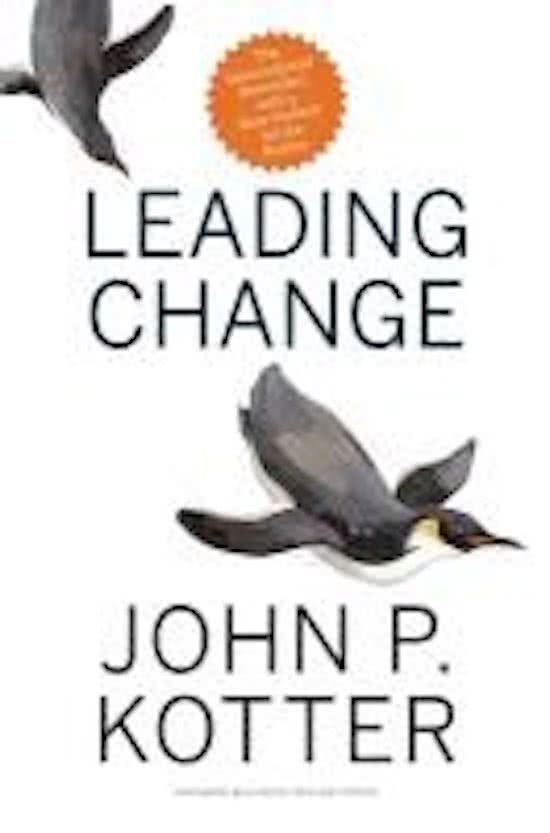
below will look at Professor John P. Kotter’s work from his 1995 book, Leading Change.
This process is one of the famous and most used models in change management today and
has only eight stages; every stage emphasizes employee's response toward change.
The first step is to create a sense of urgency. Organizations need to make an
atmosphere whereby employees are fully alerted when a problem exist. An organization
should always generate an open, authentic and substantial discussion of what is happening
with your competition and the place of market and what direction the organization could go
(Weiss, P. G., & Li, S. T. T.,2020). Transparency will make them feel free to identify a possible
solution, and this will, in turn, create the urge for change. This step will require appropriate
preparation to create the need for change rather than want for a change.
The second step in this process is to build a guiding team. One cannot lead a whole
change process independently; When change is necessary, the key to easily convince people
to support the shift one must inhibit good leadership qualities and get generous support from
stakeholders in an organization (Lv, C. M., & Zhang, L,2017). Moreover, it would be best to
Kotter’s 8-step Change Model
Student’s Name
Institution
Course
Instructor
Date
, 2
Kotter’s 8-step Change Model
Introduction
Change is to make or become different, and as the saying goes, change is inevitable.
Change is the only thing that is constant in life. In the world we live in, we have incredibly
competitive business environments and the beginning of a new industrial revolution.
Therefore, Organizations that are hesitant to embrace change end up paying a heavy price for
their firmness. Therefore, Organizations ability to adjust to change always has a direct impact
on their business’s output. Hence, Organizations need to choose the best change management
model, which is vital to the business's production. The good thing is, change does not require
a unique way to embrace it. The goals an organization wants to achieve, determine the
management program to be used while making changes (Radwan, 2020). The discussion
below will look at Professor John P. Kotter’s work from his 1995 book, Leading Change.
This process is one of the famous and most used models in change management today and
has only eight stages; every stage emphasizes employee's response toward change.
The first step is to create a sense of urgency. Organizations need to make an
atmosphere whereby employees are fully alerted when a problem exist. An organization
should always generate an open, authentic and substantial discussion of what is happening
with your competition and the place of market and what direction the organization could go
(Weiss, P. G., & Li, S. T. T.,2020). Transparency will make them feel free to identify a possible
solution, and this will, in turn, create the urge for change. This step will require appropriate
preparation to create the need for change rather than want for a change.
The second step in this process is to build a guiding team. One cannot lead a whole
change process independently; When change is necessary, the key to easily convince people
to support the shift one must inhibit good leadership qualities and get generous support from
stakeholders in an organization (Lv, C. M., & Zhang, L,2017). Moreover, it would be best to