

UNIT 17. MICROBIOLOGY AND
MICROBIOLOGICAL TECHNIQUES
ASSIGNMENT 17A: Classification of microorganisms
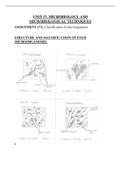
STRUCTURE AND MAGNIFICATION OF FOUR
MICROORGANISMS:
:
,CLASSIFICATION OF MICROORGANISMS 1-
BACTERIA:
Bacteria are unicellular microorganisms; hence they are classified as
prokaryotic. Most of the bacteria are only few micrometres long and cannot be
seen by naked eye. The common features of bacteria include ribosomes which is
used in forming protein from mRNA. The thin, hair-like structure called
flagellum is also found in bacteria which enables them to move. Bacteria also
have a cell wall which provides structure and strength to the cell. Other than
that, they contain cell membrane which has many folds known as mesosomes.
Some of the bacteria have small DNA loops known as plasmids and in some
bacteria mainly the DNA moves freely inside the cell of bacteria. Bacteria also
possess a feature known as pili which enables the cell of bacteria to attach with
another bacteria cell for gene transmission.
Classification of bacteria:
Classification of bacteria is based on binomial nomenclature. Some of the
species of bacteria are further divided into subspecies due to their resemblance
with each other. Bacterial species possess different variations known as
serotypes which identifies the structure of bacteria. Gram staining technique is
also used in classification of bacteria. By using gram staining, the bacteria are
either grouped into gram positive or gram-negative bacteria. When the cell wall
of bacteria does not show crystal violet colour used during the gram staining
process, the bacteria are placed into gram negative type and when the cell wall
shows crystal violet colour the bacteria are classified as gram positive bacteria.
Bacteria are classified into five main groups based on their structure which are:
• Cocci: Bacteria which are placed in cocci group are spherical in structure
and classified as gram positive. Different species of the cocci bacteria can
help in identification. If there are two cells in cocci, the bacteria are
classified as diplococci. Having more than 8 cells makes the bacteria
staphylococci. Due to the effect of reproduction, few of them are
arranged in clusters of squares. Example of cocci bacteria streptococcus
pneumonia.
• Spirilla: The bacteria in this group are helical in shape and considered as
gram negative bacteria. These bacteria are motile and have whipped
flagella at both ends. An example of this type or bacteria is
campylobacter jejuni.
• Vibrio: The bacteria present in this group are like comma in shape and
considered as gram negative. This type of bacteria doesn't require oxygen
and possess very high mobility as they contain more than three flagella at
, a single end. For example, vibrio vulnificus, Asiatic cholera are found in
these group of bacteria.
• Bacilli: In this group, the bacteria possess a rod like structure and
considered as gram positive. Species of this group can make spores in the
conditions in which usually bacteria don't grow. Due to the presence of
the endospores the bacteria in this group show resistance towards heat
and chemicals. Some of the bacilli bacteria can cause harm to the human,
plants and other microorganisms. Example of this type of bacteria is
B.cereus which can make canned food go bad, which can cause food
poisoning if eaten.
• Spirochaetes: The bacteria in this group possess corkscrew shape and
shows high mobility. This type of bacteria is not considered either gram
negative or gram positive. These bacteria contain some harmful
pathogens which can cause disease like Lyme disease.
Scientific classification of bacteria:
Domain Prokaryotes
Kingdom Bacteria
Phylum Firmicutes
Class Bacilli
Order Lactobacillales
Family Streptococcaceae
Genus Streptococcus
Species Streptococcus pyogenes
Importance of classification of bacteria for Medicine and industry:
Classification of bacteria can make it easy for the professionals to identify and
using different bacteria. For example, if a microbiologist who is working in a
lab or a hospital needs to know the best treatment option for the disease or a
scientist working in a lab with cultures can use classified bacteria to know if the
strategy is properly working or not. Other than that, the hygienist can easily
check the harmful microorganisms in the food plant. In terms of importance of
bacteria in medicine, different bacteria are being used for many years in
discovering antibacterial antibiotics and producing vaccines. These vaccines are
made by making the toxins proteins in bacteria inactive to stop the progression
of disease. In industries, the yeast is used to prepare ethanol. Yeast contains
some enzymes which converts carbohydrates like sucrose into simpler
molecules like glucose during the process of fermentation and hence ethanol is
made. Other than that, various cultures of bacteria are used to convert milk into
MICROBIOLOGICAL TECHNIQUES
ASSIGNMENT 17A: Classification of microorganisms
STRUCTURE AND MAGNIFICATION OF FOUR
MICROORGANISMS:
:
,CLASSIFICATION OF MICROORGANISMS 1-
BACTERIA:
Bacteria are unicellular microorganisms; hence they are classified as
prokaryotic. Most of the bacteria are only few micrometres long and cannot be
seen by naked eye. The common features of bacteria include ribosomes which is
used in forming protein from mRNA. The thin, hair-like structure called
flagellum is also found in bacteria which enables them to move. Bacteria also
have a cell wall which provides structure and strength to the cell. Other than
that, they contain cell membrane which has many folds known as mesosomes.
Some of the bacteria have small DNA loops known as plasmids and in some
bacteria mainly the DNA moves freely inside the cell of bacteria. Bacteria also
possess a feature known as pili which enables the cell of bacteria to attach with
another bacteria cell for gene transmission.
Classification of bacteria:
Classification of bacteria is based on binomial nomenclature. Some of the
species of bacteria are further divided into subspecies due to their resemblance
with each other. Bacterial species possess different variations known as
serotypes which identifies the structure of bacteria. Gram staining technique is
also used in classification of bacteria. By using gram staining, the bacteria are
either grouped into gram positive or gram-negative bacteria. When the cell wall
of bacteria does not show crystal violet colour used during the gram staining
process, the bacteria are placed into gram negative type and when the cell wall
shows crystal violet colour the bacteria are classified as gram positive bacteria.
Bacteria are classified into five main groups based on their structure which are:
• Cocci: Bacteria which are placed in cocci group are spherical in structure
and classified as gram positive. Different species of the cocci bacteria can
help in identification. If there are two cells in cocci, the bacteria are
classified as diplococci. Having more than 8 cells makes the bacteria
staphylococci. Due to the effect of reproduction, few of them are
arranged in clusters of squares. Example of cocci bacteria streptococcus
pneumonia.
• Spirilla: The bacteria in this group are helical in shape and considered as
gram negative bacteria. These bacteria are motile and have whipped
flagella at both ends. An example of this type or bacteria is
campylobacter jejuni.
• Vibrio: The bacteria present in this group are like comma in shape and
considered as gram negative. This type of bacteria doesn't require oxygen
and possess very high mobility as they contain more than three flagella at
, a single end. For example, vibrio vulnificus, Asiatic cholera are found in
these group of bacteria.
• Bacilli: In this group, the bacteria possess a rod like structure and
considered as gram positive. Species of this group can make spores in the
conditions in which usually bacteria don't grow. Due to the presence of
the endospores the bacteria in this group show resistance towards heat
and chemicals. Some of the bacilli bacteria can cause harm to the human,
plants and other microorganisms. Example of this type of bacteria is
B.cereus which can make canned food go bad, which can cause food
poisoning if eaten.
• Spirochaetes: The bacteria in this group possess corkscrew shape and
shows high mobility. This type of bacteria is not considered either gram
negative or gram positive. These bacteria contain some harmful
pathogens which can cause disease like Lyme disease.
Scientific classification of bacteria:
Domain Prokaryotes
Kingdom Bacteria
Phylum Firmicutes
Class Bacilli
Order Lactobacillales
Family Streptococcaceae
Genus Streptococcus
Species Streptococcus pyogenes
Importance of classification of bacteria for Medicine and industry:
Classification of bacteria can make it easy for the professionals to identify and
using different bacteria. For example, if a microbiologist who is working in a
lab or a hospital needs to know the best treatment option for the disease or a
scientist working in a lab with cultures can use classified bacteria to know if the
strategy is properly working or not. Other than that, the hygienist can easily
check the harmful microorganisms in the food plant. In terms of importance of
bacteria in medicine, different bacteria are being used for many years in
discovering antibacterial antibiotics and producing vaccines. These vaccines are
made by making the toxins proteins in bacteria inactive to stop the progression
of disease. In industries, the yeast is used to prepare ethanol. Yeast contains
some enzymes which converts carbohydrates like sucrose into simpler
molecules like glucose during the process of fermentation and hence ethanol is
made. Other than that, various cultures of bacteria are used to convert milk into


