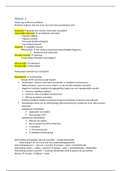
Transformation between 3 physical states
- matter can undergo transformation from 1 physical state
to another by either changing temp, pressure, or both:
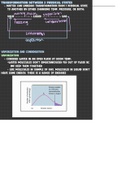
melting / fusion vaporization
solid —————- > liquid —————— > gas a
☐
Freezing %ndenranM
sublimation
deposition
Vaporization and condensation
vaporization
- consider water in an open flask at room temp:
-water molecules don’t simultaneously fly out of flask bc
imf keep them together
- like molecules in sample of gas, molecules in liquid don’t
have same energy. There is a range of energies
, - surface molecules at high end of curve have enough
energy to break free from surface and into gas phase.
Called evaporation
- evaporation occurs at surface of liquid. Therefore:
- increase in surface area = faster evaporation
- when temp high enough, molecules on surface and in the
interior process enough energy to break free of imf. This
vaporization called boiling
- vaporization requires overcoming imf that holds liquids
together.
- stronger imf = mor energy required
- process is endothermic bc energy must be provided to pill
molecules apart
- the amount of heat required to vaporize one mole of liquid
to a gas at a constant temp is called heat of vaporization
for that temp trap
'
.
Condensation
- occurs when some molecules return to liquid phase
- opposite of vaporization. Is exothermic
Dynamic equilibrium
- when vaporization is in a sealed container:
- molecules vaporize from liquid to gas state
-more gas molecules accumulate, some will condense
- state of dynamic equilibrium is reached when the rates of
condensation and vaporization become equal
- pressure of vapor remains constant bc amount of vapor
doesn’t change at equilibrium
- called dynamic bc it keeps going and never becomes static
- equilibrium can only be reached if both states exist
(condensation and vaporization)
- matter can undergo transformation from 1 physical state
to another by either changing temp, pressure, or both:
melting / fusion vaporization
solid —————- > liquid —————— > gas a
☐
Freezing %ndenranM
sublimation
deposition
Vaporization and condensation
vaporization
- consider water in an open flask at room temp:
-water molecules don’t simultaneously fly out of flask bc
imf keep them together
- like molecules in sample of gas, molecules in liquid don’t
have same energy. There is a range of energies
, - surface molecules at high end of curve have enough
energy to break free from surface and into gas phase.
Called evaporation
- evaporation occurs at surface of liquid. Therefore:
- increase in surface area = faster evaporation
- when temp high enough, molecules on surface and in the
interior process enough energy to break free of imf. This
vaporization called boiling
- vaporization requires overcoming imf that holds liquids
together.
- stronger imf = mor energy required
- process is endothermic bc energy must be provided to pill
molecules apart
- the amount of heat required to vaporize one mole of liquid
to a gas at a constant temp is called heat of vaporization
for that temp trap
'
.
Condensation
- occurs when some molecules return to liquid phase
- opposite of vaporization. Is exothermic
Dynamic equilibrium
- when vaporization is in a sealed container:
- molecules vaporize from liquid to gas state
-more gas molecules accumulate, some will condense
- state of dynamic equilibrium is reached when the rates of
condensation and vaporization become equal
- pressure of vapor remains constant bc amount of vapor
doesn’t change at equilibrium
- called dynamic bc it keeps going and never becomes static
- equilibrium can only be reached if both states exist
(condensation and vaporization)