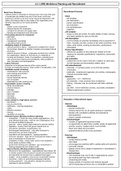
2.1.1 (HR) Workforce Planning and Recruitment
Work Force Planning: Recruitment Process:
• method used by a business to forecast how many and what type
of employees are needed now and in the future, work force • steps
planning is carried out by the human resources department. HR • job analysis
gather and analyse data on the needs of the organisation and • job description
develop responses to the needs identified • person specification
• steps: • job evaluation
• assess current employees • job advertisement
• analyse demand for employees • selection
• compare the demand and supply data
• Job analysis
• develop and implement work force plan
• Forecasting demand for employees • study of what job entails. Provides details of skills, training
• past data and tasks needed to carry out the job
• productivity • Job description
• management knowledge • communicates to potential candidates what is expected of
• calculating staff turnover them, includes: job title, context of job within business, main
• Analysing supply of employees tasks, other duties, working environment, performance
• internal sources of labour - employment available from inside information
the business, depend on whether company encourages internal • Person Specification
promotion
• defines the qualities of the individual needed to fill the
• external sources of labour - employees recruited from outside vacancy for example qualifications, experience, personality
the organisation, depend on the factors of: availability of
housing and transport, levels of competition, unemployment and skills
rate, government training and subsidiaries, skills available in • Job evaluation
area, population and demographics • assessment of the value of the job in relation to other jobs,
• Labour Turnover so that rewards and remuneration reflect value
• proportion of employees leaving within a given period • Job advertisement
• (number of employees leaving / total number of employees) x 100 • internally - if company policy us to promote existing
• Avoidable causes of leaving employees
• dissatisfaction with payment • externally - employment agencies, job centres, newspapers,
• poor working environment internet and social media
• job dissatisfaction
• Selection
• human resources policies
• lack of facilities • application - CV + references
• dissatisfaction with working time • job interview - most common form of selection
• Unavoidable causes of leaving • testing - interview may be combined with tests, aptitude
• family circumstances tests
• physical reasons • job offer - end of selection process, successful candidate s
• marriage offered employment contract
• birth of children
• retirement
• dismissal
• redundancy
• Costs related to a high labour turnover Evaluation of Recruitment types:
• recruitment
• loss of productivity • Internal
• inefficiency , machine breakdown • Advantages
• waste • shorter introduction
• defective products • existing resources can be used building on expertise
• training • familiar with candidate’s abilities and experience
• reputation of company • less expensive
• External Factors affecting workforce planning
• retains valuable employees
• competition - if there are many similar organisations in the
area offering similar jobs, it will be more challenging to find • Disadvantages
and recruit qualified employees • number of applicants becomes limited
• payment - labour supply helps determine payment offered • no opportunity to select from a better variety of applicants
• legislation -country laws that govern issues such as • another vacancy created which must be filled
recruitment, dismissal, compensation, etc • fewer new ideas and innovation
• technological advancement - may allow business to • potential internal conflict over promotion
downsize and use fewer employees
• population and demographics - ageing population • External
• economic situation - high rate of unemployment lead to large • Advantages
pool of employees to choose from
• avoids internal conflict
• availability of skills - certain skills will be more available in
some areas e.g Silicon Valley • new ideas
• government training and subsidies - gov involvement in • encourages pre-existing staff to update skills and eduction
training programmes can reduce costs • promotes change
• Internal factors affecting workforce planning • greater choice and a range of experience in candidates to
• Structure of the organisation - organisational chart allows HR choose from
to identify position that should be included and positions that • Disadvantages
are redundant and to plan how to address those gaps • new employee may not fit well in organisational culture
• budget - funds available to recruit and compensate workers • pre-existing staff may feel overlooked
• promotion - policy on promoting employees internally • consuming and costly
• working practises - may decide to change the working
practises to ensure flexibility • longer periods of induction and training required
• risk of employing someone who is unsuitable is greater
Work Force Planning: Recruitment Process:
• method used by a business to forecast how many and what type
of employees are needed now and in the future, work force • steps
planning is carried out by the human resources department. HR • job analysis
gather and analyse data on the needs of the organisation and • job description
develop responses to the needs identified • person specification
• steps: • job evaluation
• assess current employees • job advertisement
• analyse demand for employees • selection
• compare the demand and supply data
• Job analysis
• develop and implement work force plan
• Forecasting demand for employees • study of what job entails. Provides details of skills, training
• past data and tasks needed to carry out the job
• productivity • Job description
• management knowledge • communicates to potential candidates what is expected of
• calculating staff turnover them, includes: job title, context of job within business, main
• Analysing supply of employees tasks, other duties, working environment, performance
• internal sources of labour - employment available from inside information
the business, depend on whether company encourages internal • Person Specification
promotion
• defines the qualities of the individual needed to fill the
• external sources of labour - employees recruited from outside vacancy for example qualifications, experience, personality
the organisation, depend on the factors of: availability of
housing and transport, levels of competition, unemployment and skills
rate, government training and subsidiaries, skills available in • Job evaluation
area, population and demographics • assessment of the value of the job in relation to other jobs,
• Labour Turnover so that rewards and remuneration reflect value
• proportion of employees leaving within a given period • Job advertisement
• (number of employees leaving / total number of employees) x 100 • internally - if company policy us to promote existing
• Avoidable causes of leaving employees
• dissatisfaction with payment • externally - employment agencies, job centres, newspapers,
• poor working environment internet and social media
• job dissatisfaction
• Selection
• human resources policies
• lack of facilities • application - CV + references
• dissatisfaction with working time • job interview - most common form of selection
• Unavoidable causes of leaving • testing - interview may be combined with tests, aptitude
• family circumstances tests
• physical reasons • job offer - end of selection process, successful candidate s
• marriage offered employment contract
• birth of children
• retirement
• dismissal
• redundancy
• Costs related to a high labour turnover Evaluation of Recruitment types:
• recruitment
• loss of productivity • Internal
• inefficiency , machine breakdown • Advantages
• waste • shorter introduction
• defective products • existing resources can be used building on expertise
• training • familiar with candidate’s abilities and experience
• reputation of company • less expensive
• External Factors affecting workforce planning
• retains valuable employees
• competition - if there are many similar organisations in the
area offering similar jobs, it will be more challenging to find • Disadvantages
and recruit qualified employees • number of applicants becomes limited
• payment - labour supply helps determine payment offered • no opportunity to select from a better variety of applicants
• legislation -country laws that govern issues such as • another vacancy created which must be filled
recruitment, dismissal, compensation, etc • fewer new ideas and innovation
• technological advancement - may allow business to • potential internal conflict over promotion
downsize and use fewer employees
• population and demographics - ageing population • External
• economic situation - high rate of unemployment lead to large • Advantages
pool of employees to choose from
• avoids internal conflict
• availability of skills - certain skills will be more available in
some areas e.g Silicon Valley • new ideas
• government training and subsidies - gov involvement in • encourages pre-existing staff to update skills and eduction
training programmes can reduce costs • promotes change
• Internal factors affecting workforce planning • greater choice and a range of experience in candidates to
• Structure of the organisation - organisational chart allows HR choose from
to identify position that should be included and positions that • Disadvantages
are redundant and to plan how to address those gaps • new employee may not fit well in organisational culture
• budget - funds available to recruit and compensate workers • pre-existing staff may feel overlooked
• promotion - policy on promoting employees internally • consuming and costly
• working practises - may decide to change the working
practises to ensure flexibility • longer periods of induction and training required
• risk of employing someone who is unsuitable is greater