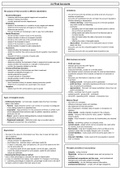
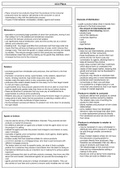
3.4 Final Accounts
Limitations:
The purpose of final accounts to different stakeholders:
• one set of accounts has limited use whilst a full set of account
• Business Managers
enables comparisons
• measure performance against targets and competitors
• accounts are quantitative and do not take into account reputation,
• decision making information
window dressing or depreciation
• monitor business function departments
• window dressing - presenting accounts in the best possible
• Employees
way which could be misleading
• assess if the business is in a position to pay wages and salaries
• examples:
• determine if the business will expand or reduce in size
• spreading cost of fixed assets over several years to reduce
• determine job security
annual revenue expenditure
• find out if profits are increasing to see if a pay rise is affordable
• selling assets just before the end of the financial year to
• Banks/Financiers
increase liquidity
• decide whether to lend money to the business
• take out loans before the date of accounts to increase
• assess whether to allow an increased overdraft
liquidity
• decide on the continuity of the overdraft facility
• inflating the value of intangible assets
• assess if the business is liquid
• depreciation - the decline in the estimated value of a fixed
• assess if the business is a good credit risk
asset over time
• decide whether to press for early repayments
• accounts can only be compared against firm involved in similar
• Customers
activities
• assess whether the business is secure
• business accounts will only publish data required by law
• determine whether they will be assured future supplies of purchased
goods
• establish if there is a security of spare parts
• Government and HMRC
Main business accounts:
• calculate the tax due
• determine whether the business is likely to expand and create new jobs
• Profit and Loss:
• assess whether the business is in danger of closing down
• displays gross and net profit figures
• confirm the operation abides by the law
• aka income statement
• Investors/Potential Investors
• produced internally, usually on a monthly basis
• assess the value of the business and their investment
• less detailed version produced annually for external stakeholders
• establish profitability/changes in it
• quantitative analysis which enables comparison of expected vs
• decide potential for growth
reality
• compare details to competitors
• financiers use information to decide on credit
• decide whether to sell or hold shares
• 3 sections:
• Local Community
• see if business is likely to expand causing economic growth • trading account - how gross profit is generated
• determine if a business loss could lead to its closure • profit and loss - calculates operating profit (prior to interest and
tax), net profit and overheads
• Suppliers
• assess how the firm will be able to pay for goods • appropriation - final part, not always published, shows how net
profit is divided up
• COGS = purchase cost of good x quantity
• operating profit = gross profit - overheads
• net profit = operating profit - (interest + corporation tax)
Types of intangible assets:
Balance Sheet:
• intellectual property - commercially valuable ideas that have monetary • net worth of a company
value in the market • difference between assets and liabilities
• Patents - legal protection given to an inventor of a product to safeguard • aka statement of financial position
it from being copied for a specified time • aim of business to increase value of assets in comparison to
• Copyrights - legal protection for the producers of literary or artistic work liabilities
which safeguards their exclusive right to publish, reproduce, perform, • share capital - capital originally invested in the company
distribute and sell. • assets - resource with economic value, assets = liabilities +
• Brand - good or service distinguished by unique characteristics owner’s equity
reinforced by the brand name • equity - finds invested in a business by shareholders plus retained
• Registered trademark - distinctive mark, sign or symbol used to profit
distinguish a brand from its competitors. • liability - something a person or company owes
• current assets - assets which can be converted into cash within
12 months, stock and inventories
• fixed assets - long-term tangible items which contribute to the
Depreciation: operation rather than for resale, lifespan over 12 months
• current liabilities - funds owed which should be paid within 12
• the loss in the value of a fixed asset over time, due to wear and tear and months
new inventions • long-term liabilities - funds owed which are payable in periods
• Straight line method: over 12 months
• annual provision for depreciation =
• (purchase price - residual value) / estimated useful life
• (+) easy to calculate, easy comparisons, full cost of the asset to the firm
can be accounted for
Principles and ethics of accountancy:
• (—) assumes asset will be used equally over its life span, useful life
cannot be easily produced for some assets, useful life and residual
values are estimates • Integrity - acting honestly
• Reducing/declining balance method • Objectivity - acting in an unbiased manor and not giving in to
pressure
• uses a fixed percentage to calculate the value of depreciation
• (+) easy to understand and apply, more realistic for changes in technology • professional competence and due care - meet professional
standard and continually update knowledge
• (—) deciding percentages is subjective, percentage would have to be high if
company wants to reduce the book value to zero • confidentiality - do not disclose personal information
• professional behaviour - comply with all legal obligations
Limitations:
The purpose of final accounts to different stakeholders:
• one set of accounts has limited use whilst a full set of account
• Business Managers
enables comparisons
• measure performance against targets and competitors
• accounts are quantitative and do not take into account reputation,
• decision making information
window dressing or depreciation
• monitor business function departments
• window dressing - presenting accounts in the best possible
• Employees
way which could be misleading
• assess if the business is in a position to pay wages and salaries
• examples:
• determine if the business will expand or reduce in size
• spreading cost of fixed assets over several years to reduce
• determine job security
annual revenue expenditure
• find out if profits are increasing to see if a pay rise is affordable
• selling assets just before the end of the financial year to
• Banks/Financiers
increase liquidity
• decide whether to lend money to the business
• take out loans before the date of accounts to increase
• assess whether to allow an increased overdraft
liquidity
• decide on the continuity of the overdraft facility
• inflating the value of intangible assets
• assess if the business is liquid
• depreciation - the decline in the estimated value of a fixed
• assess if the business is a good credit risk
asset over time
• decide whether to press for early repayments
• accounts can only be compared against firm involved in similar
• Customers
activities
• assess whether the business is secure
• business accounts will only publish data required by law
• determine whether they will be assured future supplies of purchased
goods
• establish if there is a security of spare parts
• Government and HMRC
Main business accounts:
• calculate the tax due
• determine whether the business is likely to expand and create new jobs
• Profit and Loss:
• assess whether the business is in danger of closing down
• displays gross and net profit figures
• confirm the operation abides by the law
• aka income statement
• Investors/Potential Investors
• produced internally, usually on a monthly basis
• assess the value of the business and their investment
• less detailed version produced annually for external stakeholders
• establish profitability/changes in it
• quantitative analysis which enables comparison of expected vs
• decide potential for growth
reality
• compare details to competitors
• financiers use information to decide on credit
• decide whether to sell or hold shares
• 3 sections:
• Local Community
• see if business is likely to expand causing economic growth • trading account - how gross profit is generated
• determine if a business loss could lead to its closure • profit and loss - calculates operating profit (prior to interest and
tax), net profit and overheads
• Suppliers
• assess how the firm will be able to pay for goods • appropriation - final part, not always published, shows how net
profit is divided up
• COGS = purchase cost of good x quantity
• operating profit = gross profit - overheads
• net profit = operating profit - (interest + corporation tax)
Types of intangible assets:
Balance Sheet:
• intellectual property - commercially valuable ideas that have monetary • net worth of a company
value in the market • difference between assets and liabilities
• Patents - legal protection given to an inventor of a product to safeguard • aka statement of financial position
it from being copied for a specified time • aim of business to increase value of assets in comparison to
• Copyrights - legal protection for the producers of literary or artistic work liabilities
which safeguards their exclusive right to publish, reproduce, perform, • share capital - capital originally invested in the company
distribute and sell. • assets - resource with economic value, assets = liabilities +
• Brand - good or service distinguished by unique characteristics owner’s equity
reinforced by the brand name • equity - finds invested in a business by shareholders plus retained
• Registered trademark - distinctive mark, sign or symbol used to profit
distinguish a brand from its competitors. • liability - something a person or company owes
• current assets - assets which can be converted into cash within
12 months, stock and inventories
• fixed assets - long-term tangible items which contribute to the
Depreciation: operation rather than for resale, lifespan over 12 months
• current liabilities - funds owed which should be paid within 12
• the loss in the value of a fixed asset over time, due to wear and tear and months
new inventions • long-term liabilities - funds owed which are payable in periods
• Straight line method: over 12 months
• annual provision for depreciation =
• (purchase price - residual value) / estimated useful life
• (+) easy to calculate, easy comparisons, full cost of the asset to the firm
can be accounted for
Principles and ethics of accountancy:
• (—) assumes asset will be used equally over its life span, useful life
cannot be easily produced for some assets, useful life and residual
values are estimates • Integrity - acting honestly
• Reducing/declining balance method • Objectivity - acting in an unbiased manor and not giving in to
pressure
• uses a fixed percentage to calculate the value of depreciation
• (+) easy to understand and apply, more realistic for changes in technology • professional competence and due care - meet professional
standard and continually update knowledge
• (—) deciding percentages is subjective, percentage would have to be high if
company wants to reduce the book value to zero • confidentiality - do not disclose personal information
• professional behaviour - comply with all legal obligations