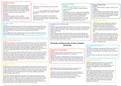
Divine Right of Kings
● “His virtues will plead like angels” - Macbeth
○ Many nobles will be sitting in court who do not want King James as their king,
do not think he has any entitlement to be there as Queen Elizabeth died
without an heir
○ Shakespeare wants to promote the idea of the Divine right of kings
○ So creates Duncan as a virtuous character to remind King James about what
kind of King he should be to make it easier for people to accept him as the
divine choice
● “We but teach bloody instructions” which “Return to plague the inventor” -
Macbeth
○ When Macbeth starts killing people, teaches all the surviving nobles that this
is something you can get away with, so they can get away with killing
Macbeth
○ Allusion to gunpowder plot, which, if it had succeeded in killing King James, it
wouldn’t have led to a better world
○ Would have led to a world in which the next conspirators would come along
and attempt to get rid of another unwanted king
○ The success of the gunpowder plot would only “teach bloody instructions”
● “Were I king, I should cut off the nobles for their lands” - Malcolm
○ Shakespeare makes Malcolm fake the idea of what a terrible King he would
be (testing Macduff)
○ This scene crucial to Shakespeare as he explores the consequences of
immoral kingship
○ Telling King James that he could “cut off the nobles for their lands”, could
“forge quarrels unjust against the good and loyal” in order to “destroy
them for wealth”
○ But not to do that as it will backfire on him in the end, will “return to plague”
him
○ And a warning to any plotters that the new King that would replace James
could be like that
● “Our fears in Banquo stick deep; and in his royalty of nature” - Macbeth
○ “royalty of nature” alludes to Banquo being thought of as the ancient
ancestor to King James
○ King James believed he has descended from Banquo, so important for
Banquo to be shown as the origin of James, having a “royalty of nature”
and being presented in a good light
○ Shakespeare purposefully describes Banquo as having “a wisdom that doth
guide his valour to act in safety”
○ On one hand showing that Banquo is cunning through his “wisdom” and also
the bravery of “act[ing] in safety” rather than rashly
○ However on the other hand this is also a message to King James that doing
nothing and “to act in safety”, not going out for vengeance against the
Catholics isn’t stupidity, but rather “wisdom” and “valour” - a sign of good
kingship
● “Will the line stretch out to the crack of doom?” - Macbeth
○ Shakespeare appeals to King James’ ambition
○ When Macbeth goes back to the witches, they show him a vision of Banquo’s
descendants that will “stretch out to the crack of doom”
○ Shakespeare is suggesting to King James that he become such a good king
that his descendants stay on the throne forever likewise to Banquo
○ This is a blatant form of flattery, Shakespeare is trying to gain his patronage
● “His virtues will plead like angels” - Macbeth
○ Many nobles will be sitting in court who do not want King James as their king,
do not think he has any entitlement to be there as Queen Elizabeth died
without an heir
○ Shakespeare wants to promote the idea of the Divine right of kings
○ So creates Duncan as a virtuous character to remind King James about what
kind of King he should be to make it easier for people to accept him as the
divine choice
● “We but teach bloody instructions” which “Return to plague the inventor” -
Macbeth
○ When Macbeth starts killing people, teaches all the surviving nobles that this
is something you can get away with, so they can get away with killing
Macbeth
○ Allusion to gunpowder plot, which, if it had succeeded in killing King James, it
wouldn’t have led to a better world
○ Would have led to a world in which the next conspirators would come along
and attempt to get rid of another unwanted king
○ The success of the gunpowder plot would only “teach bloody instructions”
● “Were I king, I should cut off the nobles for their lands” - Malcolm
○ Shakespeare makes Malcolm fake the idea of what a terrible King he would
be (testing Macduff)
○ This scene crucial to Shakespeare as he explores the consequences of
immoral kingship
○ Telling King James that he could “cut off the nobles for their lands”, could
“forge quarrels unjust against the good and loyal” in order to “destroy
them for wealth”
○ But not to do that as it will backfire on him in the end, will “return to plague”
him
○ And a warning to any plotters that the new King that would replace James
could be like that
● “Our fears in Banquo stick deep; and in his royalty of nature” - Macbeth
○ “royalty of nature” alludes to Banquo being thought of as the ancient
ancestor to King James
○ King James believed he has descended from Banquo, so important for
Banquo to be shown as the origin of James, having a “royalty of nature”
and being presented in a good light
○ Shakespeare purposefully describes Banquo as having “a wisdom that doth
guide his valour to act in safety”
○ On one hand showing that Banquo is cunning through his “wisdom” and also
the bravery of “act[ing] in safety” rather than rashly
○ However on the other hand this is also a message to King James that doing
nothing and “to act in safety”, not going out for vengeance against the
Catholics isn’t stupidity, but rather “wisdom” and “valour” - a sign of good
kingship
● “Will the line stretch out to the crack of doom?” - Macbeth
○ Shakespeare appeals to King James’ ambition
○ When Macbeth goes back to the witches, they show him a vision of Banquo’s
descendants that will “stretch out to the crack of doom”
○ Shakespeare is suggesting to King James that he become such a good king
that his descendants stay on the throne forever likewise to Banquo
○ This is a blatant form of flattery, Shakespeare is trying to gain his patronage