5.2.1: Respiration
● Chemical process of releasing energy from respiratory substrates (organic molecules eg. glucose)
through oxidation
● OIL RIG = for electrons but also for hydrogen → oxidation is loss of hydrogen, reduction is gain
of hydrogen
● Complex multi-step reaction pathway
● Universal - occurs in all living cells
● Energy released by breaking bonds then used in synthesis of ATP by combining APD w/ P
● ATP = universal energy currency, used as an immediate source of energy
● glucose + oxygen → carbon dioxide + water
● C6H12O6 + 6O2 → 6CO2 + 6H20 (+ energy)
● Occurs in mitochondria in eukaryotic cells
● Similar process occurs in prokaryotic cells but they don’t have mitochondria so many of the
reactions take place on cell membranes
● Looking at respiration in stages makes the biochemistry easier to understand, but obviously in the
cell the process is continuous
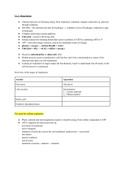
Overview of the stages of respiration:
Aerobic Anaerobic
Glycolysis Glycolysis
Link reaction Fermentation
[__ Lactate (animal)
[__ Ethanol (plant)
Krebs cycle
Oxidative phosphorylation
The need for cellular respiration
● Plants, animals and microorganisms respire to transfer energy from carbon compounds to ATP
● ATP is required for many processes eg.
- activation of chemicals
- active transport
- transport of molecules across the cell membrane (endocytosis + exocytosis)
- movement
- protein synthesis
- cell division
- metabolic reactions - anabolic + catabolic
,Adenosine triphosphate (ATP)
● Compound found in all living things
● Role is short-term and immediate energy (as opposed to long-term energy storage in molecules
eg. carbohydrates, fats)
● Constantly reformed and broken down in cells that need energy
The process and site of glycolysis
● 1st stage of respiration
● Site of glycolysis: cytoplasm of the cell
● Net yield of glycolysis per glucose molecule: 2 pyruvate molecules, 2 ATP, reduced NAD
[__ 4 ATP molecules produced in total but 2 used to phosphorylate glucose so difference from start is 2
● Therefore there is a SMALL yield of ATP (energy) + reduced NAD
● Anaerobic process - doesn’t require oxygen
1. Phosphorylation of glucose to hexose bisphosphate
- Requires 2 ATP molecules - have to put some energy for the reaction to start
- 2 phosphates released from 2 ATP molecules attach to 1 glucose molecule (6C) - the ADP
molecules formed from these used ATP molecules are released, to be reformed into ATP when the
energy that’s necessary is released in later stages
- 1st phosphate attaches: glucose→ glucose-6-P
- [_Isomerisation: glucose-6-P → fructose-6-P
- [__2nd phosphate attaches: fructose-6-P → forms fructose 1,6- bisphosphate
- Main reason phosphorylation occurs here is that it takes glucose to a higher energy level, so it is
unstable - destablises it - and therefore more reactive → more likely to split
- Phosphorylation also changes the shape of the glucose molecule → unable to leave the cell
through the glucose transporters in the cell surface membrane
- In addition, because glucose is phosphorylated to hexose bisphosphate, the glucose conc gradient
is maintained → glucose keeps diffusing (down a conc gradient) out of the blood and into the cell
2. Lysis of fructose 1,6-bisphosphate
- Fructose 1,6-bisphosphate splits (lysis) into → 2 triose phosphate molecules
3. Oxidation of triose phosphate
- Dehydrogenation - a dehydrogenase enzyme removes 2 hydrogen atoms from each triose
bisphosphate molecule - it has been oxidised
- A NAD coenzyme accepts these 2 hydrogen atoms - acts as a hydrogen acceptor (reduction)→ 2
reduced NAD molecules (NADH) - 2 per molecule of glucose because one for each triose
phosphate molecule
- 2 NADHs sent to the inner mitochondrial membrane - by diffusion involving ‘the mitochondrial
shunt’ mechanism
4. Phosphorylation of triose phosphate to triose bisphosphate
, - During the oxidation of triose bisphosphate, enough energy is released to phosphorylate both
molecules of triose phosphate, using free inorganic phosphate ions from the cytosol to form two
molecules of triose bisphosphate
- This step involves conservation of energy because w/out it, energy would be lost as heat
5. Conversion of the intermediate to pyruvate
- A series of enzyme-controlled reactions produce 2 pyruvate (3C) molecules
- As a result of these reactions, enough energy is released by each pyruvate molecule to
phosphorylate 2 more ADP molecules to form 2 ATP molecules by substrate level
phosphorylation → total of 4 ATP molecules
- Pyruvate is actively transported into the mitochondrial matrix, to enter the link reaction under
aerobic conditions
- In anaerobic conditions the pyruvate remains in the cytoplasm + is either converted into lactate
or ethanol
Substrate level phosphorylation
● Formation of ATP by the transfer of a phosphate group from a phosphorylated, short-lived, highly
reactive intermediate to ADP
● Creatine phosphate is another example of an intermediate
● Differs from oxidative phosphorylation in that it occurs w/out involvement of an ETC
The structure of the mitochondrion
In eukaryotic cells, glycolysis occurs in the cytoplasm, and the rest of the remaining aerobic reactions of
cellular respiration occur inside the mitochondria
Components of a mitochondrion:
→ Outer mitochondrial membrane
● Chemical process of releasing energy from respiratory substrates (organic molecules eg. glucose)
through oxidation
● OIL RIG = for electrons but also for hydrogen → oxidation is loss of hydrogen, reduction is gain
of hydrogen
● Complex multi-step reaction pathway
● Universal - occurs in all living cells
● Energy released by breaking bonds then used in synthesis of ATP by combining APD w/ P
● ATP = universal energy currency, used as an immediate source of energy
● glucose + oxygen → carbon dioxide + water
● C6H12O6 + 6O2 → 6CO2 + 6H20 (+ energy)
● Occurs in mitochondria in eukaryotic cells
● Similar process occurs in prokaryotic cells but they don’t have mitochondria so many of the
reactions take place on cell membranes
● Looking at respiration in stages makes the biochemistry easier to understand, but obviously in the
cell the process is continuous
Overview of the stages of respiration:
Aerobic Anaerobic
Glycolysis Glycolysis
Link reaction Fermentation
[__ Lactate (animal)
[__ Ethanol (plant)
Krebs cycle
Oxidative phosphorylation
The need for cellular respiration
● Plants, animals and microorganisms respire to transfer energy from carbon compounds to ATP
● ATP is required for many processes eg.
- activation of chemicals
- active transport
- transport of molecules across the cell membrane (endocytosis + exocytosis)
- movement
- protein synthesis
- cell division
- metabolic reactions - anabolic + catabolic
,Adenosine triphosphate (ATP)
● Compound found in all living things
● Role is short-term and immediate energy (as opposed to long-term energy storage in molecules
eg. carbohydrates, fats)
● Constantly reformed and broken down in cells that need energy
The process and site of glycolysis
● 1st stage of respiration
● Site of glycolysis: cytoplasm of the cell
● Net yield of glycolysis per glucose molecule: 2 pyruvate molecules, 2 ATP, reduced NAD
[__ 4 ATP molecules produced in total but 2 used to phosphorylate glucose so difference from start is 2
● Therefore there is a SMALL yield of ATP (energy) + reduced NAD
● Anaerobic process - doesn’t require oxygen
1. Phosphorylation of glucose to hexose bisphosphate
- Requires 2 ATP molecules - have to put some energy for the reaction to start
- 2 phosphates released from 2 ATP molecules attach to 1 glucose molecule (6C) - the ADP
molecules formed from these used ATP molecules are released, to be reformed into ATP when the
energy that’s necessary is released in later stages
- 1st phosphate attaches: glucose→ glucose-6-P
- [_Isomerisation: glucose-6-P → fructose-6-P
- [__2nd phosphate attaches: fructose-6-P → forms fructose 1,6- bisphosphate
- Main reason phosphorylation occurs here is that it takes glucose to a higher energy level, so it is
unstable - destablises it - and therefore more reactive → more likely to split
- Phosphorylation also changes the shape of the glucose molecule → unable to leave the cell
through the glucose transporters in the cell surface membrane
- In addition, because glucose is phosphorylated to hexose bisphosphate, the glucose conc gradient
is maintained → glucose keeps diffusing (down a conc gradient) out of the blood and into the cell
2. Lysis of fructose 1,6-bisphosphate
- Fructose 1,6-bisphosphate splits (lysis) into → 2 triose phosphate molecules
3. Oxidation of triose phosphate
- Dehydrogenation - a dehydrogenase enzyme removes 2 hydrogen atoms from each triose
bisphosphate molecule - it has been oxidised
- A NAD coenzyme accepts these 2 hydrogen atoms - acts as a hydrogen acceptor (reduction)→ 2
reduced NAD molecules (NADH) - 2 per molecule of glucose because one for each triose
phosphate molecule
- 2 NADHs sent to the inner mitochondrial membrane - by diffusion involving ‘the mitochondrial
shunt’ mechanism
4. Phosphorylation of triose phosphate to triose bisphosphate
, - During the oxidation of triose bisphosphate, enough energy is released to phosphorylate both
molecules of triose phosphate, using free inorganic phosphate ions from the cytosol to form two
molecules of triose bisphosphate
- This step involves conservation of energy because w/out it, energy would be lost as heat
5. Conversion of the intermediate to pyruvate
- A series of enzyme-controlled reactions produce 2 pyruvate (3C) molecules
- As a result of these reactions, enough energy is released by each pyruvate molecule to
phosphorylate 2 more ADP molecules to form 2 ATP molecules by substrate level
phosphorylation → total of 4 ATP molecules
- Pyruvate is actively transported into the mitochondrial matrix, to enter the link reaction under
aerobic conditions
- In anaerobic conditions the pyruvate remains in the cytoplasm + is either converted into lactate
or ethanol
Substrate level phosphorylation
● Formation of ATP by the transfer of a phosphate group from a phosphorylated, short-lived, highly
reactive intermediate to ADP
● Creatine phosphate is another example of an intermediate
● Differs from oxidative phosphorylation in that it occurs w/out involvement of an ETC
The structure of the mitochondrion
In eukaryotic cells, glycolysis occurs in the cytoplasm, and the rest of the remaining aerobic reactions of
cellular respiration occur inside the mitochondria
Components of a mitochondrion:
→ Outer mitochondrial membrane