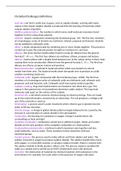
C6 Global Challenges Definitions:
Acid rain- rain that is acidic due to gases, such as sulphur dioxide, reacting with water
vapour in the clouds. Sulphur dioxide is produced from the burning of fossil fuels which
contain sulphur impurities.
Addition polymerisation- the reaction in which many small molecule monomers bond
together to form a long chain polymer.
Alcohols- organic compounds containing the functional group –OH. The first four members
of a homologous series of alcohols are methanol, ethanol, propanol and butanol. Alcohols
can be oxidised to carboxylic acids.
Alloys- a metal compound made by combining two or more metals together. This process is
carried out to give the material greater strength or resistance to corrosion.
Alkanes- the most common hydrocarbon found in crude oil. Alkanes have the general
formula C n H 2n+2. The first four alkanes are methane, ethane, propane and butane.
Alkenes- hydrocarbons with a double bond between two of the carbon atoms in their chain,
causing them to be unsaturated. Alkenes have the general formula C n H 2n. The first four
alkenes are ethene, propene, butene and pentene.
Bacterial extraction- a method of metal extraction which uses bacteria to extract
metals from their ores. The bacteria breaks down low-grade ores to produce an acidic
solution containing metal ions.
Carboxylic acids- organic compounds with the functional group –COOH. The first four
members of a homologous series of carboxylic acids are methanoic acid, ethanoic acid,
propanoic acid and butanoic acid. Carboxylic acids have typical acidic properties.
Catalytic cracking- long-chain hydrocarbons are heated to turn them into a gas. The
vapour is then passed over a hot powdered aluminium oxide catalyst. The long chain
molecules split apart on the surface of the catalyst.
Chemical cell- a cell which converts chemical energy to electrical energy. They are made
up of two metal electrodes connected by an electrolyte. The cell produces a voltage until
one of the reactants is used up.
Chlorination- a process used in water treatment where chlorine gas is injected into the
water to kill any microbes.
Climate change- a change in global climate patterns largely believed to be caused by the
increase in concentration of carbon dioxide in the atmosphere.
Combustion- the burning of a substance in oxygen. Energy is transferred to the
surroundings as heat and light.
Complete combustion- combustion carried out in sufficient oxygen. Water and carbon
dioxide are the only products of the complete combustion of a hydrocarbon.
Condensation polymerisation- reactions in which monomers join together and lose
small molecules, such as water. These reactions involve monomers with two
functional groups.
Contact process- the process used to make sulfuric acid from sulphur and water. The
sulphur is burned in oxygen to produce sulphur dioxide. The sulphur dioxide then reacts
with oxygen, in a reversible reaction, to produce sulphur trioxide. Water is reacted with
the sulphur trioxide to finally produce sulfuric acid. The process requires vanadium(V)
oxide as a catalyst and is carried out at 450°C temperature and 2 atm pressure.
Corrosion- the destruction of materials by chemical reactions with substances in the
environment. For example, iron rusts when in the presence of oxygen and water.
Acid rain- rain that is acidic due to gases, such as sulphur dioxide, reacting with water
vapour in the clouds. Sulphur dioxide is produced from the burning of fossil fuels which
contain sulphur impurities.
Addition polymerisation- the reaction in which many small molecule monomers bond
together to form a long chain polymer.
Alcohols- organic compounds containing the functional group –OH. The first four members
of a homologous series of alcohols are methanol, ethanol, propanol and butanol. Alcohols
can be oxidised to carboxylic acids.
Alloys- a metal compound made by combining two or more metals together. This process is
carried out to give the material greater strength or resistance to corrosion.
Alkanes- the most common hydrocarbon found in crude oil. Alkanes have the general
formula C n H 2n+2. The first four alkanes are methane, ethane, propane and butane.
Alkenes- hydrocarbons with a double bond between two of the carbon atoms in their chain,
causing them to be unsaturated. Alkenes have the general formula C n H 2n. The first four
alkenes are ethene, propene, butene and pentene.
Bacterial extraction- a method of metal extraction which uses bacteria to extract
metals from their ores. The bacteria breaks down low-grade ores to produce an acidic
solution containing metal ions.
Carboxylic acids- organic compounds with the functional group –COOH. The first four
members of a homologous series of carboxylic acids are methanoic acid, ethanoic acid,
propanoic acid and butanoic acid. Carboxylic acids have typical acidic properties.
Catalytic cracking- long-chain hydrocarbons are heated to turn them into a gas. The
vapour is then passed over a hot powdered aluminium oxide catalyst. The long chain
molecules split apart on the surface of the catalyst.
Chemical cell- a cell which converts chemical energy to electrical energy. They are made
up of two metal electrodes connected by an electrolyte. The cell produces a voltage until
one of the reactants is used up.
Chlorination- a process used in water treatment where chlorine gas is injected into the
water to kill any microbes.
Climate change- a change in global climate patterns largely believed to be caused by the
increase in concentration of carbon dioxide in the atmosphere.
Combustion- the burning of a substance in oxygen. Energy is transferred to the
surroundings as heat and light.
Complete combustion- combustion carried out in sufficient oxygen. Water and carbon
dioxide are the only products of the complete combustion of a hydrocarbon.
Condensation polymerisation- reactions in which monomers join together and lose
small molecules, such as water. These reactions involve monomers with two
functional groups.
Contact process- the process used to make sulfuric acid from sulphur and water. The
sulphur is burned in oxygen to produce sulphur dioxide. The sulphur dioxide then reacts
with oxygen, in a reversible reaction, to produce sulphur trioxide. Water is reacted with
the sulphur trioxide to finally produce sulfuric acid. The process requires vanadium(V)
oxide as a catalyst and is carried out at 450°C temperature and 2 atm pressure.
Corrosion- the destruction of materials by chemical reactions with substances in the
environment. For example, iron rusts when in the presence of oxygen and water.