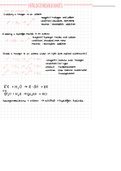
HALOGENOALKANES
:
can be
formed by
1) adding a
halogen to an alkene .
and alkene
reagents halogen
: .
B,
conditions : standard temp
/
room
I
.
Br ,
,
t →
Br reaction :
electrophilic addition .
2) hydrogen halide to alkene
adding a an
: halide and alkene
B,
reagents hydrogen .
I t H Br → / conditions : standard ,
room temp
.
reaction :
electrophilic addition .
3) add a
halogen to an alkene under UV light ( free radical substitution )
/ t ( 12 → / t HC1 : alkane and
c, reagents halogen
conditions : UV
"
light
at t
Clz →
c ! t HC1 product
:
halogen alkane
reaction : radical substitution
" I free
w/ t (I , →
c,
+ µg , (
halogen ation
RX + H ,
0 → R -
OH THX
e- g
GHSCI TH20 →
GHSOH t HC1
halide
halogenoalkane t water → alcohol 1-
hydrogen .
:
can be
formed by
1) adding a
halogen to an alkene .
and alkene
reagents halogen
: .
B,
conditions : standard temp
/
room
I
.
Br ,
,
t →
Br reaction :
electrophilic addition .
2) hydrogen halide to alkene
adding a an
: halide and alkene
B,
reagents hydrogen .
I t H Br → / conditions : standard ,
room temp
.
reaction :
electrophilic addition .
3) add a
halogen to an alkene under UV light ( free radical substitution )
/ t ( 12 → / t HC1 : alkane and
c, reagents halogen
conditions : UV
"
light
at t
Clz →
c ! t HC1 product
:
halogen alkane
reaction : radical substitution
" I free
w/ t (I , →
c,
+ µg , (
halogen ation
RX + H ,
0 → R -
OH THX
e- g
GHSCI TH20 →
GHSOH t HC1
halide
halogenoalkane t water → alcohol 1-
hydrogen .