ANGIOSPERM REPRODUCTION AND FLORAL DIVERSIFICATION
BASIC FLORAL STRUCTURE AND VARIATIONS ON THE BASIC THEME
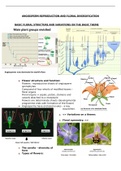
Flower structure and function:
Flowers : reproductive shoots of angiosperm
sporophytes
Composed of four whorls of modified leaves –
floral organs
Floral organs = sepals, petals, stamens and
carpels attached to a receptacle
Flowers are determinate shoots (developmental
programme ends with formation of the flower)
Angiosperms have enclosed ovules – a key
acquisition.
<= Variations on a theme:
Floral symmetry: =>
The corolla – diversity of
form
Types of flowers:
, Complete flowers contain all four floral organs
Incomplete flowers lack one or more floral organs (e.g. sepals, petals,
stamens or carpels)
Perfect flowers – hermaphropdite (contain the androecium ♂ and
gynoecium ♀)
Imperfect flowers – contain either male or female reproductive structures
Clusters of flowers are called inflorescences
Types of inflorescence:
ANGIOSPERM REPRODUCTIVE CYCLE AND THE UNIQUE FEATURES
Plant reproduction:
Plants have alternation of generations with a
haploid, gamete producing gametophyte stage
alternating with a diploid spore-producing
sporophyte stage
Trend towards reduction in gametophyte size in
evolution from moss > ferns > seed plants
Key
features of the angiosperm
life cycle:
Sporophyte is the dominant
generation
Gametophytes are extremely
reduced and depend on the
sporophyte for nutrients
Angiosperm life cycle is
characterised by the ‘three Fs’
– flowers, double fertilisation
and fruits
BASIC FLORAL STRUCTURE AND VARIATIONS ON THE BASIC THEME
Flower structure and function:
Flowers : reproductive shoots of angiosperm
sporophytes
Composed of four whorls of modified leaves –
floral organs
Floral organs = sepals, petals, stamens and
carpels attached to a receptacle
Flowers are determinate shoots (developmental
programme ends with formation of the flower)
Angiosperms have enclosed ovules – a key
acquisition.
<= Variations on a theme:
Floral symmetry: =>
The corolla – diversity of
form
Types of flowers:
, Complete flowers contain all four floral organs
Incomplete flowers lack one or more floral organs (e.g. sepals, petals,
stamens or carpels)
Perfect flowers – hermaphropdite (contain the androecium ♂ and
gynoecium ♀)
Imperfect flowers – contain either male or female reproductive structures
Clusters of flowers are called inflorescences
Types of inflorescence:
ANGIOSPERM REPRODUCTIVE CYCLE AND THE UNIQUE FEATURES
Plant reproduction:
Plants have alternation of generations with a
haploid, gamete producing gametophyte stage
alternating with a diploid spore-producing
sporophyte stage
Trend towards reduction in gametophyte size in
evolution from moss > ferns > seed plants
Key
features of the angiosperm
life cycle:
Sporophyte is the dominant
generation
Gametophytes are extremely
reduced and depend on the
sporophyte for nutrients
Angiosperm life cycle is
characterised by the ‘three Fs’
– flowers, double fertilisation
and fruits