How mutations affect the function of genes
How genes are created and what are the possible fates of new genes:
Gene = genome region which encodes functional RNA molecule or protein
New genes can sometimes arise from small mutations in non-coding
regions which are then fixed in the population.
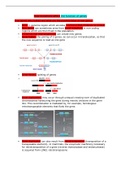
Chromosomal rearrangements can create new genes:
- Gene fusion: the joining of 2 genes, as can occur in translocation, so that
the new sequence is read as one gene
Gene fission: spitting of genes
Gene duplication: may occur through unequal crossing-over of duplicated
chromosomes harbouring the gene during meiotic divisions in the germ
line. This recombination is mediated by, for example, homologous
retrotransposable elements that flank the gene.
Gene duplication can also result from retrotransposition (transposition of a
transposable element)– in mammals, the enzymatic machinery necessary
for retrotransposition of a gene (reverse transcriptase and endonuclease)
is acquired from LINE1 retrotransposons
How genes are created and what are the possible fates of new genes:
Gene = genome region which encodes functional RNA molecule or protein
New genes can sometimes arise from small mutations in non-coding
regions which are then fixed in the population.
Chromosomal rearrangements can create new genes:
- Gene fusion: the joining of 2 genes, as can occur in translocation, so that
the new sequence is read as one gene
Gene fission: spitting of genes
Gene duplication: may occur through unequal crossing-over of duplicated
chromosomes harbouring the gene during meiotic divisions in the germ
line. This recombination is mediated by, for example, homologous
retrotransposable elements that flank the gene.
Gene duplication can also result from retrotransposition (transposition of a
transposable element)– in mammals, the enzymatic machinery necessary
for retrotransposition of a gene (reverse transcriptase and endonuclease)
is acquired from LINE1 retrotransposons