DYNAMIC CELL INTRO
ESSENTIAL: Molecular Biology of the Cell (Alberts 5th or 6th editions) or Molecular Cell Biology
(Lodish 7th edition). Counts as extra reading for exam.
100% Exam: 50% MCQ and 50% one short essay question from choice of 2 (can be from any part
of the course – similar to previous exams)
SELF-ASSEMBLY AND TURNOVER OF THE CYTOSKELETON
What is the cytoskeleton?
Definition = a cellular ‘scaffolding’ or ‘skeleton’ contained within the cytoplasm and is composed
of a microscopic network of protein filaments and microtubules.
Cells are highly dynamic – constantly changing in response to their environment. Key aspect of
this is the dynamic (rather than static) nature of cytoskeleton. For example, a macrophage
targeting a bacterium uses a lot of energy but simultaneously has a high level of flexibility.
Why is it important?
Cytoskeleton pulls the chromosomes apart at mitosis and then splits the dividing cell into two
Generating cell shape – supports structure, organisation and compartmentalisation of the cell.
Controls the amazing diversity of eukaryotic cell shapes – provides the machinery in the muscle
cell for contraction, in the nerve cell to extend an axon and dendrites and guides the growth of
the plant cell wall
Stabilising cell shape – supports the fragile plasma membrane and provides the mechanical
linkages that le the cell bear stresses and strains without being ripped apart as the environment
shifts and changes
Generating cell polarity – cytoskeleton drives and guides the intracellular traffic of organelles,
ferrying materials from one part of the cell to another
Generating cell motility – enables cells such as sperm to swim and other, such as fibroblasts and
white blood cells, to crawl across surfaces
What are the components of the cytoskeleton?
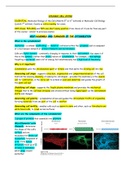
3 groups of proteins that assemble into polymers:
Microfilaments/ actin
filaments – determine
the shape of the cell’s
surface and are
necessary for whole-cell
locomotion. Composed of
actin. Form helical
structure made up of 2
strands of monomers
which wrap around
eachother
, Microtubules – determine the positions of membrane-enclosed organelles and direct intracellular
transport. Composed of tubulin. Alpha-beta tubulin dimer linked end to end to form protein
filament clusters (13) to form tubulin structures
Intermediate filaments – provide mechanical strength. Composed of a various proteins of the
coiled coil type. Role in maintaining integrity of cell
Accessory proteins - These cytoskeletal filaments would be ineffective without the hundreds
of accessory proteins that link the filaments to other cell components, as well as to each other.
Essential for the controlled assembly of the cytoskeletal filaments in particular locations –
include motor proteins, which convert the energy of ATP hydrolysis into mechanical force that
can either move organelles along the filaments or move the filaments themselves.
All share a polymeric structure, but self-assemble through relatively weak non-covalent bonds,
which allows dynamic changes and different properties.
1) Actin filaments –
Underlie the plasma
membrane of animal cells,
providing strength and shape
to its thin lipid bilayer.
2-stranded helical polymers
of actin monomers
Flexible/ dynamic structures
with a diameter of 5-9nm
Arranged in linear bundles
(contraction), 2D networks or
3D gels (drive alteration in
cell shape/movement)
Most highly concentrated in cortex of cell, just under plasma membrane (supports PM)
Versatile arrangement creates specialised structures;
Skeletal muscle – actin filaments are highly organised, interacting with myosin
filaments to control movement
Microvilli – actin filaments present at the core, holding microvilli as elongated
projections of plasma membrane. On the surface of intestinal epithelial cells, this
vastly increases the apical surface area to enhance nutrient absorption
Stress fibres – bundles of actin filaments hold the cell down in a stable manner to
provide a strength/resistance to tension
Dynamic structures such as lamellipodia and filopodia – used by cells to explore
territory and pull themselves around
Contractile ring – assembles transiently to divide cells into two
Stereocilia – regular bundles on the surface of hair cells in the inner ear contain
stable bundles of actin filaments that tilt as rigid rods in response to sound
2) Microtubules –
Long stiff hollow tubes of protein – tubulin
Rapid disassembly/reassembly
Microtubules grow from a microtubule organising centre (MTOC)
ESSENTIAL: Molecular Biology of the Cell (Alberts 5th or 6th editions) or Molecular Cell Biology
(Lodish 7th edition). Counts as extra reading for exam.
100% Exam: 50% MCQ and 50% one short essay question from choice of 2 (can be from any part
of the course – similar to previous exams)
SELF-ASSEMBLY AND TURNOVER OF THE CYTOSKELETON
What is the cytoskeleton?
Definition = a cellular ‘scaffolding’ or ‘skeleton’ contained within the cytoplasm and is composed
of a microscopic network of protein filaments and microtubules.
Cells are highly dynamic – constantly changing in response to their environment. Key aspect of
this is the dynamic (rather than static) nature of cytoskeleton. For example, a macrophage
targeting a bacterium uses a lot of energy but simultaneously has a high level of flexibility.
Why is it important?
Cytoskeleton pulls the chromosomes apart at mitosis and then splits the dividing cell into two
Generating cell shape – supports structure, organisation and compartmentalisation of the cell.
Controls the amazing diversity of eukaryotic cell shapes – provides the machinery in the muscle
cell for contraction, in the nerve cell to extend an axon and dendrites and guides the growth of
the plant cell wall
Stabilising cell shape – supports the fragile plasma membrane and provides the mechanical
linkages that le the cell bear stresses and strains without being ripped apart as the environment
shifts and changes
Generating cell polarity – cytoskeleton drives and guides the intracellular traffic of organelles,
ferrying materials from one part of the cell to another
Generating cell motility – enables cells such as sperm to swim and other, such as fibroblasts and
white blood cells, to crawl across surfaces
What are the components of the cytoskeleton?
3 groups of proteins that assemble into polymers:
Microfilaments/ actin
filaments – determine
the shape of the cell’s
surface and are
necessary for whole-cell
locomotion. Composed of
actin. Form helical
structure made up of 2
strands of monomers
which wrap around
eachother
, Microtubules – determine the positions of membrane-enclosed organelles and direct intracellular
transport. Composed of tubulin. Alpha-beta tubulin dimer linked end to end to form protein
filament clusters (13) to form tubulin structures
Intermediate filaments – provide mechanical strength. Composed of a various proteins of the
coiled coil type. Role in maintaining integrity of cell
Accessory proteins - These cytoskeletal filaments would be ineffective without the hundreds
of accessory proteins that link the filaments to other cell components, as well as to each other.
Essential for the controlled assembly of the cytoskeletal filaments in particular locations –
include motor proteins, which convert the energy of ATP hydrolysis into mechanical force that
can either move organelles along the filaments or move the filaments themselves.
All share a polymeric structure, but self-assemble through relatively weak non-covalent bonds,
which allows dynamic changes and different properties.
1) Actin filaments –
Underlie the plasma
membrane of animal cells,
providing strength and shape
to its thin lipid bilayer.
2-stranded helical polymers
of actin monomers
Flexible/ dynamic structures
with a diameter of 5-9nm
Arranged in linear bundles
(contraction), 2D networks or
3D gels (drive alteration in
cell shape/movement)
Most highly concentrated in cortex of cell, just under plasma membrane (supports PM)
Versatile arrangement creates specialised structures;
Skeletal muscle – actin filaments are highly organised, interacting with myosin
filaments to control movement
Microvilli – actin filaments present at the core, holding microvilli as elongated
projections of plasma membrane. On the surface of intestinal epithelial cells, this
vastly increases the apical surface area to enhance nutrient absorption
Stress fibres – bundles of actin filaments hold the cell down in a stable manner to
provide a strength/resistance to tension
Dynamic structures such as lamellipodia and filopodia – used by cells to explore
territory and pull themselves around
Contractile ring – assembles transiently to divide cells into two
Stereocilia – regular bundles on the surface of hair cells in the inner ear contain
stable bundles of actin filaments that tilt as rigid rods in response to sound
2) Microtubules –
Long stiff hollow tubes of protein – tubulin
Rapid disassembly/reassembly
Microtubules grow from a microtubule organising centre (MTOC)