Regulation of cell adhesion proteins by UPS and autophagy…
Define autophagy, in particular macroautophagy .
o Aging can be regulated by both Insulin/IGF1 signalling and also
dietary restriction through autophagy induction:
Insulin/IGF1 signalling pathway has been demonstrated in the model
organisms C. elegans and Drosophila – highly conserved pathway implicated
in the regulation of autophagy induction and hence aging. Insulin ligand
binding to receptor triggers a range of signal transduction pathways. One
signalling cascade ends up activating mTOR molecule, which is the driver
for protein synthesis. Everywhere where mTOR is highly active, a lot of
mRNA translation and ribosome biogenesis, etc. occurs. This protein
synthesis, active growth and high metabolism to sustain such growth has a
negative impact that often toxic by-products and ROSs are released, driving
cellular aging. To antagonise this, another arm to this pathway is mediated
by TF FOXO, which triggers the opposite to mTOR – activates autophagy
(self-digestion) and protein turnover. Balance between these two mechanisms of protein synthesis and protein
turnover dictates cellular aging.
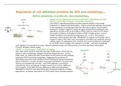
o mTOR vs. Autophagy in regulation of Aging:
Left: high insulin leads to high Akt and high mTOR levels, which has the
ability to block autophagy (triggers ribosome biogenesis etc). On the
other hand, on right hand side, inactivation of this branch of the pathway
promotes FOXO activating autophagy, triggering the synthesis of
detoxifying enzymes (anti-oxidants) and inhibiting the aging mechanism.
Some mutations in insulin receptor have been identified in humans who
lived to an exceptionally old age – the FOXO pathway is activated,
maintaining active autophagy at higher levels than normal. SNIPs are
small regions of the DNA that are different in different populations –
identified in FOXO TF and associated with increased longevity of these
populations. Increases expression of FOXO rather than changing protein
, function.
Mutations which impair IGF-1 receptor function are found in a cohort of Ashkenazi Jewish centenarians.
DNA variants in the insulin receptor are linked to longevity in a Japanese cohort.
FOXO3A mutant cohorts are located throughout the world (Hawaiians of Japanese descent, Italians, Ashkenazi Jews,
Californians, New Englanders, Germans and Chinese). SNPs identified in FOXO are located in intronic sequences which
therefore suggests that these may affect FOXO expression rather than its protein activity.
o Caloric restriction and longevity:
CR is the most potent inducer of macroautophagy. The link between CR and anti-aging is clear in C. elegans and D.
melanogaster... But it is less clear in mammalian systems. Complex studies to carry out, high number of animals
required and ethical issues associated with the procedures, therefore only 2 have been performed.
2009 study:
Caloric restriction without malnutrition delays aging and extends life span in
diverse species.
Groups of rhesus monkeys separated into 2 populations. One population
received no limitation on food intake, whereas other population received
calorie-restricted diet (enough to maintain minimal physiological function).
Followed the 2 groups over 20 years, monitored them for health in terms of
cancer, diabetes, brain function, etc. to evaluate aging process.
Showed that 13% of the dieting group died from age-related causes,
compared with 37% of the control group. Limited food intake means that
cells must recycle components, therefore a higher amount of autophagy is
stimulated which inhibits the aging process.
However in another study a CR regimen implemented in young and older age
rhesus monkeys at the National Institute on aging (NIA) has not improved
survival outcomes….
o The study of cell biology:
The discovery of the molecular mechanisms underlying autophagy did not occur until 1992, however the concept and
term were outlined before this by De Duve.
Contrast between non-selective vs. selective autophagy.
, o AUTOPHAGY:
Term originally coined in the 1960s by De Duve C, Wattiaux R. Functions of lysosomes. From the Greek words, auto
"self" and phagein "to eat” – SELF-EATING.
Many discoveries were made through observations using microscopy tools, and the ability to separate organelles
within cells (separation techniques). Using these techniques, De Duve et al were able to identify many organelles in
cells such as lysosomes and an autophagosome.
Autophagy is an evolutionarily conserved process whereby the eukaryotic cell can recycle part of its own content by
sequestering a portion of the cytoplasm in a double-membrane vesicle that is delivered to the lysosome for digestion.
This generates new building blocks and recycles materials.
Functions:
-- Nutrient mobilisation upon starvation (non-selective) -- originally, thought of as a non-selective mechanism (only
kicks in during cellular starvation – cell breaks down protein complexes, organelles etc not required as a survival
mechanism) whereby no particular components were removed, breakdown was random.
-- Degradation of intracellular aggregates, protein complexes, damaged organelles to maintain cellular homeostasis
(selective autophagy) -- we now know that this can also occur as a specific process used by the cell to break down
particular protein complexes, organelles, etc. in a very specific manner
-- Clearance of dead cells and cellular debris during programmed cell death
-- Clearance of pathogens that invade cells
Discuss the step-by-step molecular mechanisms that drive autophagy, including the
role of the PI3K pathway in this process.
Discovery of the molecular mechanisms of autophagy:
o In 1993, Oshumi published his seminal discovery of 15 genes of key importance for autophagy in budding yeast.
He then cloned these genes and elucidated the function of the encoded proteins. Ohsumi reasoned that, if autophagy
existed in yeast, inhibition of vacuolar enzymes would result in the accumulation of engulfed cytoplasmic components
in the vacuole.
o Principles of the discovery:
Define autophagy, in particular macroautophagy .
o Aging can be regulated by both Insulin/IGF1 signalling and also
dietary restriction through autophagy induction:
Insulin/IGF1 signalling pathway has been demonstrated in the model
organisms C. elegans and Drosophila – highly conserved pathway implicated
in the regulation of autophagy induction and hence aging. Insulin ligand
binding to receptor triggers a range of signal transduction pathways. One
signalling cascade ends up activating mTOR molecule, which is the driver
for protein synthesis. Everywhere where mTOR is highly active, a lot of
mRNA translation and ribosome biogenesis, etc. occurs. This protein
synthesis, active growth and high metabolism to sustain such growth has a
negative impact that often toxic by-products and ROSs are released, driving
cellular aging. To antagonise this, another arm to this pathway is mediated
by TF FOXO, which triggers the opposite to mTOR – activates autophagy
(self-digestion) and protein turnover. Balance between these two mechanisms of protein synthesis and protein
turnover dictates cellular aging.
o mTOR vs. Autophagy in regulation of Aging:
Left: high insulin leads to high Akt and high mTOR levels, which has the
ability to block autophagy (triggers ribosome biogenesis etc). On the
other hand, on right hand side, inactivation of this branch of the pathway
promotes FOXO activating autophagy, triggering the synthesis of
detoxifying enzymes (anti-oxidants) and inhibiting the aging mechanism.
Some mutations in insulin receptor have been identified in humans who
lived to an exceptionally old age – the FOXO pathway is activated,
maintaining active autophagy at higher levels than normal. SNIPs are
small regions of the DNA that are different in different populations –
identified in FOXO TF and associated with increased longevity of these
populations. Increases expression of FOXO rather than changing protein
, function.
Mutations which impair IGF-1 receptor function are found in a cohort of Ashkenazi Jewish centenarians.
DNA variants in the insulin receptor are linked to longevity in a Japanese cohort.
FOXO3A mutant cohorts are located throughout the world (Hawaiians of Japanese descent, Italians, Ashkenazi Jews,
Californians, New Englanders, Germans and Chinese). SNPs identified in FOXO are located in intronic sequences which
therefore suggests that these may affect FOXO expression rather than its protein activity.
o Caloric restriction and longevity:
CR is the most potent inducer of macroautophagy. The link between CR and anti-aging is clear in C. elegans and D.
melanogaster... But it is less clear in mammalian systems. Complex studies to carry out, high number of animals
required and ethical issues associated with the procedures, therefore only 2 have been performed.
2009 study:
Caloric restriction without malnutrition delays aging and extends life span in
diverse species.
Groups of rhesus monkeys separated into 2 populations. One population
received no limitation on food intake, whereas other population received
calorie-restricted diet (enough to maintain minimal physiological function).
Followed the 2 groups over 20 years, monitored them for health in terms of
cancer, diabetes, brain function, etc. to evaluate aging process.
Showed that 13% of the dieting group died from age-related causes,
compared with 37% of the control group. Limited food intake means that
cells must recycle components, therefore a higher amount of autophagy is
stimulated which inhibits the aging process.
However in another study a CR regimen implemented in young and older age
rhesus monkeys at the National Institute on aging (NIA) has not improved
survival outcomes….
o The study of cell biology:
The discovery of the molecular mechanisms underlying autophagy did not occur until 1992, however the concept and
term were outlined before this by De Duve.
Contrast between non-selective vs. selective autophagy.
, o AUTOPHAGY:
Term originally coined in the 1960s by De Duve C, Wattiaux R. Functions of lysosomes. From the Greek words, auto
"self" and phagein "to eat” – SELF-EATING.
Many discoveries were made through observations using microscopy tools, and the ability to separate organelles
within cells (separation techniques). Using these techniques, De Duve et al were able to identify many organelles in
cells such as lysosomes and an autophagosome.
Autophagy is an evolutionarily conserved process whereby the eukaryotic cell can recycle part of its own content by
sequestering a portion of the cytoplasm in a double-membrane vesicle that is delivered to the lysosome for digestion.
This generates new building blocks and recycles materials.
Functions:
-- Nutrient mobilisation upon starvation (non-selective) -- originally, thought of as a non-selective mechanism (only
kicks in during cellular starvation – cell breaks down protein complexes, organelles etc not required as a survival
mechanism) whereby no particular components were removed, breakdown was random.
-- Degradation of intracellular aggregates, protein complexes, damaged organelles to maintain cellular homeostasis
(selective autophagy) -- we now know that this can also occur as a specific process used by the cell to break down
particular protein complexes, organelles, etc. in a very specific manner
-- Clearance of dead cells and cellular debris during programmed cell death
-- Clearance of pathogens that invade cells
Discuss the step-by-step molecular mechanisms that drive autophagy, including the
role of the PI3K pathway in this process.
Discovery of the molecular mechanisms of autophagy:
o In 1993, Oshumi published his seminal discovery of 15 genes of key importance for autophagy in budding yeast.
He then cloned these genes and elucidated the function of the encoded proteins. Ohsumi reasoned that, if autophagy
existed in yeast, inhibition of vacuolar enzymes would result in the accumulation of engulfed cytoplasmic components
in the vacuole.
o Principles of the discovery: