Oncogenic Viruses…
An agent that induces tumours…
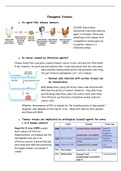
In 1909. Peyton Rous
discovered a sarcoma-inducing
agent in chickens. There was
something in the tumour that
transplanted tumourigenicity
to another tumour in a
different animal.
Is cancer caused by infectious agents?
Fibiger found that a parasite caused stomach cancer in rats, and won the 1926 Nobel
Prize. However, his work was discredited after it was discovered that the rats used
were severely malnourished and so the epithelial cells lining
the gut formed a metaplastic cell – not a tumour.
Normal cells infected with certain viruses can
be transformed:
RSV (Respiratory Syncytial Virus): some cells infected with
RSV lose the ability of contact inhibition – they don’t stop
proliferating when they come into contact with each other.
Viral infection can therefore transform normal cells into
cancer cells.
Whether the presence of RSV is needed for the transformation of descendent/
daughter cells depends on the type of virus – those with DNA as their genome
and those with RNA.
Tumour viruses are implicated as aetiological (causal) agents for every
1 in 6 human cancers!
Hepatitis B virus (HBV) causes
most cancers of the liver
(hepatocellular carcinomas) and the
development and use of an
effective vaccine is preventing new
infections with HBV and eliminating
the hepatocellular carcinomas it
causes
, Human T-cell leukaemia virus type 1 (HTLV-1) causes adult T-cell leukaemia.
Epidemiological analyses have revealed that HTLV-1 is often passed to infants from
their infected mothers’ milk. In Japan, where adult T-cell leukaemia is endemic,
mothers infected with HTLV-1 have been encouraged not to breastfeed their infants,
80% of whom are now uninfected by HTLV-1. Blocking this viral transmission will almost
certainly eliminate those adult T-cell leukaemia, which otherwise would have arisen 50–
60 years from now.
Human papillomaviruses (HPV) cause the vast majority of cervical carcinomas. In
developed nations, early detection and surgical intervention prevents most cervical
carcinomas, and vaccines are being developed for the most prevalent strains of HPVs
that are associated with cervical carcinomas, which are likely to prevent infection and
the associated cancers in developing nations.
Not all cancers that are caused by human tumour viruses are amenable to being
prevented. Some human tumour viruses, such as Epstein–Barr Virus (EBV), are
ubiquitous but primarily cause cancers in the developing nations and are, therefore,
unlikely to be the subject for successful vaccine development. An alternative strategy
to cope with the viral tumours that cannot practically be prevented is to develop
treatments targeted against the viral products that are required to maintain the
infected cells as tumours. This strategy is feasible only if such products exist. Animal
tumour viruses have previously been shown to encode genes that are required to
maintain tumours. Recently, two human tumour viruses, HPV and EBV, have also been
found to encode such genes.
Rous sarcoma virus (RSV) causes tumours rapidly following its inoculation into the wing
webs of susceptible newborn chicks. Early genetic analyses identified a viral gene that
was necessary for maintaining the transformation of infected cells, but not their
infection. This gene, termed Src, was later shown to be the sole gene of RSV that was
required to induce tumours. Such direct studies are not practical with human tumour
viruses, however. Furthermore, human tumour viruses predominantly infect only
humans, and animal hosts are often
unavailable to model their oncogenesis. These
complexities necessitate less direct
approaches to identify any human tumour
viral products that maintain tumour
phenotypes.
Overview of viral replication
Virus binds to specific receptors before
being internalised and it outer coat shed.
This exposes the viral genome to the cellular
environment of the host cell.
, Some viruses encode their own polymerase etc. and some use the host cell’s replication
machinery. Either way, the virus propagates, and either translocates to the nucleus or
remains free in the cytoplasm as an episome.
The genome then assembles into a virus particle and exits the host cell.
Replication in DNA tumour viruses:
Once the virus is taken up by the host cell and the DNA is uncoated, it
can either use its own genome to make proteins or exploit the cells
apparatus.
The DNA manufactured by replication and proteins produced via
transcription/ translation are brought together to form a virion (DNA
core and capsid protein) outside of the cell.
Replication in RNA tumour viruses:
Inside the host cell,
the capsid is
removed and RNA
exposed. Single-
stranded RNA is
then used as a
template to make
double-stranded
RNA using reverse
transcriptase. This
occurs via a
heteroduplex
transition state (RNA with complementary DNA strand) before the RNA is replaced
with DNA.
This double-stranded DNA is then able to integrate into the host DNA, before using
transcription to make RNA and translation to produce reverse transcriptase and
protein coats. These elements combine to form the virion.
An agent that induces tumours…
In 1909. Peyton Rous
discovered a sarcoma-inducing
agent in chickens. There was
something in the tumour that
transplanted tumourigenicity
to another tumour in a
different animal.
Is cancer caused by infectious agents?
Fibiger found that a parasite caused stomach cancer in rats, and won the 1926 Nobel
Prize. However, his work was discredited after it was discovered that the rats used
were severely malnourished and so the epithelial cells lining
the gut formed a metaplastic cell – not a tumour.
Normal cells infected with certain viruses can
be transformed:
RSV (Respiratory Syncytial Virus): some cells infected with
RSV lose the ability of contact inhibition – they don’t stop
proliferating when they come into contact with each other.
Viral infection can therefore transform normal cells into
cancer cells.
Whether the presence of RSV is needed for the transformation of descendent/
daughter cells depends on the type of virus – those with DNA as their genome
and those with RNA.
Tumour viruses are implicated as aetiological (causal) agents for every
1 in 6 human cancers!
Hepatitis B virus (HBV) causes
most cancers of the liver
(hepatocellular carcinomas) and the
development and use of an
effective vaccine is preventing new
infections with HBV and eliminating
the hepatocellular carcinomas it
causes
, Human T-cell leukaemia virus type 1 (HTLV-1) causes adult T-cell leukaemia.
Epidemiological analyses have revealed that HTLV-1 is often passed to infants from
their infected mothers’ milk. In Japan, where adult T-cell leukaemia is endemic,
mothers infected with HTLV-1 have been encouraged not to breastfeed their infants,
80% of whom are now uninfected by HTLV-1. Blocking this viral transmission will almost
certainly eliminate those adult T-cell leukaemia, which otherwise would have arisen 50–
60 years from now.
Human papillomaviruses (HPV) cause the vast majority of cervical carcinomas. In
developed nations, early detection and surgical intervention prevents most cervical
carcinomas, and vaccines are being developed for the most prevalent strains of HPVs
that are associated with cervical carcinomas, which are likely to prevent infection and
the associated cancers in developing nations.
Not all cancers that are caused by human tumour viruses are amenable to being
prevented. Some human tumour viruses, such as Epstein–Barr Virus (EBV), are
ubiquitous but primarily cause cancers in the developing nations and are, therefore,
unlikely to be the subject for successful vaccine development. An alternative strategy
to cope with the viral tumours that cannot practically be prevented is to develop
treatments targeted against the viral products that are required to maintain the
infected cells as tumours. This strategy is feasible only if such products exist. Animal
tumour viruses have previously been shown to encode genes that are required to
maintain tumours. Recently, two human tumour viruses, HPV and EBV, have also been
found to encode such genes.
Rous sarcoma virus (RSV) causes tumours rapidly following its inoculation into the wing
webs of susceptible newborn chicks. Early genetic analyses identified a viral gene that
was necessary for maintaining the transformation of infected cells, but not their
infection. This gene, termed Src, was later shown to be the sole gene of RSV that was
required to induce tumours. Such direct studies are not practical with human tumour
viruses, however. Furthermore, human tumour viruses predominantly infect only
humans, and animal hosts are often
unavailable to model their oncogenesis. These
complexities necessitate less direct
approaches to identify any human tumour
viral products that maintain tumour
phenotypes.
Overview of viral replication
Virus binds to specific receptors before
being internalised and it outer coat shed.
This exposes the viral genome to the cellular
environment of the host cell.
, Some viruses encode their own polymerase etc. and some use the host cell’s replication
machinery. Either way, the virus propagates, and either translocates to the nucleus or
remains free in the cytoplasm as an episome.
The genome then assembles into a virus particle and exits the host cell.
Replication in DNA tumour viruses:
Once the virus is taken up by the host cell and the DNA is uncoated, it
can either use its own genome to make proteins or exploit the cells
apparatus.
The DNA manufactured by replication and proteins produced via
transcription/ translation are brought together to form a virion (DNA
core and capsid protein) outside of the cell.
Replication in RNA tumour viruses:
Inside the host cell,
the capsid is
removed and RNA
exposed. Single-
stranded RNA is
then used as a
template to make
double-stranded
RNA using reverse
transcriptase. This
occurs via a
heteroduplex
transition state (RNA with complementary DNA strand) before the RNA is replaced
with DNA.
This double-stranded DNA is then able to integrate into the host DNA, before using
transcription to make RNA and translation to produce reverse transcriptase and
protein coats. These elements combine to form the virion.