*** Behaviour and Speciation ***
* Speciation *
speciation concepts
On the Origin of Species by Means of Natural Selection (Darwin 1859) explains adaptation – change
in species through time. Process of speciation i.e. lineage splitting not addressed much.
Common definitions of a species (of numerous proposed):
Phylogenetic species concept
group of organisms that keep integrity over time and space
Phenotypic species concept
group of individuals that look sufficiently distinct from other such groups
Vague definitions as difficult to objectively ‘draw the line’ in terms of distinguishing between what is
a species and what isn’t.
Biological species concept
“groups of actually or potentially interbreeding natural populations, which are
reproductively isolated from other such groups” (Ernst Mayr 1942)
Focuses on mechanism – good working definition. Species can be theoretically
understood by understanding reproductive isolation.
Reproductive isolation: Biological Species Concept -
“groups of actually or potentially interbreeding natural
populations, which are reproductively isolated from other
such groups” (Ernst Mayr 1942)
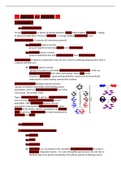
Figure: Mouse population is split by a reproductive barrier
and over time, genetic changes accumulate in each
population. With no gene flow between the two
populations, they become increasingly different. Upon
removal of the barrier, the two populations can no longer
breed to produce hybrid offspring or hybrids produced do
not survive/are sterile.
reproductive barriers
1. Prezygotic – occur before fertilisation
Temporal
Spatial
Behavioural
Mechanical: e.g. an example is the variability male genital morphology in 8 spp of
Drosophila. Diagnostic feature – for some Drosophila species pairs, the only way to
tell them apart is by genital morphology! This distinct genital morphology means
, that reproduction between species is not possible – male genitalia only
complementary to females of the same species.
Gametic
2. Postzygotic – occur after fertilisation
Hybrid inviability
Hybrid sterility – e.g. zorse (zebra x horse)
Ecological
Such barriers can also be divided into premating (temporal, spatial and behavioural) – e.g cichlids
using colour for mate choice – and postmating (mechanical, gametic, hybrid inviability/sterility and
ecological).
geographical modes of speciation: 4 different spatial models (in terms of how the
speciation happens in space). Categorised depending upon the extent of gene flow between
the populations (exchange of alleles which prevents/slows divergence of species):
Allopatric: a vicariant event divides species &
creates geographically isolated populations. Genetic
differences build up due to lack of gene flow.
Peripatric: small peripheral populations isolated
from the parent population, small amount of gene
flow but mostly separated.
Parapatric: neighbouring populations with some
gene flow
Sympatric: disruptive events within a parent
population that produce a daughter population with
much overlapping gene flow between the
populations
Two approaches to studying speciation genetics
1. Laboratory crosses between genetic model organisms – for example, much existing
knowledge about speciation genetics is derived from experiments using Drosophila
2. Natural hybrid zones also allow study of genetic variation within these zones, e.g. many
examples of hybrid zones between different butterfly species are scattered over south and
central America. Two mouse species, Mus m. domesticus and Mus m. musculus also have a
narrow band of hybrid zone.
To understand reproductive isolation need cases of hybrid defects with well-characterize genetic and
developmental basis AND estimate contribution to reproductive barrier in nature (natural hybrid
zones reveal areas existing currently in nature and allow identification of factors contributing to
them). House mice provide a rare opportunity to do both – often species can produce viable hybrids
in the lab but this does not occur in nature.
* Speciation *
speciation concepts
On the Origin of Species by Means of Natural Selection (Darwin 1859) explains adaptation – change
in species through time. Process of speciation i.e. lineage splitting not addressed much.
Common definitions of a species (of numerous proposed):
Phylogenetic species concept
group of organisms that keep integrity over time and space
Phenotypic species concept
group of individuals that look sufficiently distinct from other such groups
Vague definitions as difficult to objectively ‘draw the line’ in terms of distinguishing between what is
a species and what isn’t.
Biological species concept
“groups of actually or potentially interbreeding natural populations, which are
reproductively isolated from other such groups” (Ernst Mayr 1942)
Focuses on mechanism – good working definition. Species can be theoretically
understood by understanding reproductive isolation.
Reproductive isolation: Biological Species Concept -
“groups of actually or potentially interbreeding natural
populations, which are reproductively isolated from other
such groups” (Ernst Mayr 1942)
Figure: Mouse population is split by a reproductive barrier
and over time, genetic changes accumulate in each
population. With no gene flow between the two
populations, they become increasingly different. Upon
removal of the barrier, the two populations can no longer
breed to produce hybrid offspring or hybrids produced do
not survive/are sterile.
reproductive barriers
1. Prezygotic – occur before fertilisation
Temporal
Spatial
Behavioural
Mechanical: e.g. an example is the variability male genital morphology in 8 spp of
Drosophila. Diagnostic feature – for some Drosophila species pairs, the only way to
tell them apart is by genital morphology! This distinct genital morphology means
, that reproduction between species is not possible – male genitalia only
complementary to females of the same species.
Gametic
2. Postzygotic – occur after fertilisation
Hybrid inviability
Hybrid sterility – e.g. zorse (zebra x horse)
Ecological
Such barriers can also be divided into premating (temporal, spatial and behavioural) – e.g cichlids
using colour for mate choice – and postmating (mechanical, gametic, hybrid inviability/sterility and
ecological).
geographical modes of speciation: 4 different spatial models (in terms of how the
speciation happens in space). Categorised depending upon the extent of gene flow between
the populations (exchange of alleles which prevents/slows divergence of species):
Allopatric: a vicariant event divides species &
creates geographically isolated populations. Genetic
differences build up due to lack of gene flow.
Peripatric: small peripheral populations isolated
from the parent population, small amount of gene
flow but mostly separated.
Parapatric: neighbouring populations with some
gene flow
Sympatric: disruptive events within a parent
population that produce a daughter population with
much overlapping gene flow between the
populations
Two approaches to studying speciation genetics
1. Laboratory crosses between genetic model organisms – for example, much existing
knowledge about speciation genetics is derived from experiments using Drosophila
2. Natural hybrid zones also allow study of genetic variation within these zones, e.g. many
examples of hybrid zones between different butterfly species are scattered over south and
central America. Two mouse species, Mus m. domesticus and Mus m. musculus also have a
narrow band of hybrid zone.
To understand reproductive isolation need cases of hybrid defects with well-characterize genetic and
developmental basis AND estimate contribution to reproductive barrier in nature (natural hybrid
zones reveal areas existing currently in nature and allow identification of factors contributing to
them). House mice provide a rare opportunity to do both – often species can produce viable hybrids
in the lab but this does not occur in nature.