Week 1: Anatomy laboratory
UNIT OUTLINE/ LEARNING OBJECTIVES:
1. Locate and identify anatomical structures in the human body.
2. Differentiate between levels of organisation in biological systems and apply
this knowledge to anatomical and physiological concepts.
3. Explain the functions of organs and organ systems and their roles in normal
body function.
4. Differentiate between normal and abnormal anatomy and physiology.
Notes:
Basics:
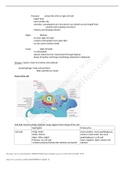
Cells are the basic building blocks of life that carry out functional
physiological roles and are comprised of:
▪ Plasma cell membrane – controls pH, ionic concentrations and transportation of ions
or larger molecules in and out of a cell
▪ Cytosol
▪ Nucleus
▪ Proteins
▪ Organelles
+ red blood cells do not contain a nuclease as they are not required to have one
Anatomical terminology:
Joints: where two bones meet
Limbs: legs and hands – upper limb and lower limbs
Tendons: A tendon is a fibrous connective tissue that attaches muscle to bone
Ligaments: a fibrous connective tissue that attaches bone to bone, and usually serves to
hold structures together and keep them stable
Muscle: Muscles are soft tissues. Many stretchy fibres make up your muscles. You have
more than 600 muscles in your body.
Human body is compromised into:
▪ Tissues
▪ Organs
▪ Systems
TISSUES: a level of organization in multicellular organisms
,Four basic types of tissues:
Connective tissues: supports other tissues and binds them together – bone, blood and lymph
tissues
Three types of connective tissues
- loose connective tissues – areolar connective tissue, adipose tissue and reticular
connective tissue
- dense connective tissues – dense regular connective tissue, dense irregular connective
tissue and elastic connective tissue
- specialised connective tissues
7 types of connective tissues:
▪ Cartilage – dense connective tissue
3 types of cartilage: hyaline cartilage, fibrocartilage and elastic cartilage
▪ Bone - Bone, also referred to as osseous tissue, can either be compact (dense) or
spongy (cancellous)
- contains the osteoblasts or osteocytes cells
- Bone connective tissue is made up of collagen fibres and has rigid, calcified ground
substance.
▪ Adipose- provides cushions (absorb shock and protect the bodies organs and other
muscles) and stores excess energy and fat
▪ Blood - Blood, also referred to as vascular tissue, is a type of fluid connective tissue.
- Blood connective tissue contains three types of cells including erythrocytes, leukocytes,
and thrombocytes
▪ Lymphatic - responsible for the manufacture of all the blood cells and immunological
capability
▪ Elastic connective tissue- helps maintain blood pressure and promotes normal
exhalation.
▪ Fibrous connective tissue- functions to provide strength to the inner layer of skin,
allowing it to handle forces of joint movements.
- Fibrous connective tissue contains fibroblast cells and is made up of fibrous fibres
- It is a dense connective tissue
3 types of fibres: collagen, elastic and reticular fibres
Epithelial tissues: provides covering – skin and the lining of the various passages inside the
body
- epithelial tissue epidermis layer of skin
- epithelial tissue lining of calcn
Functions:
▪ Protection
▪ Secretion
▪ Absorption
▪ Excretion
▪ Filtration
▪ Diffusion
▪ sensory reception
,membranes: flat sheets of pliable tissues that cover or line a part of the body
epithelial membrane: majority of the membrane consist of an epithelial layer and an
underlying connective tissue layer
▪ mucous membranes
▪ cutaneous membrane or skin
▪ serous membrane
▪ synovial membrane
Muscle tissues: (also includes striated muscles) that move the skeleton muscles and the
smooth muscles – such as muscles that surround the stomach
- composed of cells that have the special ability to shorten or contract in order to produce
movement of the body parts
- it can generate heat, produce body movements and maintain posture
3 main types of muscles:
▪ Skeletal muscle - specialised tissue that is attached to bones and allows movement.
- Together, skeletal muscles and bones are called the musculoskeletal system
▪ Smooth muscle - located in various internal structures including the digestive tract,
uterus and blood vessels such as arteries.
- Smooth muscle are arranged in layered sheets that contract in waves along the length of
the structure.
- Another common term is involuntary muscle, since the motion of smooth muscle
happens without our conscious awareness.
▪ Cardiac muscle - muscle specific to the heart.
- The heart contracts and relaxes without our conscious awareness.
Nerve tissues: made up of nerve cells (neurons) and is used to carry massages to and from
parts of the body
-nervous tissue brain
ORGAN:
a collection of tissues that structurally form a functional unit which becomes specialized to
perform a particular function within the human body
▪ The human body consists of 78 organs
5 vital organs required for survival:
▪ Heart – pumps or send blood throughout the body, allowing for the oxygen to be
carried out to every cell
▪ Brain- controls thought, memory, emotion, touch, motor skills, breathing,
temperature, hunger and other processes that regulate the body
▪ Kidney- removes waste and extra fluid (acid) from the body and maintain a healthy
balance of water, salts and minerals
▪ Liver- blood that leaves the stomach and intestine passes through the liver, allowing
the liver to process the blood and break down, balance and create nutrients and
metabolize drugs into forms that are easier for the body to use
▪ Lungs-(part of the raspatory system) group of organs and tissues that work together to
aid in breathing move fresh air into the body and waste gases out of the body
, All the organs found within the human body:
1. Hypothalamus (in the brain)
17. Adrenal glands
2. Joints
18. Anus
3. Kidneys
19. Appendix
4. Large intestine
20. Bladder (urinary)
5. Larynx (voice box)
21. Bones
6. Liver
22. Bone marrow (spongy part of
7. Lungs
the bone)
8. Lymph nodes
23. Brain
9. Mammary glands
24. Bronchi (tubes in the lungs)
10. Mesentery (covering of the intestines)
25. Diaphragm (muscle
11. Mouth
of breathing)
12. Nasal cavity
26. Ears
13. Nose
27. Esophagus (food pipe)
14. Ovaries
28. Eyes
15. Pancreas
29. Fallopian tubes
16. Pineal gland
30. Gallbladder
31. Genitals Pharynx
32. Heart
UNIT OUTLINE/ LEARNING OBJECTIVES:
1. Locate and identify anatomical structures in the human body.
2. Differentiate between levels of organisation in biological systems and apply
this knowledge to anatomical and physiological concepts.
3. Explain the functions of organs and organ systems and their roles in normal
body function.
4. Differentiate between normal and abnormal anatomy and physiology.
Notes:
Basics:
Cells are the basic building blocks of life that carry out functional
physiological roles and are comprised of:
▪ Plasma cell membrane – controls pH, ionic concentrations and transportation of ions
or larger molecules in and out of a cell
▪ Cytosol
▪ Nucleus
▪ Proteins
▪ Organelles
+ red blood cells do not contain a nuclease as they are not required to have one
Anatomical terminology:
Joints: where two bones meet
Limbs: legs and hands – upper limb and lower limbs
Tendons: A tendon is a fibrous connective tissue that attaches muscle to bone
Ligaments: a fibrous connective tissue that attaches bone to bone, and usually serves to
hold structures together and keep them stable
Muscle: Muscles are soft tissues. Many stretchy fibres make up your muscles. You have
more than 600 muscles in your body.
Human body is compromised into:
▪ Tissues
▪ Organs
▪ Systems
TISSUES: a level of organization in multicellular organisms
,Four basic types of tissues:
Connective tissues: supports other tissues and binds them together – bone, blood and lymph
tissues
Three types of connective tissues
- loose connective tissues – areolar connective tissue, adipose tissue and reticular
connective tissue
- dense connective tissues – dense regular connective tissue, dense irregular connective
tissue and elastic connective tissue
- specialised connective tissues
7 types of connective tissues:
▪ Cartilage – dense connective tissue
3 types of cartilage: hyaline cartilage, fibrocartilage and elastic cartilage
▪ Bone - Bone, also referred to as osseous tissue, can either be compact (dense) or
spongy (cancellous)
- contains the osteoblasts or osteocytes cells
- Bone connective tissue is made up of collagen fibres and has rigid, calcified ground
substance.
▪ Adipose- provides cushions (absorb shock and protect the bodies organs and other
muscles) and stores excess energy and fat
▪ Blood - Blood, also referred to as vascular tissue, is a type of fluid connective tissue.
- Blood connective tissue contains three types of cells including erythrocytes, leukocytes,
and thrombocytes
▪ Lymphatic - responsible for the manufacture of all the blood cells and immunological
capability
▪ Elastic connective tissue- helps maintain blood pressure and promotes normal
exhalation.
▪ Fibrous connective tissue- functions to provide strength to the inner layer of skin,
allowing it to handle forces of joint movements.
- Fibrous connective tissue contains fibroblast cells and is made up of fibrous fibres
- It is a dense connective tissue
3 types of fibres: collagen, elastic and reticular fibres
Epithelial tissues: provides covering – skin and the lining of the various passages inside the
body
- epithelial tissue epidermis layer of skin
- epithelial tissue lining of calcn
Functions:
▪ Protection
▪ Secretion
▪ Absorption
▪ Excretion
▪ Filtration
▪ Diffusion
▪ sensory reception
,membranes: flat sheets of pliable tissues that cover or line a part of the body
epithelial membrane: majority of the membrane consist of an epithelial layer and an
underlying connective tissue layer
▪ mucous membranes
▪ cutaneous membrane or skin
▪ serous membrane
▪ synovial membrane
Muscle tissues: (also includes striated muscles) that move the skeleton muscles and the
smooth muscles – such as muscles that surround the stomach
- composed of cells that have the special ability to shorten or contract in order to produce
movement of the body parts
- it can generate heat, produce body movements and maintain posture
3 main types of muscles:
▪ Skeletal muscle - specialised tissue that is attached to bones and allows movement.
- Together, skeletal muscles and bones are called the musculoskeletal system
▪ Smooth muscle - located in various internal structures including the digestive tract,
uterus and blood vessels such as arteries.
- Smooth muscle are arranged in layered sheets that contract in waves along the length of
the structure.
- Another common term is involuntary muscle, since the motion of smooth muscle
happens without our conscious awareness.
▪ Cardiac muscle - muscle specific to the heart.
- The heart contracts and relaxes without our conscious awareness.
Nerve tissues: made up of nerve cells (neurons) and is used to carry massages to and from
parts of the body
-nervous tissue brain
ORGAN:
a collection of tissues that structurally form a functional unit which becomes specialized to
perform a particular function within the human body
▪ The human body consists of 78 organs
5 vital organs required for survival:
▪ Heart – pumps or send blood throughout the body, allowing for the oxygen to be
carried out to every cell
▪ Brain- controls thought, memory, emotion, touch, motor skills, breathing,
temperature, hunger and other processes that regulate the body
▪ Kidney- removes waste and extra fluid (acid) from the body and maintain a healthy
balance of water, salts and minerals
▪ Liver- blood that leaves the stomach and intestine passes through the liver, allowing
the liver to process the blood and break down, balance and create nutrients and
metabolize drugs into forms that are easier for the body to use
▪ Lungs-(part of the raspatory system) group of organs and tissues that work together to
aid in breathing move fresh air into the body and waste gases out of the body
, All the organs found within the human body:
1. Hypothalamus (in the brain)
17. Adrenal glands
2. Joints
18. Anus
3. Kidneys
19. Appendix
4. Large intestine
20. Bladder (urinary)
5. Larynx (voice box)
21. Bones
6. Liver
22. Bone marrow (spongy part of
7. Lungs
the bone)
8. Lymph nodes
23. Brain
9. Mammary glands
24. Bronchi (tubes in the lungs)
10. Mesentery (covering of the intestines)
25. Diaphragm (muscle
11. Mouth
of breathing)
12. Nasal cavity
26. Ears
13. Nose
27. Esophagus (food pipe)
14. Ovaries
28. Eyes
15. Pancreas
29. Fallopian tubes
16. Pineal gland
30. Gallbladder
31. Genitals Pharynx
32. Heart