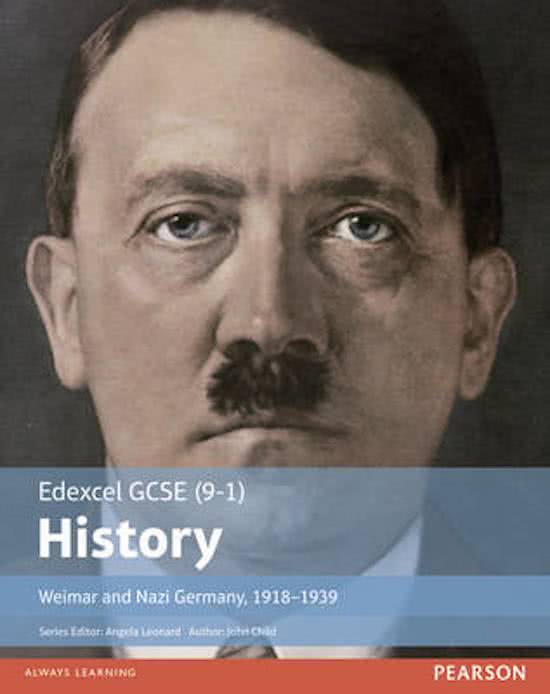
Weirmar and nazi Germany
1918-1939
,Section 1.A – the origins of the republic (1918-
,What was the impact of the First World War
on Germany?
• The First World War ended in 1918 and left
Germany scared and crumbling, having been
defeated. Friedrich Ebert, leader of the Social
Democratic Party, became the first German
president and declared Germany a republic.
,What was the impact of the First World War on Germ
• Two million German troops died and over four million we
wounded (11 million in total fought in the war).
• Government debts increased from 50 billion marks to 150
billion marks.
• Germany crumbled from within before it was ever defeat
on the battlefield as the British navy blockaded German
ports, preventing food being brought in.
• More than 750,000 Germans died because of food
shortages.
The devastating effects of the war left many people with n
option other than to revolt by striking and rioting.
,The Abdication of Kaiser Wilhelm II (Empero
9 Nov 1918 - The Kaiser visited army
headquarters in Spa. Ministers tried to persuade
the Kaiser to abdicate. The Kaiser refused Army
officers refused to support the Kaiser. The Kaise
had no option but to abdicate.
10 Nov - The Kaiser went into exile in Holland
, Revolution and the Declaration of the Republic
9th Nov 1918 - the German Republic was declared
10th - Friedrich Ebert suspended the old Reichstag and formed
Council of People’s Representatives as a temporary measure.
• The Berlin street were crowded. Some people were armed,
hoping to take over parts of the city.
• Philipp Scheidemann, of the Social Democratic Party (SDP) t
largest party in the German government (Reichstag), declare
new Republic to the crowds. He was fearful that armed riote
were preparing to declare a communist government in Berli
and, keen to prevent this, he promoted a peaceful transition
1918-1939
,Section 1.A – the origins of the republic (1918-
,What was the impact of the First World War
on Germany?
• The First World War ended in 1918 and left
Germany scared and crumbling, having been
defeated. Friedrich Ebert, leader of the Social
Democratic Party, became the first German
president and declared Germany a republic.
,What was the impact of the First World War on Germ
• Two million German troops died and over four million we
wounded (11 million in total fought in the war).
• Government debts increased from 50 billion marks to 150
billion marks.
• Germany crumbled from within before it was ever defeat
on the battlefield as the British navy blockaded German
ports, preventing food being brought in.
• More than 750,000 Germans died because of food
shortages.
The devastating effects of the war left many people with n
option other than to revolt by striking and rioting.
,The Abdication of Kaiser Wilhelm II (Empero
9 Nov 1918 - The Kaiser visited army
headquarters in Spa. Ministers tried to persuade
the Kaiser to abdicate. The Kaiser refused Army
officers refused to support the Kaiser. The Kaise
had no option but to abdicate.
10 Nov - The Kaiser went into exile in Holland
, Revolution and the Declaration of the Republic
9th Nov 1918 - the German Republic was declared
10th - Friedrich Ebert suspended the old Reichstag and formed
Council of People’s Representatives as a temporary measure.
• The Berlin street were crowded. Some people were armed,
hoping to take over parts of the city.
• Philipp Scheidemann, of the Social Democratic Party (SDP) t
largest party in the German government (Reichstag), declare
new Republic to the crowds. He was fearful that armed riote
were preparing to declare a communist government in Berli
and, keen to prevent this, he promoted a peaceful transition