2.2. What are the contemporary patterns of global migration?
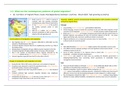
2b. Corridors of migrant flows create interdependence between countries - Brazil (EDC: fast growing economy)
Brazil is part of ‘BRICS’ which is a group of Economic, political, social & environmental interdependence with countries connected
countries with fast growing economies to Brazil by migrant flows:
including Russia, India, China & South Africa
It’s the 7th largest economy in the world & Portugal
the leading economic power in Latin
Long-standing bilateral relationship – good political relationship
America
Shared language, ancestry & family ties contribute to the ease with which migrants in both
GDP: US $4874 (2007) – US $5823 (2014)
countries can be integrated – strong social diaspora in both countries: builds stronger bonds
Sectoral contribution to GDP: services 69%,
Brazil was a former colony of Portugal, Portuguese government still gives special status to
industry 25% and agriculture 6%
Brazilian migrants, new gateway for entry for economic migrants to the EU – can access
higher paid tertiary jobs, send more remittances (links to next point)
Current patterns of immigration and emigration: Migrant remittances are an important economic factor for many families – 400€ mill / year
to Brazil, boosts its economic growth
Net migration loss of ½ million between 2000-2004 & 2005-2009, but this
slowed to 190,000 between 2010-14 USA
Increased migration between Brazil & its neighbouring countries e.g. Chile &
the Andean states High skilled Brazilians: more opportunities (higher paid) in USA especially in service sector
Slowing down of emigration of lower skilled economic migrants to the USA Low skilled economic migrants working in US remit significant monies back to Brazil – 50% of
Increased emigration of highly skilled workers to Europe, USA and Japan remittance money is from US
Rise in the number of international labour migrants attracted by the Access to better education in US, migrants return to Brazil with new acquired skills &
construction industry for the 2014 football world cup & the 2016 Olympics knowledge – contribute to Brazil’s development
Internal migration especially from the NE to the cities of the SE USAID projects give support in many ways e.g. assisting the Brazilian government in
designing/implementing laws concerning forest governance & sustainable forest
management (environmental)
Changes in immigration and emigration over time:
Haiti
During the late 19th & 20th century, Brazil was a net recipient of migrants
Europeans were attracted to work in the agricultural sector: coffee cultivation, Many join friends/relatives in SE Brazil, fill skill gaps in low-skilled jobs (Brazil relies on this) –
particularly Italians, Germans and Portuguese agriculture & manufacturing in factories of Santa Catarina for example
Japanese migrants have been long drawn towards agricultural and industrial National immigration Council for Brazil, Haitian immigrants can obtain visas quite easily in
sectors Haiti - reduces vulnerability to trafficking networks - beneficial for Haitians who have found it
Constant relatively high economic migration between near neighbours difficult to recover from the devastating earthquake of 2010, displaced 1.5 million people
Paraguay & Argentina No of immigrants in Brazil from Haiti: 2010 = 1681, 2013 = 11,072 - continues rising Haitians
Immigration into Brazil has slowed in the last 15 years, there are 80,000 fewer attempt to escape: political instability, unemployment, poverty & poor access to education
immigrants living in Brazil than at the start of the century
2b. Corridors of migrant flows create interdependence between countries - Brazil (EDC: fast growing economy)
Brazil is part of ‘BRICS’ which is a group of Economic, political, social & environmental interdependence with countries connected
countries with fast growing economies to Brazil by migrant flows:
including Russia, India, China & South Africa
It’s the 7th largest economy in the world & Portugal
the leading economic power in Latin
Long-standing bilateral relationship – good political relationship
America
Shared language, ancestry & family ties contribute to the ease with which migrants in both
GDP: US $4874 (2007) – US $5823 (2014)
countries can be integrated – strong social diaspora in both countries: builds stronger bonds
Sectoral contribution to GDP: services 69%,
Brazil was a former colony of Portugal, Portuguese government still gives special status to
industry 25% and agriculture 6%
Brazilian migrants, new gateway for entry for economic migrants to the EU – can access
higher paid tertiary jobs, send more remittances (links to next point)
Current patterns of immigration and emigration: Migrant remittances are an important economic factor for many families – 400€ mill / year
to Brazil, boosts its economic growth
Net migration loss of ½ million between 2000-2004 & 2005-2009, but this
slowed to 190,000 between 2010-14 USA
Increased migration between Brazil & its neighbouring countries e.g. Chile &
the Andean states High skilled Brazilians: more opportunities (higher paid) in USA especially in service sector
Slowing down of emigration of lower skilled economic migrants to the USA Low skilled economic migrants working in US remit significant monies back to Brazil – 50% of
Increased emigration of highly skilled workers to Europe, USA and Japan remittance money is from US
Rise in the number of international labour migrants attracted by the Access to better education in US, migrants return to Brazil with new acquired skills &
construction industry for the 2014 football world cup & the 2016 Olympics knowledge – contribute to Brazil’s development
Internal migration especially from the NE to the cities of the SE USAID projects give support in many ways e.g. assisting the Brazilian government in
designing/implementing laws concerning forest governance & sustainable forest
management (environmental)
Changes in immigration and emigration over time:
Haiti
During the late 19th & 20th century, Brazil was a net recipient of migrants
Europeans were attracted to work in the agricultural sector: coffee cultivation, Many join friends/relatives in SE Brazil, fill skill gaps in low-skilled jobs (Brazil relies on this) –
particularly Italians, Germans and Portuguese agriculture & manufacturing in factories of Santa Catarina for example
Japanese migrants have been long drawn towards agricultural and industrial National immigration Council for Brazil, Haitian immigrants can obtain visas quite easily in
sectors Haiti - reduces vulnerability to trafficking networks - beneficial for Haitians who have found it
Constant relatively high economic migration between near neighbours difficult to recover from the devastating earthquake of 2010, displaced 1.5 million people
Paraguay & Argentina No of immigrants in Brazil from Haiti: 2010 = 1681, 2013 = 11,072 - continues rising Haitians
Immigration into Brazil has slowed in the last 15 years, there are 80,000 fewer attempt to escape: political instability, unemployment, poverty & poor access to education
immigrants living in Brazil than at the start of the century