1.2. How are coastal landscapes developed?
2b. Coastal landforms are inter-related and together make up characteristic landscapes
- High energy coastline (Saltburn to Flamborough Head, Yorkshire): erosional landforms
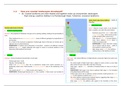
Robin Hood’s Bay Shore Platform – North of
Filey Bay
High energy waves
Flamborough Head & Filey Bay Fetch = distance of open water in one direction
from a coastline, over which the wind is blown
Structure of geology bands:
- Dominant waves from N & NE where fetch
Structure = the properties of individual rock types such as jointing, bedding, faulting & the permeability of
= over 1500km long – active marine erosion
rocks
of cliffs (at HWM within marine zone)
- These landforms lie on a discordant coastline – bands of different geologies lie perpendicular to - Cliffs retreat (0.25m / yr) to leave behind a
the shoreline rocky shore platform (500m) which is
- As a result of this structural arrangement, Flamborough Head & Filey Bay are formed due to evident at spring low tide
adjacent rocks of varied resistances - SIGNIFICANCE: If waves had lower energy
- SIGNIFICANCE: If coastline wasn’t discordant, if concordant – would be very different erosional rate of retreat could be slower – width of
landforms e.g. cove – hugely influential with regard to nature of erosional landform as this shore platform could be narrower
determines what landforms are formed - High energy waves modify the landform –
continue lower of the landform in future
Lithology: Tidal range
Lithology = chemical & physical characteristics of rock types Tidal range = the vertical difference in height between consecutive high & low waters over
a tidal cycle
- Flamborough head = Chalk
- Filey Bay = Kimmeridge Clay - The whole length of Robin Hood’s Bay is subject to marine erosion as every high
- Chalk is far more resistant than clay so experiences change from marine processes at a tide reaches the base of the cliffs at the back of the bay
significantly slower pace: chalk becomes promontory landform (due to the positioning of the - Tidal range = approx. 3.5m - formation of localised feature & ramp on N side of
bands) platform
- Clay: erosion rate of 0.5m / yr, Chalk: erosion rate of approx 0.2m / yr - SIGNIFICANCE: tidal range is very close to optimum tidal range (4m) for formation
- SIGNIFICANCE: Flamborough Head juts out 8km from coastline – if there wasn’t such variation in of localised feature (cliff & ramp)
rock resistance then it may not exist so far out to sea - If tidal range wasn’t near to optimum, erosion processes would spread over larger
area & shore platform would be more uniform
- This shore platform demonstrates localised features suggesting tidal range is very
influential factor in relation to these features
- Tidal range modifies the platform with regard to the formation of the micro-
features
2b. Coastal landforms are inter-related and together make up characteristic landscapes
- High energy coastline (Saltburn to Flamborough Head, Yorkshire): erosional landforms
Robin Hood’s Bay Shore Platform – North of
Filey Bay
High energy waves
Flamborough Head & Filey Bay Fetch = distance of open water in one direction
from a coastline, over which the wind is blown
Structure of geology bands:
- Dominant waves from N & NE where fetch
Structure = the properties of individual rock types such as jointing, bedding, faulting & the permeability of
= over 1500km long – active marine erosion
rocks
of cliffs (at HWM within marine zone)
- These landforms lie on a discordant coastline – bands of different geologies lie perpendicular to - Cliffs retreat (0.25m / yr) to leave behind a
the shoreline rocky shore platform (500m) which is
- As a result of this structural arrangement, Flamborough Head & Filey Bay are formed due to evident at spring low tide
adjacent rocks of varied resistances - SIGNIFICANCE: If waves had lower energy
- SIGNIFICANCE: If coastline wasn’t discordant, if concordant – would be very different erosional rate of retreat could be slower – width of
landforms e.g. cove – hugely influential with regard to nature of erosional landform as this shore platform could be narrower
determines what landforms are formed - High energy waves modify the landform –
continue lower of the landform in future
Lithology: Tidal range
Lithology = chemical & physical characteristics of rock types Tidal range = the vertical difference in height between consecutive high & low waters over
a tidal cycle
- Flamborough head = Chalk
- Filey Bay = Kimmeridge Clay - The whole length of Robin Hood’s Bay is subject to marine erosion as every high
- Chalk is far more resistant than clay so experiences change from marine processes at a tide reaches the base of the cliffs at the back of the bay
significantly slower pace: chalk becomes promontory landform (due to the positioning of the - Tidal range = approx. 3.5m - formation of localised feature & ramp on N side of
bands) platform
- Clay: erosion rate of 0.5m / yr, Chalk: erosion rate of approx 0.2m / yr - SIGNIFICANCE: tidal range is very close to optimum tidal range (4m) for formation
- SIGNIFICANCE: Flamborough Head juts out 8km from coastline – if there wasn’t such variation in of localised feature (cliff & ramp)
rock resistance then it may not exist so far out to sea - If tidal range wasn’t near to optimum, erosion processes would spread over larger
area & shore platform would be more uniform
- This shore platform demonstrates localised features suggesting tidal range is very
influential factor in relation to these features
- Tidal range modifies the platform with regard to the formation of the micro-
features