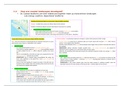
1.2. How are coastal landscapes developed?
2b. Coastal landforms are inter-related and together make up characteristic landscapes
- Low energy coastline: depositional landforms
Tombolo (Chesterman Beach on Vancouver Island, British Columbia)
Tombolo = sandbar that connects an offshore island to the mainland
Tombolo at Chesterman Beach connects Frank Island to Vancouver via a sandbar
Wave refraction around the island:
- Waves approaching Frank’s Island are forced to break by shallow water surrounding it
- Waves bend around island to the leeward side (S) as they approach
- This wave refraction creates a low energy environment on S of the island – deposition
Goose Spit (Comox on Vancouver Island, British Columbia) Positive feedback = an automated response to change in a system which generates further change
Spit = long narrow beaches of sand/shingle that are attached to the land at 1 end & - Positive feedback is created due to sediment build up at Frank’s island with increased friction which reduces
extend across a bay, estuary or indentation in the coastline velocity = encouraging further deposition
- Overtime, these sediments form a ridge that eventually became higher than sea level & connected the island to
Sediment supply: the mainland
- For a depositional landform to form = consistent sediment supply - SIGNIFICANCE: without refraction, tombolo wouldn’t form – low energy environments are needed for
- Goose spit has constant supply of Quadra Sands (unconsolidated material deposition & these conditions are on the leeward side of Frank’s Island
so easily eroded) from the 60m cliffs N along the coastline from Goose - Otherwise, the prevailing winds would just transport the sediment & deposit it further out causing a bar rather
Spit than a tombolo
- They’re unconsolidated as the cliffs are large areas of glacial till from the
Pleistocene period – spit grows by accretion Direction of LSD:
- SIGNIFICANCE: Due to material being unconsolidated this makes the - Drift – aligned beach prevailing winds from NW, determine direction of swash & movement of material via LSD
factor more significant as this glacial till is more easily susceptible to - Material moves N along coastline - S (towards wave shadow area/deposited material on leeward side of
erosional processes island) to feed into tombolo
- Factor is even more significant in regards its location: if the cliffs were not - SIGNIFICANCE: If LSD moved material away from the island, towards N, sediment wouldn’t meet the
located N of the coastline where the prevailing winds travel from NE, the deposited material in the wave shadow of the leeward side – tombolo might not have formed
spit would not be supplied with sediment
Location of Comox estuary:
- This is significant in the formation & modification of Goose Spit
- Strong current of the River Comox erodes distal end of spit, prevents
growth of spit across estuary
- Spit is susceptible to marine erosion processes, spit’s profile is modified
- SIGNIFICANCE: Sediment balance of spit could be affected – if net loss of
sediment by erosion > net gain by LSD, spit will start to shrink
- If this estuary wasn’t located in the same position the spit would continue
to grow across the waterway to the other land area = form offshore bar
2b. Coastal landforms are inter-related and together make up characteristic landscapes
- Low energy coastline: depositional landforms
Tombolo (Chesterman Beach on Vancouver Island, British Columbia)
Tombolo = sandbar that connects an offshore island to the mainland
Tombolo at Chesterman Beach connects Frank Island to Vancouver via a sandbar
Wave refraction around the island:
- Waves approaching Frank’s Island are forced to break by shallow water surrounding it
- Waves bend around island to the leeward side (S) as they approach
- This wave refraction creates a low energy environment on S of the island – deposition
Goose Spit (Comox on Vancouver Island, British Columbia) Positive feedback = an automated response to change in a system which generates further change
Spit = long narrow beaches of sand/shingle that are attached to the land at 1 end & - Positive feedback is created due to sediment build up at Frank’s island with increased friction which reduces
extend across a bay, estuary or indentation in the coastline velocity = encouraging further deposition
- Overtime, these sediments form a ridge that eventually became higher than sea level & connected the island to
Sediment supply: the mainland
- For a depositional landform to form = consistent sediment supply - SIGNIFICANCE: without refraction, tombolo wouldn’t form – low energy environments are needed for
- Goose spit has constant supply of Quadra Sands (unconsolidated material deposition & these conditions are on the leeward side of Frank’s Island
so easily eroded) from the 60m cliffs N along the coastline from Goose - Otherwise, the prevailing winds would just transport the sediment & deposit it further out causing a bar rather
Spit than a tombolo
- They’re unconsolidated as the cliffs are large areas of glacial till from the
Pleistocene period – spit grows by accretion Direction of LSD:
- SIGNIFICANCE: Due to material being unconsolidated this makes the - Drift – aligned beach prevailing winds from NW, determine direction of swash & movement of material via LSD
factor more significant as this glacial till is more easily susceptible to - Material moves N along coastline - S (towards wave shadow area/deposited material on leeward side of
erosional processes island) to feed into tombolo
- Factor is even more significant in regards its location: if the cliffs were not - SIGNIFICANCE: If LSD moved material away from the island, towards N, sediment wouldn’t meet the
located N of the coastline where the prevailing winds travel from NE, the deposited material in the wave shadow of the leeward side – tombolo might not have formed
spit would not be supplied with sediment
Location of Comox estuary:
- This is significant in the formation & modification of Goose Spit
- Strong current of the River Comox erodes distal end of spit, prevents
growth of spit across estuary
- Spit is susceptible to marine erosion processes, spit’s profile is modified
- SIGNIFICANCE: Sediment balance of spit could be affected – if net loss of
sediment by erosion > net gain by LSD, spit will start to shrink
- If this estuary wasn’t located in the same position the spit would continue
to grow across the waterway to the other land area = form offshore bar