

SGS 1 – Professional Conduct Issues and Courts
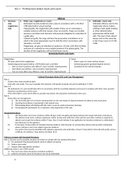
Offences
1. Summary 2. Either way- magistrates or crown 3. Indictable- crown only
only- - Defendant must be invited to enter a plea in accordance with s.17A MCA - Indictable offences start in the
magistrates 1980 (plea before venue hearing). magistrates where matters
only - If plead guilty, the magistrates will consider if they can or cannot give a relating to bail, public funding
suitable sentence with their powers, they can transfer. Mags can consider or other administrative
previous convictions and character and personal mitigation for reduction for preliminaries will be dealt
a guilty plea. with. The case is then almost
- If plead not guilty, the mags will hear the prosecution and defence as to always sent on the same day
which is the most appropriate court to hold the trial in accordance with to the Crown court (s.51 CDA
allocation s.19 MCA. 1998).
- Magistrates can give an indication of sentence s.20 and s.20A MCA on likely
outcome of a custodial or non-custodial sentence if he pleads guilty. The
decision of the magistrates will not bind future courts.
Sentencing Powers and Courts
Magistrates: Crown:
- All cases start in the magistrates - Hears cases of a more serious nature
- Sentencing powers governed by s.78 PCC(S)A and s.133 MCA - Sentencing powers granted depend and are
o One or more summary only offence- max 6 months’ imprisonment contained in the relevant statute.
o One either way offence- max 6 months’ imprisonment
o Two or more either way offences- max 12 months’ imprisonment
Criminal Procedure Rules 2015 and Case Management
Rule 1:
- Governs how cases should be dealt.
- Deal with cases justly. The court considers the interests of all parties involved not just the defendant (1.1(2)).
Rule 1.2:
- All participants of a case should deal with it in accordance with the overriding objective and ensure it complies with other rules, practice
directions and directions of the court.
- If the client fails to come to the office to provide instructions, this should be mentioned to the court.
Rule 3:
- Deals with case management.
a) The early indication of real issues meaning what are the real mattes in dispute between the defence and prosecution.
e) Ensuring that evidence is presented in the clearest way.
f) Discouraging delay and dealing with the case in a way to avoid unnecessary hearings.
g) Encouraging the participants to co-operate in the progression of the case
Standard Directions:
i) The Prosecution must serve evidence within 28 days of the not guilty plea being entered and comply with duty of disclosure.
ii) The Defence must serve a witness statement, within 14 days and notify the Crown and the court that a witness is required to
attend court to give live evidence within 7 days. Also, D must indicate if any application to introduce evidence to a defendant’s
bad character is to be opposed.
iii) D must give 14 days notice to introduce hearsay evidence, bad character of a prosecution witness and any other statements
where a witness is not to be called to give live evidence.
iv) Any point of law must be identified with skeleton arguments and authorities at least 21 days before trial and both parties serve a
certificate of readiness 7 days before trial (Rule 10.3).
Failure to Comply with Standard Directions:
Rule 3.5(6) sets out the possible sanctions for failure to comply with the standard directions
a) Fix, postpone bring forward extend cancel or adjourn a hearing
b) Make a costs order
c) Impose other appropriate sanctions
Additional notes to rule 3.5(6) include
a) The court may refuse the party to introduce evidence
b) Evidence the party wants to introduce may not be admissible
1
, SGS 1 – Professional Conduct Issues and Courts
c) Court may draw adverse inferences from late introduction of an issue or evidence.
Professional Conduct
- The SRA deals with all regulatory and disciplinary issues relating to solicitors.
- The SRA code relies on seven mandatory principles (the ‘principles’) which are the basis on which solicitors (and others) must
conduct themselves.
Seven Principles, act:
1. in a way that upholds the constitutional principle of the rule of law, and the proper administration of justice;
2. in a way that upholds public trust and confidence in the solicitors’ profession and in legal services provided by authorised
persons;
3. with independence;
4. with honesty;
5. with integrity;
6. in a way that encourages equality, diversity and inclusion;
7. in the best interests of each client.
Note: where two principles conflict, the principle which best serves the public interest preservers, especially one in relation to the
administration of justice.
Code Conduct for Solicitors (CCS):
1. Maintaining trust and acting fairly
2. Dispute resolution and proceedings before courts, tribunals and inquiries
3. Service and competence
4. Client money and assets
5. Referrals, introductions and separate businesses
6. Conflict, confidentiality and disclosure
7. Cooperation and accountability
8. When you are providing services to the public or a section of the public.
Conduct Issues for a Defence Solicitor
1. Being asked by a third party to represent a detainee at the police station
Considerations:
- CCS 1.1: provides you are free to decide whether to take on a particular client provided you do not unlawfully discriminate.
- CCS 3.1: you only act for a client on instructions from that client or someone authorised to provide instructions on their behalf.
- PACE COP C Annex B Para 4: access to a solicitor cannot be delayed on the grounds that they might advise the detainee not to
answer or the solicitor was initially asked to attend the police station by someone else.
Solution:
- The solicitor should call the police station and advise them you have been contacted. The police should then ask the detainee
and the police will call the Defence Solicitor Call Centre who will then contact you to instruct you to attend and advise the
client.
- The detainee should be told a solicitor has come to the police station at another’s request and must sign the custody record to
signify whether he wants to see the solicitor.
2. Conflicts of Interests
- CCS 6.2 You must not act in relation to a matter or particular aspect of it if you have a conflict of interest or a significant risk of
such a conflict in relation to that matter or aspect of it. Exceptions in (a) and (b) do not apply in criminal litigation.
- CCS 6.5- you cannot act for a client where the client has an adverse interest to an interest of another current or former client
or client of you or your business or employer for whom you or your business holds comfortable information which is material
to that matter.
- If advising two clients, think what your arguments will be and whether they will conflict each other. Can you maintain principle
7 of acting in the best interest of each client? Can you act for either of them?
- Governed by CCS 6.1 and 6.2.
Guidance
- A solicitor cannot act where there is an own interest conflict and/or where there is a client conflict.
- If there is a conflict or a risk of one, you must not act.
LSPNCI
2
Offences
1. Summary 2. Either way- magistrates or crown 3. Indictable- crown only
only- - Defendant must be invited to enter a plea in accordance with s.17A MCA - Indictable offences start in the
magistrates 1980 (plea before venue hearing). magistrates where matters
only - If plead guilty, the magistrates will consider if they can or cannot give a relating to bail, public funding
suitable sentence with their powers, they can transfer. Mags can consider or other administrative
previous convictions and character and personal mitigation for reduction for preliminaries will be dealt
a guilty plea. with. The case is then almost
- If plead not guilty, the mags will hear the prosecution and defence as to always sent on the same day
which is the most appropriate court to hold the trial in accordance with to the Crown court (s.51 CDA
allocation s.19 MCA. 1998).
- Magistrates can give an indication of sentence s.20 and s.20A MCA on likely
outcome of a custodial or non-custodial sentence if he pleads guilty. The
decision of the magistrates will not bind future courts.
Sentencing Powers and Courts
Magistrates: Crown:
- All cases start in the magistrates - Hears cases of a more serious nature
- Sentencing powers governed by s.78 PCC(S)A and s.133 MCA - Sentencing powers granted depend and are
o One or more summary only offence- max 6 months’ imprisonment contained in the relevant statute.
o One either way offence- max 6 months’ imprisonment
o Two or more either way offences- max 12 months’ imprisonment
Criminal Procedure Rules 2015 and Case Management
Rule 1:
- Governs how cases should be dealt.
- Deal with cases justly. The court considers the interests of all parties involved not just the defendant (1.1(2)).
Rule 1.2:
- All participants of a case should deal with it in accordance with the overriding objective and ensure it complies with other rules, practice
directions and directions of the court.
- If the client fails to come to the office to provide instructions, this should be mentioned to the court.
Rule 3:
- Deals with case management.
a) The early indication of real issues meaning what are the real mattes in dispute between the defence and prosecution.
e) Ensuring that evidence is presented in the clearest way.
f) Discouraging delay and dealing with the case in a way to avoid unnecessary hearings.
g) Encouraging the participants to co-operate in the progression of the case
Standard Directions:
i) The Prosecution must serve evidence within 28 days of the not guilty plea being entered and comply with duty of disclosure.
ii) The Defence must serve a witness statement, within 14 days and notify the Crown and the court that a witness is required to
attend court to give live evidence within 7 days. Also, D must indicate if any application to introduce evidence to a defendant’s
bad character is to be opposed.
iii) D must give 14 days notice to introduce hearsay evidence, bad character of a prosecution witness and any other statements
where a witness is not to be called to give live evidence.
iv) Any point of law must be identified with skeleton arguments and authorities at least 21 days before trial and both parties serve a
certificate of readiness 7 days before trial (Rule 10.3).
Failure to Comply with Standard Directions:
Rule 3.5(6) sets out the possible sanctions for failure to comply with the standard directions
a) Fix, postpone bring forward extend cancel or adjourn a hearing
b) Make a costs order
c) Impose other appropriate sanctions
Additional notes to rule 3.5(6) include
a) The court may refuse the party to introduce evidence
b) Evidence the party wants to introduce may not be admissible
1
, SGS 1 – Professional Conduct Issues and Courts
c) Court may draw adverse inferences from late introduction of an issue or evidence.
Professional Conduct
- The SRA deals with all regulatory and disciplinary issues relating to solicitors.
- The SRA code relies on seven mandatory principles (the ‘principles’) which are the basis on which solicitors (and others) must
conduct themselves.
Seven Principles, act:
1. in a way that upholds the constitutional principle of the rule of law, and the proper administration of justice;
2. in a way that upholds public trust and confidence in the solicitors’ profession and in legal services provided by authorised
persons;
3. with independence;
4. with honesty;
5. with integrity;
6. in a way that encourages equality, diversity and inclusion;
7. in the best interests of each client.
Note: where two principles conflict, the principle which best serves the public interest preservers, especially one in relation to the
administration of justice.
Code Conduct for Solicitors (CCS):
1. Maintaining trust and acting fairly
2. Dispute resolution and proceedings before courts, tribunals and inquiries
3. Service and competence
4. Client money and assets
5. Referrals, introductions and separate businesses
6. Conflict, confidentiality and disclosure
7. Cooperation and accountability
8. When you are providing services to the public or a section of the public.
Conduct Issues for a Defence Solicitor
1. Being asked by a third party to represent a detainee at the police station
Considerations:
- CCS 1.1: provides you are free to decide whether to take on a particular client provided you do not unlawfully discriminate.
- CCS 3.1: you only act for a client on instructions from that client or someone authorised to provide instructions on their behalf.
- PACE COP C Annex B Para 4: access to a solicitor cannot be delayed on the grounds that they might advise the detainee not to
answer or the solicitor was initially asked to attend the police station by someone else.
Solution:
- The solicitor should call the police station and advise them you have been contacted. The police should then ask the detainee
and the police will call the Defence Solicitor Call Centre who will then contact you to instruct you to attend and advise the
client.
- The detainee should be told a solicitor has come to the police station at another’s request and must sign the custody record to
signify whether he wants to see the solicitor.
2. Conflicts of Interests
- CCS 6.2 You must not act in relation to a matter or particular aspect of it if you have a conflict of interest or a significant risk of
such a conflict in relation to that matter or aspect of it. Exceptions in (a) and (b) do not apply in criminal litigation.
- CCS 6.5- you cannot act for a client where the client has an adverse interest to an interest of another current or former client
or client of you or your business or employer for whom you or your business holds comfortable information which is material
to that matter.
- If advising two clients, think what your arguments will be and whether they will conflict each other. Can you maintain principle
7 of acting in the best interest of each client? Can you act for either of them?
- Governed by CCS 6.1 and 6.2.
Guidance
- A solicitor cannot act where there is an own interest conflict and/or where there is a client conflict.
- If there is a conflict or a risk of one, you must not act.
LSPNCI
2


