Anatomie hoorcollege en werkcollege dinsdag 2 december .
‘De bekkengordel en het heupgewricht’
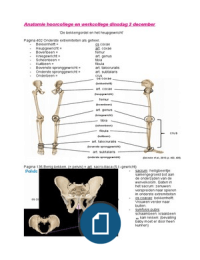
Pagina 402 Onderste extremiteiten als geheel.
- Bekkenhelft = os coxae
- Heupgewricht = art. coxae
- Bovenbeen = femur
- Kniegewricht = art. genus
- Scheenbeen = tibia
- Kuitbeen = fibula
- Bovenste spronggewricht = art. talocruralis
- Onderste spronggewricht = art. subtalaris
- Onderbeen = crus
os coxae
(bekkenhelft)
art. coxae
(heupgewricht)
femur
(bovenbeen)
art. genus
(kniegewricht)
tibia
(scheenbeen)
fibula
crus
(kuitbeen)
art. talocruralis
(bovenste spronggewricht)
art. subtalaris
(onderste spronggewricht) (Schunke et al., 2010; p. 402, 405)
Pagina 136 Benig bekken. (= pelvis) = art. sacro-iliaca (S.I.-gewricht)
Pelvis - sacrum: heiligbeentje:
sacrum samengegroeid bot aan
de onderzijden van de
wervelkolom. Gaten in
het sacrum: zenuwen:
verspreiden naar spieren
in onderste extremiteiten
os coxae os coxae - os coaxae: bekkenhelft.
Vrouwen verder naar
buiten.
- symfysis pubis:
schaambeen: kraakbeen
kan rekken: (bevalling
baby moet er door heen
symfysis pubis kunnen)
(Schunke et al., 2010; p. 136)
, stevig bovenlichaam valt erin, kleine bewegingsmogelijkheden.
Pagina 407 Beenderen van de bekkengordel (os coxae). Zijaanzicht
s coxae - os ilium: darmbeen (kom voor de
darmen)
- os ischii: zitbeen + zitbeenknobbel
os ilium - acetabulum: heupkomn(kogel)
- os pubis: schaambeen bot
Definitieve verbening tussen 14 en 16
acetabulum jaar dan is het gewricht in zijn geheel
aan elkaar gegroeid. Zitten met banden
en ligamenten aan elkaar. Anders kan de
heup uit de kom raken. Vergroeiing vindt
plaats in de heupkom
(Schunke et al. ,2010; p. 407)
eve verbening tussen 14 en 16 jaar
Pagina 430: Bewegingen in het heupgewricht: art. coxae. komgewricht.
Trochantor major: botstructuur die deel
uitmaakt van het dijbeen (femur)
Bevind zich proximaal (bovenaan)
lateraal (buitenzijde) van het dijbeen.
Uitsteeksel aan buitenkant van
bovenbeen.
Trochantor minor: uitstekend deel van
bot aan de binnenkant.
Bewegingsmogelijkheden van het heupgewricht: art. coxae.
‘De bekkengordel en het heupgewricht’
Pagina 402 Onderste extremiteiten als geheel.
- Bekkenhelft = os coxae
- Heupgewricht = art. coxae
- Bovenbeen = femur
- Kniegewricht = art. genus
- Scheenbeen = tibia
- Kuitbeen = fibula
- Bovenste spronggewricht = art. talocruralis
- Onderste spronggewricht = art. subtalaris
- Onderbeen = crus
os coxae
(bekkenhelft)
art. coxae
(heupgewricht)
femur
(bovenbeen)
art. genus
(kniegewricht)
tibia
(scheenbeen)
fibula
crus
(kuitbeen)
art. talocruralis
(bovenste spronggewricht)
art. subtalaris
(onderste spronggewricht) (Schunke et al., 2010; p. 402, 405)
Pagina 136 Benig bekken. (= pelvis) = art. sacro-iliaca (S.I.-gewricht)
Pelvis - sacrum: heiligbeentje:
sacrum samengegroeid bot aan
de onderzijden van de
wervelkolom. Gaten in
het sacrum: zenuwen:
verspreiden naar spieren
in onderste extremiteiten
os coxae os coxae - os coaxae: bekkenhelft.
Vrouwen verder naar
buiten.
- symfysis pubis:
schaambeen: kraakbeen
kan rekken: (bevalling
baby moet er door heen
symfysis pubis kunnen)
(Schunke et al., 2010; p. 136)
, stevig bovenlichaam valt erin, kleine bewegingsmogelijkheden.
Pagina 407 Beenderen van de bekkengordel (os coxae). Zijaanzicht
s coxae - os ilium: darmbeen (kom voor de
darmen)
- os ischii: zitbeen + zitbeenknobbel
os ilium - acetabulum: heupkomn(kogel)
- os pubis: schaambeen bot
Definitieve verbening tussen 14 en 16
acetabulum jaar dan is het gewricht in zijn geheel
aan elkaar gegroeid. Zitten met banden
en ligamenten aan elkaar. Anders kan de
heup uit de kom raken. Vergroeiing vindt
plaats in de heupkom
(Schunke et al. ,2010; p. 407)
eve verbening tussen 14 en 16 jaar
Pagina 430: Bewegingen in het heupgewricht: art. coxae. komgewricht.
Trochantor major: botstructuur die deel
uitmaakt van het dijbeen (femur)
Bevind zich proximaal (bovenaan)
lateraal (buitenzijde) van het dijbeen.
Uitsteeksel aan buitenkant van
bovenbeen.
Trochantor minor: uitstekend deel van
bot aan de binnenkant.
Bewegingsmogelijkheden van het heupgewricht: art. coxae.