Civil procedure
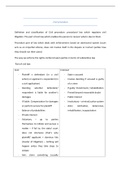
Definition and classification of Civil procedure: procedural law which regulates civil
litigation. The part of civil law which enables the person to recover what is due to them.
Procedure part of law which deals with enforcement: based on adversarial system (court
acts as an impartial referee, does not involve itself in the dispute or instruct parties how
they should run their cases)
The way we enforce the rights conferred upon parties in terms of substantive law
Part of civil law:
Civil: Criminal:
- Plaintiff v defendant (in a civil - State v accused
action) or applicant v respondent (in - Involve deciding if accused is guilty
a civil application) of a crime
- Deciding whether defendant/ - If guilty: Punishment / rehabilitation
respondent is liable for another’s - Proved beyond reasonable doubt
damages - Public interest
- If liable: Compensation for damages - Involuntary – criminal justice system
or perform service for plaintiff - Aims: retribution, deterrence,
- Balance of probabilities rehabilitation, incapacitation
- Private interest
- Voluntary – up to parties
themselves to initiate and pursue a
matter – if fail to, the state/ court
does not intervene (that’s why
plaintiff/ applicant = dominus litis
(master of litigation) – nothing will
happen unless they take steps to
initiate
- Aim: claim something (usually
, money) but also specific
performance etc.
Substantive law: Procedural law:
- Describes what rights, duties and - Describes how rights, duties and
remedies parties have in given remedies are enforced
circumstances - Mechanism for enforcement of
- Content and scope of rights substantive law and those rights
General principles/ guarantees of civil procedure:
- De Vos articles
- The basic requirements that must be met for procedural justice
- Important because: it gives us a better understanding of these specific rules of civil
procedure, they assist with meaningful reform, assists with comparative study
- Principles have a flexible nature thus can have exceptions
1. Audi et alteram partem: hear the other side, both parties have the opportunity
to place their cases before the court.
- Defendant is notified of proceedings, so they know the applicant is taking them to
court
- Both parties are mutually kept informed of nature and grounds of opponent’s case
e.g exchange of affidavits
- Both parties can present cases before court
- Exception: ex parte application – is a respondent but go to court behind their back,
approach the court ex parte e.g interdict to prohibit someone from doing something
or warrant or presumption of death (no respondent to come forward).
, 2. Access to an independent, impartial, and competent jury.
- Access: We have inefficiencies in legal system excluding many from proper leal
recourse
- Independent and impartial: doctrine of judicial immunity (judges enjoys immunity
from any liability they have caused because of their work (unless they acted in bad
faith)
- Competent: motivate decision on rational basis
3. Party control
- Process in hands of parties themselves
- SA has an adversarial system (parties fight for themselves)
- Inquisitorial system: courts play a role, lead investigator makes the finding
- High court is now getting more involved in matters
4. Direct oral communication between parties
- Both parties can cross examine witnesses for the opposing parties
- Exception: children, witnesses in different countries
5. Public hearings
- Usually in public interest to have these, justice should be seen to be done.
- We want public to know justice Is being done
6. Approach and judgement of court
7. Finality of judgment
8. Higher recourse
- Appeal or reviewed
, How do we recognise these guarantees?
- De vos: traditionally we could only identify by abstraction from specific statutory
provisions and court decisions
- Interim constitution: recognised these guarantees (444-445 DV)
- Constitution: found in section 34 – access to public, independent courts and right to
a fair trial
- Content (451-461 DV)
Impact of Constitution on civil procedural law:
- If these guarantees are recognised In Con then surely they should be present in law
of Civil procedure
- Coetzee v Government of RSA: certain provisions in magistrates court act relating to
debt collection was found unconstitutional. Declared to be invalid from date the
court made its order. A civil debtor could be imprisoned for failing to pay his debt. S
65 redrafted to bring debt collected procedures in line with the constitution.
- Again challenged in university of Stellenbosch legal aid clinic v minister of justice and
correctional services: various words in s 65 MCA provided for emolument
attachment orders. Declared unconstitutional as failure to provide judicial oversight
for this emolument attachment order process. Certain safeguards must be read with
s 65. All emolument attachment orders must now be issued through the court (not
through the clerks), court must also be satisfied it is just and equitable to grant the
order. Judicial oversight would lessen the harsh effects of such orders especially on
vulnerable, low-income debtors. All emolument attachment orders must now be
granted with judicial oversight.
- Institution of legal proceeding against certain organisations of the state Act: in
actions against police or defence force, prescription periods were much less than
normal prescription periods. Written legal action given in one month before legal
action instituted against police or DF. Many claimants denied legal relief because
they failed to comply with technical requirements. New act brought this area of civil
procedure in line with constitution.
Definition and classification of Civil procedure: procedural law which regulates civil
litigation. The part of civil law which enables the person to recover what is due to them.
Procedure part of law which deals with enforcement: based on adversarial system (court
acts as an impartial referee, does not involve itself in the dispute or instruct parties how
they should run their cases)
The way we enforce the rights conferred upon parties in terms of substantive law
Part of civil law:
Civil: Criminal:
- Plaintiff v defendant (in a civil - State v accused
action) or applicant v respondent (in - Involve deciding if accused is guilty
a civil application) of a crime
- Deciding whether defendant/ - If guilty: Punishment / rehabilitation
respondent is liable for another’s - Proved beyond reasonable doubt
damages - Public interest
- If liable: Compensation for damages - Involuntary – criminal justice system
or perform service for plaintiff - Aims: retribution, deterrence,
- Balance of probabilities rehabilitation, incapacitation
- Private interest
- Voluntary – up to parties
themselves to initiate and pursue a
matter – if fail to, the state/ court
does not intervene (that’s why
plaintiff/ applicant = dominus litis
(master of litigation) – nothing will
happen unless they take steps to
initiate
- Aim: claim something (usually
, money) but also specific
performance etc.
Substantive law: Procedural law:
- Describes what rights, duties and - Describes how rights, duties and
remedies parties have in given remedies are enforced
circumstances - Mechanism for enforcement of
- Content and scope of rights substantive law and those rights
General principles/ guarantees of civil procedure:
- De Vos articles
- The basic requirements that must be met for procedural justice
- Important because: it gives us a better understanding of these specific rules of civil
procedure, they assist with meaningful reform, assists with comparative study
- Principles have a flexible nature thus can have exceptions
1. Audi et alteram partem: hear the other side, both parties have the opportunity
to place their cases before the court.
- Defendant is notified of proceedings, so they know the applicant is taking them to
court
- Both parties are mutually kept informed of nature and grounds of opponent’s case
e.g exchange of affidavits
- Both parties can present cases before court
- Exception: ex parte application – is a respondent but go to court behind their back,
approach the court ex parte e.g interdict to prohibit someone from doing something
or warrant or presumption of death (no respondent to come forward).
, 2. Access to an independent, impartial, and competent jury.
- Access: We have inefficiencies in legal system excluding many from proper leal
recourse
- Independent and impartial: doctrine of judicial immunity (judges enjoys immunity
from any liability they have caused because of their work (unless they acted in bad
faith)
- Competent: motivate decision on rational basis
3. Party control
- Process in hands of parties themselves
- SA has an adversarial system (parties fight for themselves)
- Inquisitorial system: courts play a role, lead investigator makes the finding
- High court is now getting more involved in matters
4. Direct oral communication between parties
- Both parties can cross examine witnesses for the opposing parties
- Exception: children, witnesses in different countries
5. Public hearings
- Usually in public interest to have these, justice should be seen to be done.
- We want public to know justice Is being done
6. Approach and judgement of court
7. Finality of judgment
8. Higher recourse
- Appeal or reviewed
, How do we recognise these guarantees?
- De vos: traditionally we could only identify by abstraction from specific statutory
provisions and court decisions
- Interim constitution: recognised these guarantees (444-445 DV)
- Constitution: found in section 34 – access to public, independent courts and right to
a fair trial
- Content (451-461 DV)
Impact of Constitution on civil procedural law:
- If these guarantees are recognised In Con then surely they should be present in law
of Civil procedure
- Coetzee v Government of RSA: certain provisions in magistrates court act relating to
debt collection was found unconstitutional. Declared to be invalid from date the
court made its order. A civil debtor could be imprisoned for failing to pay his debt. S
65 redrafted to bring debt collected procedures in line with the constitution.
- Again challenged in university of Stellenbosch legal aid clinic v minister of justice and
correctional services: various words in s 65 MCA provided for emolument
attachment orders. Declared unconstitutional as failure to provide judicial oversight
for this emolument attachment order process. Certain safeguards must be read with
s 65. All emolument attachment orders must now be issued through the court (not
through the clerks), court must also be satisfied it is just and equitable to grant the
order. Judicial oversight would lessen the harsh effects of such orders especially on
vulnerable, low-income debtors. All emolument attachment orders must now be
granted with judicial oversight.
- Institution of legal proceeding against certain organisations of the state Act: in
actions against police or defence force, prescription periods were much less than
normal prescription periods. Written legal action given in one month before legal
action instituted against police or DF. Many claimants denied legal relief because
they failed to comply with technical requirements. New act brought this area of civil
procedure in line with constitution.