B Explore the effect of activity on respiration in humans and
factors that can affect respiratory pathways
The stages involved in the human respiratory pathway
Introduction
,Glycolysis
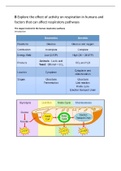
Glycolysis (inner membrane), (outer membrane), (cristae), (matrix = link reaction & kerbs cycle)
Glycolysis, which takes place in the cytoplasm, is the first step of aerobic respiration. Glycolysis
breaks down glucose, a six-carbon molecule, into two three-carbon pyruvate molecules. This is an
anaerobic mechanism that is active in both aerobic and anaerobic respiration pathways because it
does not contain oxygen.
The phosphate groups from two molecules of ATP are used to phosphorylate glucose. ADP and
inorganic phosphate are formed as ATP is hydrolyzed. This produces an unstable molecule that
breaks down into two three-carbon molecules known as triose phosphate (TP). To transform TP to
pyruvate, hydrogen is extracted from it. To form reduced NAD, the hydrogen is moved to a coenzyme
called NAD (NADH). The elimination of hydrogen from TP causes it to oxidise. The pyruvate passes
into the mitochondria for the next step of respiration, the connection reaction, while the decreased
NAD is used in the last stage of aerobic respiration, oxidative phosphorylation.
Four molecules of ATP were formed when triose phosphate was converted to pyruvate. Since two
molecules were used to phosphorylate glucose in the first step, glycolysis results in a net gain of two
ATP molecules.
Glycolysis is the breakdown of carbohydrates into sugars.
This is the initial step of aerobic respiration, which takes place in the cell's cytoplasm. Glycolysis is the
process of converting glucose into pyruvates through a number of stages.
Glycolysis includes the following steps:
1. Phosphorylation activates glucose in the first phase of glycolysis. This necessitated the conversion
of ATP to ADP+ Pi (to provide the phosphate)
2. The phosphorylated glucose is divided into two molecules of triose phosphate.
3. A triose Phosphates are then converted to pyruvates via oxidation. The hydrogen carrier molecules
were converted to NAD to NADH2 as a result of the loss of an H. At this point, ATP is also created
directly.
, Reason for this:
The phosphate group of two molecules of ATP is utilised to phosphorlyate glucose. The ATP is
hydrolyzed after ADP and inorganic phosphate are produced. This creates an unstable molecule that
can be broken down into two or three carbon molecules known as triose phosphates. The hydrogen
molecule is removed to convert them to pyruvetes. The pyruvates can then enter the mitochondria
for the link reaction, the next stage of respiration. The reduced NAD is utilised in the oxidative
phosphorylation step of aerobic respiration.
Glycolysis produces two ATP molecules, two NADH molecules, and two pyruvate molecules.
Why is it significant: Glycolasis is crucial because glucose is the body's primary source of energy, and
also produces vital intermediates for other metabolic processes. The coenzyme NAD is reduced to
NAD (NADH), which is subsequently employed in the electron transport chain, the last stage of
respiration. The reduced NAD can subsequently transport electrons to the oxidative phosphorylation
electron transport chain, as well as hydrogen ions for chemosmosis. Pyruvates are generated in two
molecules. These are necessary to continue the next step of aerobic respiration, which produces
lactose and alcohol, as well as to allow reduced NAD to be oxidised back into NAD and employed in
glycolysis again.
Link reaction
The hydrogen is transferred to a coenzyme called NAD
to form reduced NAD (NADH). The oxidation of TP is
caused by the removal of hydrogen. The pyruvate is
transported into the mitochondria for the attachment
reaction, while the reduced NAD is used in the final
stage of aerobic respiration, oxidative phosphorylation.
As triose phosphate is converted to pyruvate, four
molecules of ATP are formed. Glycolysis produces a net
gain of two ATP molecules since two molecules were
used to phosphorylate glucose in the first step.
Pyruvate still carries energy, and it is transformed to
acetyl co A via the link reaction. The pyruvate is oxidised, and the hydrogen loss decreases the
hydrogen transporter NAD to generate reduced NAD (NADH2), as well as a molecule of coenzyme A.
In this process, one molecule of CO2 is lost.
In the link reaction, no ATP is created directly.
The yield of the link reaction per gramme of glucose is:
2 reduced NAD, which will be oxidatively phosphorylated to create ATP.
acetlycoenzyme A is a kind of acetyl coenzyme.
CO2 levels are 2
factors that can affect respiratory pathways
The stages involved in the human respiratory pathway
Introduction
,Glycolysis
Glycolysis (inner membrane), (outer membrane), (cristae), (matrix = link reaction & kerbs cycle)
Glycolysis, which takes place in the cytoplasm, is the first step of aerobic respiration. Glycolysis
breaks down glucose, a six-carbon molecule, into two three-carbon pyruvate molecules. This is an
anaerobic mechanism that is active in both aerobic and anaerobic respiration pathways because it
does not contain oxygen.
The phosphate groups from two molecules of ATP are used to phosphorylate glucose. ADP and
inorganic phosphate are formed as ATP is hydrolyzed. This produces an unstable molecule that
breaks down into two three-carbon molecules known as triose phosphate (TP). To transform TP to
pyruvate, hydrogen is extracted from it. To form reduced NAD, the hydrogen is moved to a coenzyme
called NAD (NADH). The elimination of hydrogen from TP causes it to oxidise. The pyruvate passes
into the mitochondria for the next step of respiration, the connection reaction, while the decreased
NAD is used in the last stage of aerobic respiration, oxidative phosphorylation.
Four molecules of ATP were formed when triose phosphate was converted to pyruvate. Since two
molecules were used to phosphorylate glucose in the first step, glycolysis results in a net gain of two
ATP molecules.
Glycolysis is the breakdown of carbohydrates into sugars.
This is the initial step of aerobic respiration, which takes place in the cell's cytoplasm. Glycolysis is the
process of converting glucose into pyruvates through a number of stages.
Glycolysis includes the following steps:
1. Phosphorylation activates glucose in the first phase of glycolysis. This necessitated the conversion
of ATP to ADP+ Pi (to provide the phosphate)
2. The phosphorylated glucose is divided into two molecules of triose phosphate.
3. A triose Phosphates are then converted to pyruvates via oxidation. The hydrogen carrier molecules
were converted to NAD to NADH2 as a result of the loss of an H. At this point, ATP is also created
directly.
, Reason for this:
The phosphate group of two molecules of ATP is utilised to phosphorlyate glucose. The ATP is
hydrolyzed after ADP and inorganic phosphate are produced. This creates an unstable molecule that
can be broken down into two or three carbon molecules known as triose phosphates. The hydrogen
molecule is removed to convert them to pyruvetes. The pyruvates can then enter the mitochondria
for the link reaction, the next stage of respiration. The reduced NAD is utilised in the oxidative
phosphorylation step of aerobic respiration.
Glycolysis produces two ATP molecules, two NADH molecules, and two pyruvate molecules.
Why is it significant: Glycolasis is crucial because glucose is the body's primary source of energy, and
also produces vital intermediates for other metabolic processes. The coenzyme NAD is reduced to
NAD (NADH), which is subsequently employed in the electron transport chain, the last stage of
respiration. The reduced NAD can subsequently transport electrons to the oxidative phosphorylation
electron transport chain, as well as hydrogen ions for chemosmosis. Pyruvates are generated in two
molecules. These are necessary to continue the next step of aerobic respiration, which produces
lactose and alcohol, as well as to allow reduced NAD to be oxidised back into NAD and employed in
glycolysis again.
Link reaction
The hydrogen is transferred to a coenzyme called NAD
to form reduced NAD (NADH). The oxidation of TP is
caused by the removal of hydrogen. The pyruvate is
transported into the mitochondria for the attachment
reaction, while the reduced NAD is used in the final
stage of aerobic respiration, oxidative phosphorylation.
As triose phosphate is converted to pyruvate, four
molecules of ATP are formed. Glycolysis produces a net
gain of two ATP molecules since two molecules were
used to phosphorylate glucose in the first step.
Pyruvate still carries energy, and it is transformed to
acetyl co A via the link reaction. The pyruvate is oxidised, and the hydrogen loss decreases the
hydrogen transporter NAD to generate reduced NAD (NADH2), as well as a molecule of coenzyme A.
In this process, one molecule of CO2 is lost.
In the link reaction, no ATP is created directly.
The yield of the link reaction per gramme of glucose is:
2 reduced NAD, which will be oxidatively phosphorylated to create ATP.
acetlycoenzyme A is a kind of acetyl coenzyme.
CO2 levels are 2