Discovering Statistics: Multiple Choice Testbank 1
TESTBANK MULTIPLE CHOICE
QUESTIONS
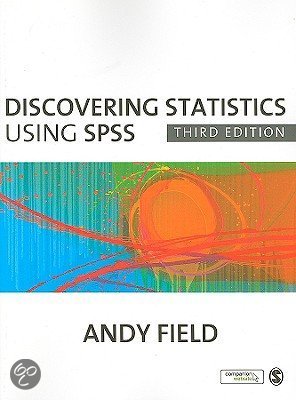
To be used in conjunction with Field, A. P. (2009). Discovering Statistics Using SPSS (third
edition). London: Sage. Questions are listed under the chapter they best represent; however,
they should not be given to students with the chapter numbers indicated (or else it will make
the answers to some questions fairly obvious!). Correct answers are denoted with a *.
This Testbank is designed to assist instructors in their assessment of students, but it may not
provide all of the questions necessary to run a full examination (for e.g. some chapters have
more questions than others). Also, Instructors should take full responsibility for the use of this
Testbank in their course assessment. It is intended to provide an aid to teaching and
assessment not a direct replacement for an examination paper.
Questions for Ch 19 Multilevel Linear Models are not yet included but will be completed shortly.
Ch 1 Why is my evil lecturer forcing me to learn statistics?
&
Ch 2 Everything you wanted to know about Statistics
1. The standard deviation is the square root of
a. the coefficient of determination
b. sum of squares
c. variance*
d. range
2. A frequency distribution in which low scores are most frequent (i.e. bars on the graph
are highest on the left hand side) is said to be:
a. Positively skewed*
b. Leptokurtic
c. Platykurtic
d. Negatively skewed
3. If the scores on a test have a mean of 26 and a standard deviation of 4, what is the z-
score for a score of 18?
a. –2*
b. 11
c. 2
d. –1.41
By Dr. Andy Field, Sussex University and Dr Helen Gavin, University of the West of England
,Discovering Statistics: Multiple Choice Testbank 2
4. Which of the following is true about a 95% confidence interval of the mean of a given
sample:
a. 95 out of 100 sample means will fall within the limits of the confidence interval.
b. There is a 95% chance that the population mean will fall within the limits of the
confidence interval.*
c. 95 out of 100 population means will fall within the limits of the confidence
interval.
d. There is a 0.05 probability that the population mean falls within the limits of the
confidence interval.
5. What does a significant test statistic tell us?
a. There is an important effect.
b. The hull hypothesis is false.
c. There is an effect in the population of sufficient magnitude to be scientifically
interesting.*
d. All of the above.
6. A type I error is when
a. We conclude that there is a meaningful effect in the population when in fact
there is not.*
b. We conclude that there is not a meaningful effect in the population when in fact
there is.
c. We conclude that the test statistic is significant when in fact it is not.
d. The data we have typed into SPSS is different to the data collected.
7. If we calculated an effect size and found it was r = .42 which expression would best
describe the size of effect.
a. small
b. small-to-medium
c. large
d. medium-to-large*
8. Which of these statements about statistical power is not true:
a. Power is the ability of a test to detect an effect.
b. We can use power to determine how big a sample is required to detect an effect
of a certain size.
c. Power is linked to the probability of making a type I error.
d. All of the above are true.*
By Dr. Andy Field, Sussex University and Dr Helen Gavin, University of the West of England
,Discovering Statistics: Multiple Choice Testbank 3
9. What is a significance level?
a. The level at which statistics finally become meaningful to a stein
b. The impact that reporting statistics incorrectly could have
c. A pre-set level of probability that the results are correct
d. A pre-set level of probability at which it will be accepted that results are due to
chance or not. *
10. What is the conventional level of probability that is often accepted when conducting
statistical tests?
a. 0.1
b. 0.05 *
c. 0.5
d. 0.001
11. A null hypothesis:
a. states that the experimental treatment will have an effect
b. is rarely used in experiments
c. predicts that the experimental treatment will have no effect *
d. none of the above
12. Which of the following terms best describes the sentence: ‘In a blind-tasting, people will
not be able to tell the difference between margarine and butter’
a. a directional hypothesis
b. an operational definition
c. a null hypothesis
d. a non-directional hypothesis *
13. The aim of experimental research is to:
a. be a phenomenon
b. cause a phenomenon
c. investigate what caused a phenomenon *
d. to prevent a phenomenon
14. ‘Sleep derivation will reduce the ability to perform a complex cognitive task’. State the
direction of this hypothesis:
By Dr. Andy Field, Sussex University and Dr Helen Gavin, University of the West of England
, Discovering Statistics: Multiple Choice Testbank 4
a. Directional *
b. Non-Directional
c. Both
d. Not enough information given
15. In experiments the independent variable is manipulated to determine:
a. effects on the individual participants
b. effect on the dependent variable *
c. effects of certain stimuli
d. relation to other variables
By Dr. Andy Field, Sussex University and Dr Helen Gavin, University of the West of England
TESTBANK MULTIPLE CHOICE
QUESTIONS
To be used in conjunction with Field, A. P. (2009). Discovering Statistics Using SPSS (third
edition). London: Sage. Questions are listed under the chapter they best represent; however,
they should not be given to students with the chapter numbers indicated (or else it will make
the answers to some questions fairly obvious!). Correct answers are denoted with a *.
This Testbank is designed to assist instructors in their assessment of students, but it may not
provide all of the questions necessary to run a full examination (for e.g. some chapters have
more questions than others). Also, Instructors should take full responsibility for the use of this
Testbank in their course assessment. It is intended to provide an aid to teaching and
assessment not a direct replacement for an examination paper.
Questions for Ch 19 Multilevel Linear Models are not yet included but will be completed shortly.
Ch 1 Why is my evil lecturer forcing me to learn statistics?
&
Ch 2 Everything you wanted to know about Statistics
1. The standard deviation is the square root of
a. the coefficient of determination
b. sum of squares
c. variance*
d. range
2. A frequency distribution in which low scores are most frequent (i.e. bars on the graph
are highest on the left hand side) is said to be:
a. Positively skewed*
b. Leptokurtic
c. Platykurtic
d. Negatively skewed
3. If the scores on a test have a mean of 26 and a standard deviation of 4, what is the z-
score for a score of 18?
a. –2*
b. 11
c. 2
d. –1.41
By Dr. Andy Field, Sussex University and Dr Helen Gavin, University of the West of England
,Discovering Statistics: Multiple Choice Testbank 2
4. Which of the following is true about a 95% confidence interval of the mean of a given
sample:
a. 95 out of 100 sample means will fall within the limits of the confidence interval.
b. There is a 95% chance that the population mean will fall within the limits of the
confidence interval.*
c. 95 out of 100 population means will fall within the limits of the confidence
interval.
d. There is a 0.05 probability that the population mean falls within the limits of the
confidence interval.
5. What does a significant test statistic tell us?
a. There is an important effect.
b. The hull hypothesis is false.
c. There is an effect in the population of sufficient magnitude to be scientifically
interesting.*
d. All of the above.
6. A type I error is when
a. We conclude that there is a meaningful effect in the population when in fact
there is not.*
b. We conclude that there is not a meaningful effect in the population when in fact
there is.
c. We conclude that the test statistic is significant when in fact it is not.
d. The data we have typed into SPSS is different to the data collected.
7. If we calculated an effect size and found it was r = .42 which expression would best
describe the size of effect.
a. small
b. small-to-medium
c. large
d. medium-to-large*
8. Which of these statements about statistical power is not true:
a. Power is the ability of a test to detect an effect.
b. We can use power to determine how big a sample is required to detect an effect
of a certain size.
c. Power is linked to the probability of making a type I error.
d. All of the above are true.*
By Dr. Andy Field, Sussex University and Dr Helen Gavin, University of the West of England
,Discovering Statistics: Multiple Choice Testbank 3
9. What is a significance level?
a. The level at which statistics finally become meaningful to a stein
b. The impact that reporting statistics incorrectly could have
c. A pre-set level of probability that the results are correct
d. A pre-set level of probability at which it will be accepted that results are due to
chance or not. *
10. What is the conventional level of probability that is often accepted when conducting
statistical tests?
a. 0.1
b. 0.05 *
c. 0.5
d. 0.001
11. A null hypothesis:
a. states that the experimental treatment will have an effect
b. is rarely used in experiments
c. predicts that the experimental treatment will have no effect *
d. none of the above
12. Which of the following terms best describes the sentence: ‘In a blind-tasting, people will
not be able to tell the difference between margarine and butter’
a. a directional hypothesis
b. an operational definition
c. a null hypothesis
d. a non-directional hypothesis *
13. The aim of experimental research is to:
a. be a phenomenon
b. cause a phenomenon
c. investigate what caused a phenomenon *
d. to prevent a phenomenon
14. ‘Sleep derivation will reduce the ability to perform a complex cognitive task’. State the
direction of this hypothesis:
By Dr. Andy Field, Sussex University and Dr Helen Gavin, University of the West of England
, Discovering Statistics: Multiple Choice Testbank 4
a. Directional *
b. Non-Directional
c. Both
d. Not enough information given
15. In experiments the independent variable is manipulated to determine:
a. effects on the individual participants
b. effect on the dependent variable *
c. effects of certain stimuli
d. relation to other variables
By Dr. Andy Field, Sussex University and Dr Helen Gavin, University of the West of England