How does Stevenson present the dark side of nature in Dr. Jekyll and Mr. Hyde?
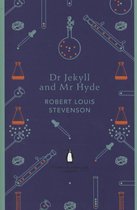
In the Gothic novella, Dr. Jekyll and Mr. Hyde, Stevenson explores his ideas about the dark
side of human nature through psychology and his own personal beliefs.
In Chapter 10, Henry Jekyll’s Full Statement of the Case, Stevenson uses atavism to
explore the dark side of nature through the character of Edward Hyde. Atavism, the fear that
we will return to an ancestral, primitive state, is perfectly embodied by Hyde, who is said to
leave an “imprint of deformity and decay”. This coincides with Lombroso’s theory of
criminals having a certain appearance, as Hyde is said to be “deformed” and “so ugly” at the
height of his crimes. The “deformity and decay” of Hyde’s appearance suggests that his
dark nature is reflected by his physical appearance, which can still be seen in many modern
villains in fiction. This implies that the dark side of nature can be reflected physically,
warning of danger. Although these theories are now considered outdated and
unsubstantiated, Hyde’s “deformed” and “ugly” appearance does reflect his violent and dark
nature, creating a sense of unease whenever Hyde is described. This anxiety is a result of
the uncanny valley, humans’ innate fear of those that appear to be human, but are not, such
as hyperrealistic robots, as Hyde often appears to be more animal than man, to the extent
of Enfield stating, “It was not like a man; it was like some damned Juggernaut.”
Despite Hyde’s apparent role as the villain of the novella, Stevenson begins to introduce his
own beliefs about the dark side of nature in the novella after the death of Dr. Lanyon. We
are led to believe that Lanyon died from the shock of witnessing the transformation of his
former friend, Jekyll, into Hyde, as a result of Lanyon’s likely knowledge of Hyde’s violent
crimes. However, Lanyon’s death could have actually resulted from the realisation that Dr.
Jekyll, a professional who is supposed to have a strong moral compass, is actually the true
In the Gothic novella, Dr. Jekyll and Mr. Hyde, Stevenson explores his ideas about the dark
side of human nature through psychology and his own personal beliefs.
In Chapter 10, Henry Jekyll’s Full Statement of the Case, Stevenson uses atavism to
explore the dark side of nature through the character of Edward Hyde. Atavism, the fear that
we will return to an ancestral, primitive state, is perfectly embodied by Hyde, who is said to
leave an “imprint of deformity and decay”. This coincides with Lombroso’s theory of
criminals having a certain appearance, as Hyde is said to be “deformed” and “so ugly” at the
height of his crimes. The “deformity and decay” of Hyde’s appearance suggests that his
dark nature is reflected by his physical appearance, which can still be seen in many modern
villains in fiction. This implies that the dark side of nature can be reflected physically,
warning of danger. Although these theories are now considered outdated and
unsubstantiated, Hyde’s “deformed” and “ugly” appearance does reflect his violent and dark
nature, creating a sense of unease whenever Hyde is described. This anxiety is a result of
the uncanny valley, humans’ innate fear of those that appear to be human, but are not, such
as hyperrealistic robots, as Hyde often appears to be more animal than man, to the extent
of Enfield stating, “It was not like a man; it was like some damned Juggernaut.”
Despite Hyde’s apparent role as the villain of the novella, Stevenson begins to introduce his
own beliefs about the dark side of nature in the novella after the death of Dr. Lanyon. We
are led to believe that Lanyon died from the shock of witnessing the transformation of his
former friend, Jekyll, into Hyde, as a result of Lanyon’s likely knowledge of Hyde’s violent
crimes. However, Lanyon’s death could have actually resulted from the realisation that Dr.
Jekyll, a professional who is supposed to have a strong moral compass, is actually the true