Ryan Mulcahy
Hess’ law states that regardless of the amount of different stages of a reaction, the
total enthalpy change for a reaction is the final sum of all changes. Hess’ law states
that enthalpy is a state function (Chemistry LibreTexts, 2018).
Thermodynamic quantity is the same as the total heat content within a system. It is
the equivalent to the internal energy of the system, added by the product of pressure
and volume. The change of enthalpy is associated with a particular chemical process
(Chemistry LibreTexts, 2018).
There are multiple changes that can occur in enthalpy, this can me be determined by
reacting different solutions in a polystyrene cup. Enthalpy can be measured by
neutralisation by using hydrochloric acid and sodium hydroxide solution.
The start of this experiment was putting a base inside of a polystyrene cup; this was
Measure 25cm3 of 2.0 mol dm-3 hydrochloric acid. This was left for five minutes
before measuring the initial temperature. After this was recorded, 25cm 3 of 2.0 mol
dm-3 sodium hydroxide solution was placed into a measuring cylinder, and then the
temperature was taken. This mix was then left for another five minutes before
recording this new temperature.
It is important to note that both, the acid and base have been in room temperature
for numerous hours, so therefore it is safe to assume that they are both recorded at
room temperature.
Once the five minute mark has been reached, the base and acid should be mixed
into the calorimeter. Once added, this should also be recorded every thirty seconds
and this should be done for a total of ten minutes.
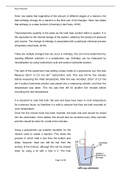
Using a polystyrene cup enables insulation for the
mixture used to create a reaction. This slows the
process in which heat is lost from the bottom and
sides; however, heat can still be lost from the
surface of the mixture, although this can be slowed
down by using a lid with a hole in it. The hole
Page 1 of 6
, Ryan Mulcahy
enables enough room for the thermometer to be inserted. Any heat that is produced
can be measured.
Any heat losses that have occurred during the reaction can be plotted onto a graph
by using a cooling curve (Umich.edu, 2018).
Exothermic reactions release heat into the surroundings, this reaction will cause a
decrease in enthalpy due to the heat leaving. Endothermic reactions are the
opposite; there will be an increase in heat which will increase the enthalpy Khan
Academy. (2018).
There should always be health and safety evaluations and assessments prior to the
experiment occurring. The major issue that could happen would be that the
polystyrene cup could be knocked over and spilling, this is due to the surface it is on;
it could be on an unstable surface. In order to prevent this, it should be placed on a
flat stable surface, such as a table. During this experiment, there was no lid placed
on the cup, therefore, the substance could have caused an exothermic reaction as
there was no insulation, furthermore, the substance could have been spilled if the
cup was knocked over. Another risk were chairs, this was due to the experiment
being undertaken within a class room. Chairs are an easy hazard that could be
avoidable as they could have been tucked away under table or area that will not be
in use.
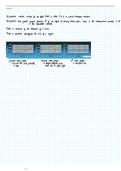
This table will demonstrate how hydrochloric, the base and sodium hydroxide
change. These results show the temperature of the hydrochloric acid and sodium
hydroxide in their own surroundings and then how they decrease as the time scale
went on. When the acid and base were mixed, this then changed as the temperature
increased 1.5 Celsius after a total of 6.5 minutes. Due to the rise of the temperature,
this is an endothermic reaction. This corresponds to objectives of the experiment to
see what reaction will occur.
Page 2 of 6
Hess’ law states that regardless of the amount of different stages of a reaction, the
total enthalpy change for a reaction is the final sum of all changes. Hess’ law states
that enthalpy is a state function (Chemistry LibreTexts, 2018).
Thermodynamic quantity is the same as the total heat content within a system. It is
the equivalent to the internal energy of the system, added by the product of pressure
and volume. The change of enthalpy is associated with a particular chemical process
(Chemistry LibreTexts, 2018).
There are multiple changes that can occur in enthalpy, this can me be determined by
reacting different solutions in a polystyrene cup. Enthalpy can be measured by
neutralisation by using hydrochloric acid and sodium hydroxide solution.
The start of this experiment was putting a base inside of a polystyrene cup; this was
Measure 25cm3 of 2.0 mol dm-3 hydrochloric acid. This was left for five minutes
before measuring the initial temperature. After this was recorded, 25cm 3 of 2.0 mol
dm-3 sodium hydroxide solution was placed into a measuring cylinder, and then the
temperature was taken. This mix was then left for another five minutes before
recording this new temperature.
It is important to note that both, the acid and base have been in room temperature
for numerous hours, so therefore it is safe to assume that they are both recorded at
room temperature.
Once the five minute mark has been reached, the base and acid should be mixed
into the calorimeter. Once added, this should also be recorded every thirty seconds
and this should be done for a total of ten minutes.
Using a polystyrene cup enables insulation for the
mixture used to create a reaction. This slows the
process in which heat is lost from the bottom and
sides; however, heat can still be lost from the
surface of the mixture, although this can be slowed
down by using a lid with a hole in it. The hole
Page 1 of 6
, Ryan Mulcahy
enables enough room for the thermometer to be inserted. Any heat that is produced
can be measured.
Any heat losses that have occurred during the reaction can be plotted onto a graph
by using a cooling curve (Umich.edu, 2018).
Exothermic reactions release heat into the surroundings, this reaction will cause a
decrease in enthalpy due to the heat leaving. Endothermic reactions are the
opposite; there will be an increase in heat which will increase the enthalpy Khan
Academy. (2018).
There should always be health and safety evaluations and assessments prior to the
experiment occurring. The major issue that could happen would be that the
polystyrene cup could be knocked over and spilling, this is due to the surface it is on;
it could be on an unstable surface. In order to prevent this, it should be placed on a
flat stable surface, such as a table. During this experiment, there was no lid placed
on the cup, therefore, the substance could have caused an exothermic reaction as
there was no insulation, furthermore, the substance could have been spilled if the
cup was knocked over. Another risk were chairs, this was due to the experiment
being undertaken within a class room. Chairs are an easy hazard that could be
avoidable as they could have been tucked away under table or area that will not be
in use.
This table will demonstrate how hydrochloric, the base and sodium hydroxide
change. These results show the temperature of the hydrochloric acid and sodium
hydroxide in their own surroundings and then how they decrease as the time scale
went on. When the acid and base were mixed, this then changed as the temperature
increased 1.5 Celsius after a total of 6.5 minutes. Due to the rise of the temperature,
this is an endothermic reaction. This corresponds to objectives of the experiment to
see what reaction will occur.
Page 2 of 6