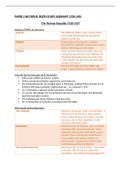
PAPER 1 SECTION B: DEPTH STUDY GERMANY 1918-1945
The Weimar Republic 1918-1929
Impacts of WW1 on Germany
Anarchy Demobilised soldiers were coming home
and joining demonstrations against the
Kaiser and the war
Political Kaiser had run Germany as a military
dictatorship, opposition leaders were put in
prison, Reichstag was very weak
Physical Many Germans faced starvation, this was
caused because farmers were fighting and
the British blockaded German ports 1916-
1918, around 750,000 Germans died from
hunger and disease
Psychological The war left many Germans bitter and
angry – they looked for someone to blame
How did the Germans get rid of the Kaiser?
Sailors and soldiers started to mutiny
Strikes and demonstrations against the war broke out
The Social Democrats, the leading party in Reichstag, realised if they did not act an
extreme left-wing revolution might break out – as in Russia in 1917
On 9 November a general strike took place in Berlin
To counter this danger the Social Democrats announced the Kaiser had abdicated
and they had taken control
The following day Kaiser Wilhem II fled into exile
On 11 November an armistice was signed with the Allies
Who would control Germany?
The Freikorps Wanted a strong gvt. with a strong leader, a
return to the former govt. with a proud
army, united by their ideas about a strong
Germany and in their opposition to left-
wing and Spartacists ideas.
Spartacists Wanted to get rid of Kaiser, start a socialist
revolution like Communist Russia, some
wanted to seize power while Berlin was in
turmoil, Rosa Luxembourg wanted to be
more patient and wait for workers to
distrust Ebert’s government, led by Rosa
Luxembourg and Karl Liebknecht
The Social Democrats Wanted to get rid of the Kaiser , were quite
moderate, did not want a communist
revolution, were afraid of losing support of
, the elite who had been so important to
German success before WW1, were quite
united but some left the SD when Ebert set
up the Freikorps to keep control.
The Spartacist Rising – January 1919
5th Jan 1919
Berlin govt. headquarters
The Spartacists took control of the HQ but were not supported by the other left-wing
groups
Freikorps stopped the Spartacist rising and in return captured the Spartacists’ HQ
They killed 100 Spartacists
Only 13 Freikorps killed
Rosa Luxembourg and Karl Liebknecht were arrested and interrogated and shot in
secrecy
Freikorps stopped left-wing parties in other cities and killed more communist
supporters
What did the Germans expect from the peace treaty?
A fair treaty based on Wilson’s lenient 14 Points
Support for the new democratic government
Shared blame for starting the war
Terms of the Treaty of Versailles
War Guilt -Germany was to blame for starting the war
(Article 231)
-Very important, justifies other terms
Reparations -6600million paid in annual instalments
(1921)
-10% of German industry and 15% of its
farming land was taken
German Colonies (mandates) -Run by Britain and France on behalf of the
League of Nations
Military Restrictions -Rhineland was occupied for 15 years and
no Germans were allowed in the area
-Army: 100,000 soldiers
-Navy: 15,000 sailors
-6 Battleships, 0 submarines
-Air Force: disbanded
German Reactions
Many Germans believed Germany never lost the war
Ludendorff agreed the army could have kept fighting to keep honour
Instead, weak politicians and communist revolutionaries wanted peace
From this came the phrase ‘stab in the back’ as Germans believed they had been by
weak politicians
Right-wing blamed the new government for peace
, Soldiers were ‘stabbed in the back’
The Kapp Putsch, 1920
March 1920 after Versailles
Wolfgang Kapp led Freikorps units with ex-soldiers into Berlin to declare a new
government
The soldiers blamed the govt. for agreeing to the terms of the treaty
The govt. tried to disband the units
The Social Democrats asked the workers to go on strike, this caused the economy to
shut down
The Weimar Constitution
The President
Elected every seven years.
Appoints
Article 48
The Chancellor Said in an
Appointed from the Reichstag by the President. Had emergency
to be supported by a majority of the Reichstag. president
could make
laws without
going first to
The Reichstag the Reichstag.
Proportional representation: parties got the same
proportion of seats as their proportion of votes.
Makes laws
laws
Elect Elect
The German people
All adults can vote, all have equal rights.
Strengths
All Germans had equal rights, including the vote
Political representation made sure that political parties were allocated seats in
Parliament in proportion to the number of votes they got. This was fair.
A strong president was necessary to keep control over the govt. and to protect the
country in a crisis
The Weimar Republic 1918-1929
Impacts of WW1 on Germany
Anarchy Demobilised soldiers were coming home
and joining demonstrations against the
Kaiser and the war
Political Kaiser had run Germany as a military
dictatorship, opposition leaders were put in
prison, Reichstag was very weak
Physical Many Germans faced starvation, this was
caused because farmers were fighting and
the British blockaded German ports 1916-
1918, around 750,000 Germans died from
hunger and disease
Psychological The war left many Germans bitter and
angry – they looked for someone to blame
How did the Germans get rid of the Kaiser?
Sailors and soldiers started to mutiny
Strikes and demonstrations against the war broke out
The Social Democrats, the leading party in Reichstag, realised if they did not act an
extreme left-wing revolution might break out – as in Russia in 1917
On 9 November a general strike took place in Berlin
To counter this danger the Social Democrats announced the Kaiser had abdicated
and they had taken control
The following day Kaiser Wilhem II fled into exile
On 11 November an armistice was signed with the Allies
Who would control Germany?
The Freikorps Wanted a strong gvt. with a strong leader, a
return to the former govt. with a proud
army, united by their ideas about a strong
Germany and in their opposition to left-
wing and Spartacists ideas.
Spartacists Wanted to get rid of Kaiser, start a socialist
revolution like Communist Russia, some
wanted to seize power while Berlin was in
turmoil, Rosa Luxembourg wanted to be
more patient and wait for workers to
distrust Ebert’s government, led by Rosa
Luxembourg and Karl Liebknecht
The Social Democrats Wanted to get rid of the Kaiser , were quite
moderate, did not want a communist
revolution, were afraid of losing support of
, the elite who had been so important to
German success before WW1, were quite
united but some left the SD when Ebert set
up the Freikorps to keep control.
The Spartacist Rising – January 1919
5th Jan 1919
Berlin govt. headquarters
The Spartacists took control of the HQ but were not supported by the other left-wing
groups
Freikorps stopped the Spartacist rising and in return captured the Spartacists’ HQ
They killed 100 Spartacists
Only 13 Freikorps killed
Rosa Luxembourg and Karl Liebknecht were arrested and interrogated and shot in
secrecy
Freikorps stopped left-wing parties in other cities and killed more communist
supporters
What did the Germans expect from the peace treaty?
A fair treaty based on Wilson’s lenient 14 Points
Support for the new democratic government
Shared blame for starting the war
Terms of the Treaty of Versailles
War Guilt -Germany was to blame for starting the war
(Article 231)
-Very important, justifies other terms
Reparations -6600million paid in annual instalments
(1921)
-10% of German industry and 15% of its
farming land was taken
German Colonies (mandates) -Run by Britain and France on behalf of the
League of Nations
Military Restrictions -Rhineland was occupied for 15 years and
no Germans were allowed in the area
-Army: 100,000 soldiers
-Navy: 15,000 sailors
-6 Battleships, 0 submarines
-Air Force: disbanded
German Reactions
Many Germans believed Germany never lost the war
Ludendorff agreed the army could have kept fighting to keep honour
Instead, weak politicians and communist revolutionaries wanted peace
From this came the phrase ‘stab in the back’ as Germans believed they had been by
weak politicians
Right-wing blamed the new government for peace
, Soldiers were ‘stabbed in the back’
The Kapp Putsch, 1920
March 1920 after Versailles
Wolfgang Kapp led Freikorps units with ex-soldiers into Berlin to declare a new
government
The soldiers blamed the govt. for agreeing to the terms of the treaty
The govt. tried to disband the units
The Social Democrats asked the workers to go on strike, this caused the economy to
shut down
The Weimar Constitution
The President
Elected every seven years.
Appoints
Article 48
The Chancellor Said in an
Appointed from the Reichstag by the President. Had emergency
to be supported by a majority of the Reichstag. president
could make
laws without
going first to
The Reichstag the Reichstag.
Proportional representation: parties got the same
proportion of seats as their proportion of votes.
Makes laws
laws
Elect Elect
The German people
All adults can vote, all have equal rights.
Strengths
All Germans had equal rights, including the vote
Political representation made sure that political parties were allocated seats in
Parliament in proportion to the number of votes they got. This was fair.
A strong president was necessary to keep control over the govt. and to protect the
country in a crisis