Manual with Test Items
to accompany
Applied Behavior Analysis
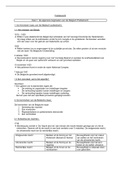
, Chapter 1: Definition and Characteristics of Applied Behavior Analysis
Chapter Summary
The word science has come to mean many things, but when used properly it refers to a
systematic approach for seeking and organizing knowledge about the natural world around us.
Science then has really one overall goal: to achieve a thorough understanding of the phenomena
under study. In the field of applied behavior analysis, this means socially important behaviors.
There are three levels of understanding that yield different types of knowledge within science:
description, prediction, and control. Functional relations only exist when well-controlled
experiments revel that a specific change in the dependent variable can reliably be produced by
specific manipulations of the independent, and the change was unlikely to be the result of
confounding variables.
Science is foremost a set of attitudes that set an overriding set of assumptions and values
that guide the work of all scientists. The attitudes include: determinism, empiricism,
experimentation, replication, parsimony, and philosophic doubt. Determinism is the attitude
upon which science is predicted; the presumption that the universe is a lawful and orderly place
in which all phenomena occurs as the result of other events. Determinism provides the
framework in the field of behavior analysis that all behavior is the result of specifiable
conditions, and once identified, these conditions can be used to some extent to determine the
future occurrence of behavior. Other qualities that guide success in science include
thoroughness, curiosity, perseverance, diligence, ethics, and honesty.
These principles and attitudes serve as a basis for behavior analysis. Behavior analysis
consists of three major branches of study: behaviorism, basic research or the experimental
analysis of behavior, and applied behavior analysis or the development of a technology for
improving behavior. Behavior analysis can be traced back to John B. Watson with what became
known as Watsonian behaviorism or stimulus-response psychology. B.F. Skinner is credited
though as being the founder of the experimental analysis of behavior and wrote extensively on
the science. This behaviorism differs significantly from prior approaches to the study of
behavior, most of which involved mentalism. Mentalism is an approach that assumes behavior is
the result of inner causes and hypothetical constructs. Behaviorism aims to explain behavior in
terms of measurable and observable events. Skinner’s radical behaviorism incorporates private
events into an overall conceptual system of behavior, where as other types of behaviorism do not
include private events.
One of the first studies to apply the principles of operant behavior to humans was in 1949
by Fuller. The field of applied behavior analysis grew in the 1950’s and 1960’s as researchers
began to apply methods of experimental analysis of behavior to determine if principles of
behavior demonstrated in laboratory settings with nonhumans could b e replicated with humans
in naturalistic settings. Applied behavior analysis as it is now known can be traced to the word of
Ayllon and Michael in 1959. The field began to expand and two significant events marked the
formal beginning of contemporary applied behavior analysis in 1968: 1) publication of the
Journal of Applied Behavior Analysis began, and 2) the publication “Some Current Dimensions
of Applied Behavior Analysis by Baer, Wolf, and Risley.
, Baer et al. (1968) provided recommendations for applied behavior analysis which later
became the field’s defining characteristics. These defining characteristics state that applied
behavior analysis should be applied, behavioral, analytic, technological, conceptual, effective,
and capable of generalized outcomes. As the field of applied behavior analysis continues to
grow and approach a wide variety of problems additional characteristics have been suggested,
but the original defining characteristics as proposed by Baer et al. (1968) remain the standard.
Chapter Objectives
1. Describe the basic characteristics and goals of science.
2. Explain behavior in accordance with the philosophical assumptions of behavior analysis.
3. Explain determinism as it relates to behavior analysis.
4. State distinguishing features of mentalistic and environmental explanations of behavior.
5. Describe and explain behavior in behavior analytic terms.
6. State and describe each of the dimensions of applied behavior analysis.
Chapter Focus Questions
1. What is science, its basic characteristics and goals?
2. What is a functional relation?
3. What are the overarching attitudes of science?
4. What is behaviorism and its main branches of study?
5. How did applied behavior analysis get its start, develop over the years, and become known as
it is today?
6. What are the different types of behaviorism? How are they similar and different from one
another?
7. What are the defining characteristics of applied behavior analysis?
Chapter Key Terms
applied behavior analysis (ABA) behaviorism
determinism empiricism
experiment experimental analysis of behavior (EAB)
explanatory fiction functional relation
hypothetical construct mentalism
methodological behaviorism parsimony
philosophic doubt radical behaviorism
replication science
Chapter Suggested Readings/Activities
Ayllon, T., & Michael, J. (1959). The psychiatric nurse as a behavioral engineer. Journal
of the Experimental Analysis of Behavior, 2, 323-334.
, One of the guiding articles that provide the basis for the foundation of applied behavior analysis,
this study employs the use of techniques based on reinforcement theory in a mental hospital.
Psychiatric nurses implement a variety of procedures with patients.
Baer, D.M., Wolf, M.M., & Risley, T.R. (1968). Some current dimensions of applied
behavior analysis. Journal of Applied Behavior Analysis, 1, 91-97.
This article serves to provide the original defining seven characteristics in the field of applied
behavior analysis that remain the guiding principles of the field today.
Baer, D.M., Wolf, M.M., & Risley, T.R. (1987). Some still-current dimensions of applied
behavior analysis. Journal of Applied Behavior Analysis, 20, 313-327.
This article serves as a follow up to the authors’ original work in 1968 in which the defining
characteristics are reviewed and are argued as being functional within the contemporary field of
applied behavior analysis. In addition, new tactics within the field are discussed.
Fuller, P.R. (1949). Operant conditioning of a vegetative human organism. American
Journal of Psychology, 62, 587-590.
This study is one of the first to report the human application of the principles of operant
behavior. An individual with disabilities learns to make a physical response through operant
conditioning.
Risley, T.R. (1997). Montrose M. Wolf: The origin of the dimensions of applied behavior
analysis. Journal of Applied Behavior Analysis, 30, 377-381.
This piece highlights the work and life of Montrose Wolf and the origins of the defining
characteristics of applied behavior analysis.
Skinner, B.F. (1938/1966). The behavior of organisms: An experimental analysis. New
York: Appleton-Century. (Copyright renewed in 1966 by the B.F. Skinner
Foundation, Cambridge, MA).
This book summarizes nearly ten years of Skinner’s research, spanning his years of graduate
school through is three years as a member of the Society of Fellows. Skinner defines his basic
unit of behavior, the operant, proposes basic datum, and describes his research agenda.
Skinner, B.F. (1948). Walden two. New York: Macmillan.
Skinner extends his works in this novel by applying the principles of behavior analysis to a
fictional community. The book illustrates a community that is minimally consuming and
polluting, egalitarian in the division of work, communal raising of children, and an educational
system that teaches patience and the ability to handle destructive emotions.
Skinner, B.F. (1953). Science and human behavior. New York: Macmillan.
This book presents a case for a natural science of human behavior. Skinner examines all human
activity from a behaviorist approach, and advocates for the application of scientific method to
study human behavior.
Skinner, B.F. (1957). Verbal behavior. New York: Appleton-Century-Crofts.
to accompany
Applied Behavior Analysis
, Chapter 1: Definition and Characteristics of Applied Behavior Analysis
Chapter Summary
The word science has come to mean many things, but when used properly it refers to a
systematic approach for seeking and organizing knowledge about the natural world around us.
Science then has really one overall goal: to achieve a thorough understanding of the phenomena
under study. In the field of applied behavior analysis, this means socially important behaviors.
There are three levels of understanding that yield different types of knowledge within science:
description, prediction, and control. Functional relations only exist when well-controlled
experiments revel that a specific change in the dependent variable can reliably be produced by
specific manipulations of the independent, and the change was unlikely to be the result of
confounding variables.
Science is foremost a set of attitudes that set an overriding set of assumptions and values
that guide the work of all scientists. The attitudes include: determinism, empiricism,
experimentation, replication, parsimony, and philosophic doubt. Determinism is the attitude
upon which science is predicted; the presumption that the universe is a lawful and orderly place
in which all phenomena occurs as the result of other events. Determinism provides the
framework in the field of behavior analysis that all behavior is the result of specifiable
conditions, and once identified, these conditions can be used to some extent to determine the
future occurrence of behavior. Other qualities that guide success in science include
thoroughness, curiosity, perseverance, diligence, ethics, and honesty.
These principles and attitudes serve as a basis for behavior analysis. Behavior analysis
consists of three major branches of study: behaviorism, basic research or the experimental
analysis of behavior, and applied behavior analysis or the development of a technology for
improving behavior. Behavior analysis can be traced back to John B. Watson with what became
known as Watsonian behaviorism or stimulus-response psychology. B.F. Skinner is credited
though as being the founder of the experimental analysis of behavior and wrote extensively on
the science. This behaviorism differs significantly from prior approaches to the study of
behavior, most of which involved mentalism. Mentalism is an approach that assumes behavior is
the result of inner causes and hypothetical constructs. Behaviorism aims to explain behavior in
terms of measurable and observable events. Skinner’s radical behaviorism incorporates private
events into an overall conceptual system of behavior, where as other types of behaviorism do not
include private events.
One of the first studies to apply the principles of operant behavior to humans was in 1949
by Fuller. The field of applied behavior analysis grew in the 1950’s and 1960’s as researchers
began to apply methods of experimental analysis of behavior to determine if principles of
behavior demonstrated in laboratory settings with nonhumans could b e replicated with humans
in naturalistic settings. Applied behavior analysis as it is now known can be traced to the word of
Ayllon and Michael in 1959. The field began to expand and two significant events marked the
formal beginning of contemporary applied behavior analysis in 1968: 1) publication of the
Journal of Applied Behavior Analysis began, and 2) the publication “Some Current Dimensions
of Applied Behavior Analysis by Baer, Wolf, and Risley.
, Baer et al. (1968) provided recommendations for applied behavior analysis which later
became the field’s defining characteristics. These defining characteristics state that applied
behavior analysis should be applied, behavioral, analytic, technological, conceptual, effective,
and capable of generalized outcomes. As the field of applied behavior analysis continues to
grow and approach a wide variety of problems additional characteristics have been suggested,
but the original defining characteristics as proposed by Baer et al. (1968) remain the standard.
Chapter Objectives
1. Describe the basic characteristics and goals of science.
2. Explain behavior in accordance with the philosophical assumptions of behavior analysis.
3. Explain determinism as it relates to behavior analysis.
4. State distinguishing features of mentalistic and environmental explanations of behavior.
5. Describe and explain behavior in behavior analytic terms.
6. State and describe each of the dimensions of applied behavior analysis.
Chapter Focus Questions
1. What is science, its basic characteristics and goals?
2. What is a functional relation?
3. What are the overarching attitudes of science?
4. What is behaviorism and its main branches of study?
5. How did applied behavior analysis get its start, develop over the years, and become known as
it is today?
6. What are the different types of behaviorism? How are they similar and different from one
another?
7. What are the defining characteristics of applied behavior analysis?
Chapter Key Terms
applied behavior analysis (ABA) behaviorism
determinism empiricism
experiment experimental analysis of behavior (EAB)
explanatory fiction functional relation
hypothetical construct mentalism
methodological behaviorism parsimony
philosophic doubt radical behaviorism
replication science
Chapter Suggested Readings/Activities
Ayllon, T., & Michael, J. (1959). The psychiatric nurse as a behavioral engineer. Journal
of the Experimental Analysis of Behavior, 2, 323-334.
, One of the guiding articles that provide the basis for the foundation of applied behavior analysis,
this study employs the use of techniques based on reinforcement theory in a mental hospital.
Psychiatric nurses implement a variety of procedures with patients.
Baer, D.M., Wolf, M.M., & Risley, T.R. (1968). Some current dimensions of applied
behavior analysis. Journal of Applied Behavior Analysis, 1, 91-97.
This article serves to provide the original defining seven characteristics in the field of applied
behavior analysis that remain the guiding principles of the field today.
Baer, D.M., Wolf, M.M., & Risley, T.R. (1987). Some still-current dimensions of applied
behavior analysis. Journal of Applied Behavior Analysis, 20, 313-327.
This article serves as a follow up to the authors’ original work in 1968 in which the defining
characteristics are reviewed and are argued as being functional within the contemporary field of
applied behavior analysis. In addition, new tactics within the field are discussed.
Fuller, P.R. (1949). Operant conditioning of a vegetative human organism. American
Journal of Psychology, 62, 587-590.
This study is one of the first to report the human application of the principles of operant
behavior. An individual with disabilities learns to make a physical response through operant
conditioning.
Risley, T.R. (1997). Montrose M. Wolf: The origin of the dimensions of applied behavior
analysis. Journal of Applied Behavior Analysis, 30, 377-381.
This piece highlights the work and life of Montrose Wolf and the origins of the defining
characteristics of applied behavior analysis.
Skinner, B.F. (1938/1966). The behavior of organisms: An experimental analysis. New
York: Appleton-Century. (Copyright renewed in 1966 by the B.F. Skinner
Foundation, Cambridge, MA).
This book summarizes nearly ten years of Skinner’s research, spanning his years of graduate
school through is three years as a member of the Society of Fellows. Skinner defines his basic
unit of behavior, the operant, proposes basic datum, and describes his research agenda.
Skinner, B.F. (1948). Walden two. New York: Macmillan.
Skinner extends his works in this novel by applying the principles of behavior analysis to a
fictional community. The book illustrates a community that is minimally consuming and
polluting, egalitarian in the division of work, communal raising of children, and an educational
system that teaches patience and the ability to handle destructive emotions.
Skinner, B.F. (1953). Science and human behavior. New York: Macmillan.
This book presents a case for a natural science of human behavior. Skinner examines all human
activity from a behaviorist approach, and advocates for the application of scientific method to
study human behavior.
Skinner, B.F. (1957). Verbal behavior. New York: Appleton-Century-Crofts.