YOOST & CRAWFORD FUNDAMENTALS OF NURSING: ACTIVE LEARNING FOR COLLABORATIVE PRACTICE, 2ND EDITION
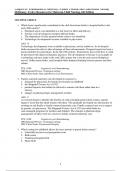
YOOST & CRAWFORD FUNDAMENTALS OF NURSING: ACTIVE LEARNING FOR COLLABORATIVE PRACTICE, 2ND EDITIONFOR MORE MATERIALS- Chapter 10: Documentation, Electronic Health Records, and Reporting MULTIPLE CHOICE 1. The nurse understands the need for accurate documentation due to which fact? a. Accurate documentation is needed for proper reimbursement. b. Accurate documentation must be electronically generated. c. Accurate documentation does not include e-mails or faxes. d. Accurate documentation is only accepted in court if written by hand. ANS: A Accurate documentation is necessary for hospitals to be reimbursed according to diagnostic- related groups (DRGs). DRGs are a system used to classify hospital admissions. Health care documentation is any written or electronically generated information about a patient that describes the patient, the patient’s health, and the care and services provided, including the dates of care. These records may be paper or electronic documents, such as electronic medical records, faxes, e-mails, audiotapes, videotapes, and images. All such records are considered legal documentation and may be used in court. DIF: Remembering OBJ: 10.1 TOP: Assessment MSC: NCLEX Client Needs Category: Safe and Effective Care Environment: Management of Care NOT: Concepts: Communication 2. The nurse identifies which statement to be true regarding nursing documentation? a. Standards for documentation are established by a national commission. b. Medical records should be accessible to everyone. c. Documentation should not include the patient’s diagnosis. d. High-quality nursing documentation reflects the nursing process. ANS: D The ANA’s model for high-quality nursing documentation reflects the nursing process and includes accessibility, accuracy, relevance, auditability, thoughtfulness, timeliness, and retrievability. Standards for documentation are established by each health care organization’s policies and procedures. They should be in agreement with The Joint Commission’s standards and elements of performance, including having a medical record for each patient that is accessed only by authorized personnel. General principles of medical record documentation from the Centers for Medicare and Medicaid Services (2017) include the need for completeness and legibility; the reasons for each patient encounter, including assessments and diagnosis; and the plan of care, the patient’s progress, and any changes in diagnosis and treatment.FOR MORE MATERIALS- DIF: Understanding OBJ: 10.1 TOP: Assessment MSC: NCLEX Client Needs Category: Safe and Effective Care Environment: Management of Care NOT: Concepts: Communication 3. The nurse identifies which true statement regarding the medical record? a. It serves as a major communication tool but is not a legal document. b. It cannot be used to assess quality of care issues. c. It is not used to determine reimbursement claims. d. It can be used as a tool for biomedical research and provide education. ANS: D The medical record promotes continuity of care and ensures that patients receive appropriate health care services. The record can be used to assess quality-of-care measures, determine the medical necessity of health care services, support reimbursement claims, and protect health care providers, patients, and others in legal matters. It is a clinical data archive. The medical record serves as a tool for biomedical research and provider education, collection of statistical data for government and other agencies, maintenance of compliance with external regulatory bodies, and establishment of policies and regulations for standards of care. The record serves as the major communication tool between staff members and as a single data access point for everyone involved in the patient’s care. It is a legal document that must meet guidelines for completeness, accuracy, timeliness, accessibility, and authenticity. The record can be used to assess quality-of-care measures, determine the medical necessity of health care services, support reimbursement claims, and protect health care providers, patients, and others in legal matters. DIF: Understanding OBJ: 10.2 TOP: Assessment MSC: NCLEX Client Needs Category: Safe and Effective Care Environment: Management of Care NOT: Concepts: Communication 4. The nurse knows that paper records are being replaced by other forms of record keeping for what reason? a. Paper is fragile and susceptible to damage. b. Paper records are always available to multiple people at a time. c. Paper records can be stored without difficulty and are easily retrievable.FOR MORE MATERIALS- d. Paper records are permanent and last indefinitely. ANS: A Paper records have several potential problems. Paper is fragile, susceptible to damage, and can degrade over time. It may be difficult to locate a particular chart because it is being used by someone else, it is in a different department, or it is misfiled. Storage and control of paper records can be a major problem. DIF: Evaluating OBJ: 10.2 TOP: Assessment MSC: NCLEX Client Needs Category: Safe and Effective Care Environment: Management of Care NOT: Concepts: Communication 5. When the nurse is charting in the paper medical record, what action does the nurse carry out? a. Print his/her name since signatures are often not readable. b. Omit nursing credentials since only the nurses chart c. Skip a line between entries so that it looks neat. d. Use black ink unless the facility allows a different color. ANS: D Entries into paper medical records are traditionally made with black ink to enable copying or scanning, unless a facility requires or allows a different color. The date, time, and signature, with credentials of the person writing the entry, are included in the entry. No blank spaces are left between entries because they could allow someone to add a note out of sequence. DIF: Remembering OBJ: 10.3 TOP: Implementation MSC: NCLEX Client Needs Category: Safe and Effective Care Environment: Management of Care NOT: Concepts: Communication 6. The nurse is admitting a patient who has had several previous admissions. To obtain a knowledge base about the patient’s medical history, the nurse would access which document? a. Electronic medical record (EMR) b. The computerized provider order entry (CPOE) c. Electronic health record (EHR) d. Primary provider’s office notesFOR MORE MATERIALS- ANS: C The EHR is a longitudinal record of health that includes the information from inpatient and outpatient episodes of health care from one or more care settings. The EMR is a record of one episode of care, such as an inpatient stay or an outpatient appointment. CPOE allows clinicians to enter orders in a computer that are sent directly to the appropriate department. It does not provide historical data. The primary provider’s office notes may not include all the patient’s information if the patient has other providers. DIF: Applying OBJ: 10.2 TOP: Implementation MSC: NCLEX Client Needs Category: Safe and Effective Care Environment: Management of Care NOT: Concepts: Communication 7. The nurse understands which statement about the use of electronic health records is true? a. They improve patient health status. b. They require a keyboard to enter data. c. They have not reduced medication errors. d. They require increased storage space. ANS: A Adoption of an EHR system produces major cost savings through gains in productivity and error reduction, which ultimately improves patient health status. The most common benefits of electronic records are increased delivery of guideline-based care, better monitoring, reduced medication errors, and decreased use of care. Use of EHRs can reduce storage space, allow simultaneous access by multiple users, facilitate easy duplication for sharing or backup, and increase portability in environments using wireless systems and hand-held devices. Although data are often entered by keyboard, they can also be entered by means of dictated voice recordings, light pens, or handwriting and pattern recognition systems. DIF: Remembering OBJ: 10.2 TOP: Assessment MSC: NCLEX Client Needs Category: Safe and Effective Care Environment: Management of Care NOT: Concepts: Communication 8. The nurse is caring for patients on a unit that uses electronic health records (EHRs). What action by the nurse protects personal health information? a. The nurse should allow only nurses that he/she knows and trusts to use his/her verification code.FOR MORE MATERIALS- b. The nurse should not worry about mistakes since the information cannot be tracked. c. The nurse should never share any password with anyone. d. The nurse should be aware that the EHR is sophisticated and immune to failure. ANS: C Access to an EHR is controlled through assignment of individual passwords and verification codes that identify people who have the right to enter the record. Passwords and verification codes should never be shared with anyone. Health care information systems have the ability to track who uses the system and which records are accessed. These organizational tools contribute to the protection of personal health information. Disadvantages of use of computers for documentation include computer and software failure and problems if there is a power outage. DIF: Applying OBJ: 10.4 TOP: Implementation MSC: NCLEX Client Needs Category: Safe and Effective Care Environment: Management of Care NOT: Concepts: Communication 9. The nurse recognizes which statement to be accurate regarding what should be documented? a. Document facts and subjective data from the patient. b. Document how he/she feels about the care being provided. c. Document in a “block” fashion once per shift. d. Double document as often as possible in order to not miss anything. ANS: A Nursing documentation is an important part of effective communication among nurses and with other health care providers. Documentation should be factual and nonjudgmental, with proper spelling and grammar. Subjective data from the patient should be included. Events should be reported in the order they happened, and documentation should occur as soon as possible after assessment, interventions, condition changes, or evaluation. Each entry includes the date, time, and signature with credentials of the person documenting. Double documentation of data should be avoided because legal issues can arise as a result of conflicting data. DIF: Remembering OBJ: 10.3 TOP: Assessment MSC: NCLEX Client Needs Category: Safe and Effective Care Environment: Management of Care NOT: Concepts: CommunicationFOR MORE MATERIALS- 10. The nurse recognizes that nursing documentation is guided by what process? a. The nursing process b. NANDA-I, nursing diagnoses c. Nursing interventions classification d. Nursing Outcomes Classification ANS: A Nursing documentation is guided by the five steps of the nursing process: assessment, diagnosis, planning, implementation, and evaluation. Standardized nursing terminologies such as the North American Nursing Diagnosis Association–International (NANDA-I) Nursing Diagnoses, nursing interventions classification (NIC), and Nursing Outcomes Classification (NOC) may be used in the documentation process. DIF: Remembering OBJ: 10.3 TOP: Assessment MSC: NCLEX Client Needs Category: Safe and Effective Care Environment: Management of Care NOT: Concepts: Communication 11. What fact does the nurse know applies to PIE, APIE, SOAP, and SOAPIE documentation? a. They are chronologic. b. They are examples of problem-oriented charting. c. They are narrative charting. d. They are forms of “charting by exception.” ANS: B The nurse’s notes may be in a narrative format or in a problem-oriented structure such as the PIE, APIE, SOAP, SOAPIE, SOAPIER, DAR, or CBE format. Narrative charting is chronologic, charting by exception (CBE) is documentation that records only abnormal or significant data. DIF: Remembering OBJ: 10.3 TOP: Assessment MSC: NCLEX Client Needs Category: Safe and Effective Care Environment: Management of Care NOT: Concepts: CommunicationFOR MORE MATERIALS- 12. The nursing instructor teaching students about charting explains that this type of charting records only abnormal or significant data? a. PIE b. SOAP c. Narrative d. Charting by exception ANS: D Charting by exception (CBE) is documentation that records only abnormal or significant data. A PIE note is used to document problem (P), intervention (I), and evaluation (E). A SOAP note is used to chart the subjective data (S), objective data (O), assessment (A), and plan (P). Narrative charting is chronologic, with a baseline recorded on a shift-by-shift basis. Data are recorded in the progress notes, often without an organizing framework. Narrative charting may stand alone, or it may be complemented by other tools. DIF: Remembering OBJ: 10.3 TOP: Assessment MSC: NCLEX Client Needs Category: Safe and Effective Care Environment: Management of Care NOT: Concepts: Communication 13. Prior to preparing to administer medications to the patient, the nurse should compare the provider orders with what document? a. Flow sheet b. Kardex c. MAR d. Admission summary ANS: C A medication administration record (MAR) is a list of ordered medications, along with dosages and times of administration, on which the nurse initials medications given or not given. A paper MAR usually includes a signature section in which the nurse is identified by linking the initials used with a full signature. The EHR includes an electronic medication administration record (eMAR). Flow sheets and checklists may be used to document routine care and observations that are recorded on a regular basis, such as vital signs, and intake and output measurements. Data collected on flow sheets may be converted to a graph, which pictorially reflects patient data. Originally, the Kardex was a nonpermanent filing system for nursing records, orders, and patient information that was held centrally on the unit.FOR MORE MATERIALS- Although computerization of records may mean that the Kardex system is no longer active, the term kardex continues to be used generically for certain patient information held at the nurses’ station. An admission summary includes the patient’s history. DIF: Applying OBJ: 10.3 TOP: Implementation MSC: NCLEX Client Needs Category: Safe and Effective Care Environment: Management of Care NOT: Concepts: Communication 14. The nurse is caring for a patient for the first time and needs background information such as history, medications taken at home, etc. What is the best central location for the nurse to obtain this information? a. Admission summary b. Discharge summary c. Flow sheet d. Kardex ANS: A An admission summary includes the patient’s history, a medication reconciliation, and an initial assessment that addresses the patient’s problems, including identification of needs pertinent to discharge planning and formulation of a plan of care based on those needs. The discharge summary addresses the patient’s hospital course and plans for follow-up, and it documents the patient’s status at discharge. It includes information on medication and treatment, discharge placement, patient education, follow-up appointments, and referrals. Flow sheets and checklists may be used to document routine care and observations that are recorded on a regular basis, such as vital signs, medications, and intake and output measurements. Although computerization of records may mean that the Kardex system is no longer active, the term kardex continues to be used generically for certain patient information held at the nurses’ station. DIF: Applying OBJ: 10.3 TOP: Implementation MSC: NCLEX Client Needs Category: Safe and Effective Care Environment: Management of Care NOT: Concepts: Communication 15. What fact is the nurse aware of when charting using paper nursing notes? a. Use red ink so the nursing entries stand out. b. When mistakes are made in documentation, the nurse should white out the entry.FOR MORE MATERIALS- c. Only one nurse should document on a sheet so that it can be removed in case of error. d. The medical record, in any format, is the most reliable source of information in a legal action. ANS: D The medical record is seen as the most reliable source of information in any legal action related to care. When legal counsel is sought because of a negative outcome of care, the first action taken by an attorney is to acquire a copy of the medical record. Ink color is usually black, blue or other as designated by the facility. Notes should never be altered or obliterated. Documentation mistakes must be acknowledged. If an error is made in paper documentation, a line is drawn through the error and the word error is placed above or after the entry, along with the nurse’s initials and followed by the correct entry. DIF: Applying OBJ: 10.3 TOP: Implementation MSC: NCLEX Client Needs Category: Safe and Effective Care Environment: Management of Care NOT: Concepts: Communication 16. What fact is the nurse aware of when charting using electronic documentation? a. Errors can be corrected and totally removed from the record in the screen view. b. Log-on access to the electronic record identifies the person charting. c. Each entry requires the nurse to sign her/his name and credentials. d. Documenting significant changes in the electronic record ends the nurse’s responsibility. ANS: B Log-on access to the electronic record identifies the person charting or making a change. If an error is made in electronic documentation, it can be corrected on the screen view but the error and correction process remain in the permanent electronic record. Any correction in documentation that indicates a significant change in patient status should include notification of the primary care provider. DIF: Understanding OBJ: 10.3 TOP: Assessment MSC: NCLEX Client Needs Category: Safe and Effective Care Environment: Management of Care NOT: Concepts: Communication 17. What action should the nurse take to correct an error in paper charting? a. Remove the sheet with the error and replace it with a new sheet with the correct entry.FOR MORE MATERIALS- b. Scribble out the error and rewrite the entry correctly. c. Draw a single line through the error write “error” above or after the entry, along with the nurse’s initials. d. Leave the entry as is and tell the charge nurse. ANS: C Documentation mistakes must be acknowledged. If an error is made in paper documentation, a line is drawn through the error and the word error is placed above or after the entry, along with the nurse’s initials and followed by the correct entry. Notes should never be altered or obliterated. Documentation mistakes must be acknowledged. DIF: Applying OBJ: 10.3 TOP: Implementation MSC: NCLEX Client Needs Category: Safe and Effective Care Environment: Management of Care NOT: Concepts: Communication 18. If a verbal or phone order is necessary in an emergency, the nurse knows what action needs to be completed? a. The order must be taken by an RN or LPN. b. The order must be repeated verbatim to confirm accuracy. c. The order is documented as a written order. d. The order does not need further verification by the provider. ANS: B If a verbal or phone order is necessary in an emergency, the order must be taken by a registered nurse (RN) who repeats the order verbatim to confirm accuracy and then enters the order into the paper or electronic system, documenting it as a verbal or phone order and including the date, time, physician’s name, and RN’s signature. Most facility policies require the physician to co-sign a verbal or telephone order within a defined time period. DIF: Understanding OBJ: 10.6 TOP: Assessment MSC: NCLEX Client Needs Category: Safe and Effective Care Environment: Management of Care NOT: Concepts: CommunicationFOR MORE MATERIALS- 19. The nurse identifies which statement to be accurate regarding the process of making a changeof-shift report (handoff)? a. Handoff is an uncommon occurrence of little importance. b. Handoff occurs only at change of shift and only to oncoming nurses. c. Handoff can lead to patient death if done incorrectly. d. Handoff does not allow for collaboration or problem solving. ANS: C An ineffective handoff may lead to wrong treatments, wrong medications, or other life- threatening events, increasing the length of stay and causing patient injury or death. Improvement in the hand-off process can increase patient safety and promote positive patient outcomes. The hand-off process can be an opportunity for collaborative problem solving. During an average hospital stay of approximately 4 days, as many as 24 handoffs can occur for just one patient because shifts change every 8 to 12 hours and many individuals are responsible for care. DIF: Understanding OBJ: 10.5 TOP: Assessment MSC: NCLEX Client Needs Category: Safe and Effective Care Environment: Management of Care NOT: Concepts: Communication 20. When the patient has had a fall while trying to climb out of bed, the nurse must carry out which task? a. Complete an incident report as a risk management document. b. Complete an incident report and add it to the medical record. c. Document that an incident report was completed in the medical record. d. Say nothing about the incident in the medical record. ANS: A Incident reports are objective, nonjudgmental, factual reports of the occurrence and its consequences. The incident report is not part of a medical record but is considered a risk management or qualityimprovement document. The fact that an incident report was completed is not recorded in the patient’s medical record; however, the details of a patient incident are documented. DIF: Applying OBJ: 10.7 TOP: ImplementationFOR MORE MATERIALS- MSC: NCLEX Client Needs Category: Safe and Effective Care Environment: Management of Care NOT: Concepts: Communication MULTIPLE RESPONSE 1. The nurse identifies which components to be expected nursing documentation? (Select all that apply.) a. Nursing assessment b. The care plan c. Critique of the physician’s care d. Interventions e. Patient responses to care ANS: A, B, D, E Expected nursing documentation includes a nursing assessment, the care plan, interventions, the patient’s outcomes or response to care, and assessment of the patient’s ability to manage after discharge. Documentation should be factual and nonjudgmental. DIF: Remembering OBJ: 10.3 TOP: Assessment MSC: NCLEX Client Needs Category: Safe and Effective Care Environment: Management of Care NOT: Concepts: Communication 2. The Joint Commission has compiled a list of do-not-use abbreviations, acronyms, and symbols to avoid the possibility of errors that may be life threatening. The nurse identifies which abbreviations to be unacceptable? (Select all that apply.) a. prn b. QD c. qod d. 0.X mg e. X mg ANS: B, C Nurses must be aware of the danger of using abbreviations that may be misunderstood and compromise patient safety. The Joint Commission (2018) has compiled a list of do-not-use abbreviations, acronyms,FOR MORE MATERIALS- and symbols to avoid the possibility of errors that may be life threatening. QD, Q.D., qd, q.d. (daily), QOD, Q.O.D., qod, and q.o.d. (every other day) can be mistaken for each other. Periods after Q can be mistaken for I, and the O mistaken for I. Write daily or every other day. Trailing zero (X.0 mg) or a lack of leading zero (.X mg) can be confusing. Write as X mg or 0.X mg. DIF: Applying OBJ: 10.3 TOP: Implementation MSC: NCLEX Client Needs Category: Safe and Effective Care Environment: Management of Care NOT: Concepts: Communication 3. The nurse understands the use of standardized language in care planning is beneficial for what reasons? (Select all that apply.) a. Standardized language provides consistency. b. Standardized language improves communication among nurses. c. Standardized language increases the visibility of nursing interventions. d. Standardized language enhances data collection. Standardized language supports adherence to care standards. ANS: A, B, C, D Standardized nursing terminologies such as the North American Nursing Diagnosis Association– International (NANDA-I) Nursing diagnoses, Nursing Interventions Classification (NIC), and Nursing Outcomes Classification (NOC) may be used in the documentation process. Use of standardized language provides consistency, improves communication among nurses and with other health care providers, increases the visibility of nursing interventions, improves patient care, enhances data collection to evaluate nursing care outcomes, and supports adherence to care standards. DIF: Remembering OBJ: 10.3 TOP: Assessment MSC: NCLEX Client Needs Category: Safe and Effective Care Environment: Management of Care NOT: Concepts: Communication 4. When charting is done using the DAR charting format, the nurse documents which components? (Select all that apply.) a. The patient problems b. Subjective dataFOR MORE MATERIALS- c. Any actions initiated d. Objective data e. The patient’s response to interventions ANS: A, C, E A DAR note is used to chart the data (D) collected about the patient problems, the action (A) initiated, and the patient’s response (R) to the actions. A SOAP note is used to chart the subjective data (S), objective data (O), assessment (A), and plan (P). DIF: Remembering OBJ: 10.3 TOP: Assessment MSC: NCLEX Client Needs Category: Safe and Effective Care Environment: Management of Care NOT: Concepts: Communication 5. The nurse knows that the Health Insurance Portability and Accountability Act (HIPAA) allows health information to be shared in which circumstances? (Select all that apply.) a. To provide treatment for the patient b. To determine billing and payment issues c. To enhance health care operations related to the patient d. In public areas such as the cafeteria or elevator e. Over the telephone with any family member ANS: A, B, C The Health Insurance Portability and Accountability Act (HIPAA), originally passed in 1996, created standards for the protection of personal health information, whether conveyed orally or recorded in any form or medium. The act clearly mandates that protected health information may be used only for treatment, payment, or health care operations. HIPAA privacy standards should be applied during phone, fax, e-mail, or Internet transmission of protected patient information. DIF: Understanding OBJ: 10.4 TOP: Assessment MSC: NCLEX Client Needs Category: Safe and Effective Care Environment: Management of Care NOT: Concepts: Communication 6. The nursing student is learning about SBAR reporting. What statements about the patient are matched with the correct part of the report? (Select all that apply.)FOR MORE MATERIALS- a. Patient is an 84-year-old female with a history of hypertension: S b. Patient’s blood pressure has dropped from 142/92 to 98/48 mmHg: S c. Patient is hemorrhaging with four saturated dressings in an hour: A d. The patient took an overdose of antidepressants three days ago: B e. By policy, the patient needs transferred to the ICU; please come write the orders: R ANS: B, C, D, E SBAR stands for situation (what is happening the current time), background (circumstances leading up to this situation), assessment (what the nurse thinks the problem is), and recommendation (what needs to be done to correct the situation). A history of hypertension would be background (if it were related to the current issue). DIF: Understanding OBJ: 10.5 TOP: Assessment MSC: NCLEX Client Needs Category: Safe and Effective Care Environment: Management of Care NOT: Concepts: Communication Chapter 01: Nursing, Theory, and Professional Practice MULTIPLE CHOICE 1. A group of students are discussing the impact of non-nursing theories in clinical practice. The students would be correct if they chose which theory to prioritize patient care? a. Erikson’s Psychosocial Theory b. Paul’s Critical Thinking Theory c. Maslow’s Hierarchy of Needs d. Rosenstock’s Health Belief Model ANS: C Maslow’s hierarchy of needs specifies the psychological and physiologic factors that affect each person’s physical and mental health. The nurse’s understanding of these factors helps with formulating nursing diagnoses that address the patient’s needs and values to prioritize care. Erikson’s Psychosocial Theory of Development and Socialization is based on individuals’ interacting and learning about their world.FOR MORE MATERIALS- Nurses use concepts of developmental theory to critically think in providing care for their patients at various stages of their lives. Rosenstock (1974) developed the psychological Health Belief Model. The model addresses possible reasons for why a patient may not comply with recommended health promotion behaviors. This model is especially useful to nurses as they educate patients. DIF: Remembering REF: p. 8 | pp. 10-11 OBJ: 1.4 TOP: Planning MSC: NCLEX Client Needs Category: Safe and Effective Care Environment: Management of Care NOT: Concepts: Care Coordination 2. A nursing student is preparing study notes from a recent lecture in nursing history. The student would credit Florence Nightingale for which definition of nursing? a. The imbalance between the patient and the environment decreases the capacity for health. b. The nurse needs to focus on interpersonal processes between nurse and patient. c. The nurse assists the patient with essential functions toward independence. d. Human beings are interacting in continuous motion as energy fields. ANS: A Florence Nightingale’s (1860) concept of the environment emphasized prevention and clean air, water, and housing. This theory states that the imbalance between the patient and the environment decreases the capacity for health and does not allow for conservation of energy. Hildegard Peplau (1952) focused on the roles played by the nurse and the interpersonal process between a nurse and a patient. Virginia Henderson described the nurse’s role as substitutive (doing for the person), supplementary (helping the person), or complementary (working with the person), with the ultimate goal of independence for the patient. Martha Rogers (1970) developed the Science of Unitary Human Beings. She stated that human beings and their environments are interacting in continuous motion as infinite energy fields. DIF: Understanding REF: p. 7 OBJ: 1.1 TOP: Planning MSC: NCLEX Client Needs Category: Health Promotion and Maintenance NOT: Concepts: Health Promotion 3. Which nurse established the American Red Cross during the Civil War? a. Dorothea Dix b. Linda RichardsFOR MORE MATERIALS- c. Lena Higbee d. Clara Barton ANS: D Clara Barton practiced nursing in the Civil War and established the American Red Cross. Dorothea Dix was the head of the U.S. Sanitary Commission, which was a forerunner of the Army Nurse Corps. Linda Richards was America’s first trained nurse, graduating from Boston’s Women’s Hospital in 1873, and Lena Higbee, superintendent of the U.S. Navy Nurse Corps, was awarded the Navy Cross in 1918. DIF: Remembering REF: p. 5 OBJ: 1.3 TOP: Assessment MSC: NCLEX Client Needs Category: Health Promotion and Maintenance NOT: Concepts: Professionalism 4. The nursing instructor is researching the five proficiencies regarded as essential for students and professionals. Which organization, if explored by the instructor, would be found to have added safety as a sixth competency? a. Quality and Safety Education for Nurses (QSEN) b. Institute of Medicine (IOM) c. American Association of Colleges of Nursing (AACN) d. National League for Nursing (NLN) ANS: A The Institute of Medicine report, Health Professions Education: A Bridge to Quality (2003), outlines five core competencies. These include patient-centered care, interdisciplinary teamwork, use of evidencebased medicine, quality improvement, and use of information technology. QSEN added safety as a sixth competency. The Essentials of Baccalaureate Education for Professional Nursing Practice are provided and updated by the American Association of Colleges of Nursing (AACN) (2008). The document offers a framework for the education of professional nurses with outcomes for students to meet. The National League for Nursing (NLN) outlines and updates competencies for practical, associate, baccalaureate, and graduate nursing education programs. DIF: Remembering REF: p. 17 OBJ: 1.1 TOP: Planning MSC: NCLEX Client Needs Category: Safe and Effective Care Environment: Management of Care NOT: Concepts: Care CoordinationFOR MORE MATERIALS- 5. The nurse manager is interviewing graduate nurses to fill existing staffing vacancies. When hiring graduate nurses, the nurse manager realizes that they will probably not be considered “competent” until: a. They graduate and pass NCLEX. b. They have worked 2 to 3 years. c. Their last year of nursing school. d. They are actually hired. ANS: B Benner’s model identifies five levels of proficiency: novice, advanced beginner, competent, proficient, and expert. The student nurse progresses from novice to advanced beginner during nursing school and attains the competent level after approximately 2 to 3 years of work experience after graduation. To obtain the RN credential, a person must graduate from an approved school of nursing and pass a state licensing examination called the National Council Licensure Examination for Registered Nurses (NCLEXRN) usually taken soon after completion of an approved nursing program. DIF: Remembering REF: p. 13 OBJ: 1.7 TOP: Planning MSC: NCLEX Client Needs Category: Safe and Effective Care Environment: Management of Care NOT: Concepts: Care Coordination 6. The prospective student is considering options for beginning a career in nursing. Which degree would best match the student’s desire to conduct research at the university level? a. Associate Degree in Nursing (ADN) b. Bachelor of Science in Nursing (BSN) c. Doctor of Nursing Practice (DNP) d. Doctor of Philosophy in Nursing (PhD) ANS: D Doctoral nursing education can result in a doctor of philosophy (PhD) degree. This degree prepares nurses for leadership roles in research, teaching, and administration that are essential to advancing nursing as a profession. Associate Degree in Nursing (ADN) programs usually are conducted in a community college setting. The nursing curriculum focuses on adult acute and chronic disease; maternal/child health; pediatrics; and psychiatric/mental health nursing. ADN RNs may return to school to earn a bachelor’s degree or higher in an RN-to-BSN or RN-to-MSN program. Bachelor’s degree programs include community health and management courses beyond those provided in an associateFOR MORE MATERIALS- degree program. A newer practice-focused doctoral degree is the doctor of nursing practice (DNP), which concentrates on the clinical aspects of nursing. DNP specialties include the four advanced practice roles of NP, CNS, CNM, and CRNA. DIF: Remembering REF: pp. 15-16 OBJ: 1.8 TOP: Assessment MSC: NCLEX Client Needs Category: Safe and Effective Care Environment: Management of Care NOT: Concepts: Care Coordination 7. During a staff meeting, the nurse manager announces that the hospital will be seeking Magnet status. In order to explain the requirements for this award, the nurse manager will contact the: a. American Nurses Association (ANA). b. American Nurses Credentialing Center (ANCC). c. National League for Nursing (NLN). d. Joint Commission. ANS: B The American Nurses Credentialing Center (ANCC) awards Magnet Recognition to hospitals that have shown excellence and innovation in nursing. The ANA is a professional organization that provides standards of nursing practice. The National League for Nursing (NLN) outlines and updates competencies for practical, associate, baccalaureate, and graduate nursing education programs. The Joint Commission is the accrediting organization for health care facilities in the United States. DIF: Remembering REF: p. 14 | pp. 16-17 OBJ: 1.9 TOP: Assessment MSC: NCLEX Client Needs Category: Safe and Effective Care Environment: Management of Care NOT: Concepts: Care Coordination 8. The nurse is caring for a patient who refuses two units of packed red blood cells. The nurse notifies the health care provider of the patient’s decision. The nurse is acting in the role of the: a. Manager. b. Change agent. c. Advocate. d. Educator.FOR MORE MATERIALS- ANS: C As the patient’s advocate, the nurse interprets information and provides the necessary education. The nurse then accepts and respects the patient’s decisions even if they are different from the nurse’s own beliefs. The nurse supports the patient’s wishes and communicates them to other health care providers. A nurse manages all of the activities and treatments for patients. A nurse manages all of the activities and treatments for patients. In the role of change agent, the nurse works with patients to address their health concerns and with staff members to address change in an organization or within a community. The nurse ensures that the patient receives sufficient information on which to base consent for care and related treatment. Education becomes a major focus of discharge planning so that patients will be prepared to handle their own needs at home. DIF: Applying REF: pp. 3-4 OBJ: 1.2 TOP: Implementation MSC: NCLEX Client Needs Category: Safe and Effective Care Environment: Management of Care NOT: Concepts: Care Coordination 9. The nursing student develops a plan of care based on a recently published article describing the effects of bedrest on a patient’s calcium blood levels. In creating the plan of care, the nursing student has the obligation to: a. Critically appraise the evidence and determine validity. b. Ensure that the plan of care does not alter current practice. c. Change the process even when there is no problem identified. d. Maintain the plan of care regardless of initial outcome. ANS: A Evidence-based practice (EBP) is an integration of the best-available research evidence with clinical judgment about a specific patient situation. The nurse assesses current and past research, clinical guidelines, and other resources to identify relevant literature. The application of EBP includes critically appraising the evidence to assess its validity, designing a change for practice, assessing the need for change and identifying a problem, and integrating and maintaining change while monitoring process and outcomes by reevaluating the application of evidence and assessing areas for improvement. DIF: Applying REF: p. 4 OBJ: 1.2 TOP: Implementation MSC: NCLEX Client Needs Category: Safe and Effective Care Environment: Management of Care NOT: Concepts: Care CoordinationFOR MORE MATERIALS- 10. The nurse is delegating frequent blood pressure (BP) measurements for a patient admitted with a gunshot wound to a licensed practical nurse (LPN). When delegating, the nurse understands that: a. He/she may assume that the LPN is able to perform this task appropriately. b. The LPN is ultimately responsible for the patient findings and assessment. c. The LPN may perform the tasks assigned without further supervision. d. He/she retains ultimate responsibility for patient care and supervision is needed. ANS: D The RN retains ultimate responsibility for patient care, which requires supervision of those to whom patient care is delegated. In the process of collaboration, the nurse delegates certain activities to other health care personnel. The RN needs to know the scope of practice or capabilities of each health care member. For example, UAPs are capable of performing basic care that includes providing hygienic care, taking vital signs, helping the patient ambulate, and assisting with eating. DIF: Understanding REF: p. 5 OBJ: 1.2 TOP: Implementation MSC: NCLEX Client Needs Category: Safe and Effective Care Environment: Management of Care NOT: Concepts: Care Coordination 11. The nurse is preparing to discharge a patient admitted with fever of unknown origin. The patient states, “I never got past the fifth grade in school. Don’t read much. Never saw much sense in it. But I do OK. I can read most stuff. But my doctor explains things good, and doesn’t think that my sickness is serious.” The nurse should: a. Provide discharge medication information from a professional source to provide the most information. b. Expect that the patient may return to the hospital if the discharge process is poorly done. c. Assume that the physician and the patient have a good rapport and that the physician will clarify everything. d. Defer offering the patient the opportunity to get the influenza vaccine because of the rapport that he has with his physician. ANS: B Low health literacy is associated with increased hospitalization, greater emergency care use, lower use of mammography, and lower receipt of influenza vaccine. A goal of patient education by the nurse is to inform patients and deliver information that is understandable by examining their level of health literacy. The more understandable health information is for patients, the closer the care is coordinated with need.FOR MORE MATERIALS- DIF: Applying REF: p. 3 OBJ: 1.2 TOP: Implementation MSC: NCLEX Client Needs Category: Safe and Effective Care Environment: Management of Care NOT: Concepts: Health Promotion 12. A nurse is caring for a patient who lost a large amount of blood during childbirth. The nurse provides the opportunity for the patient to maintain her activity level while providing adequate periods of rest and encouragement. Which nursing theory would the nurse most likely choose as a framework for addressing the fatigue associated with the low blood count? a. Watson Human Caring Theory b. Parse’s Theory of Human Becoming c. Roy’s Adaptation Model d. Rogers’ Science of Unitary Human Beings ANS: C Roy’s Adaptation Model is based on the human being as an adaptive open system. The person adapts by meeting physiologic-physical needs, developing a positive self-concept–group identity, performing social role functions, and balancing dependence and independence. Stressors result in illness by disrupting the equilibrium. Nursing care is directed at altering stimuli that are stressors to the patient. The nurse helps patients strengthen their abilities to adapt to their illnesses or helps them to develop adaptive behaviors. Watson’s theory is based on caring, with nurses dedicated to health and healing. The nurse functions to preserve the dignity and wholeness of humans in health or while peacefully dying. Parse’s theory is called the Human Becoming School of Thought. Parse formulated the Theory of Human Becoming by combining concepts from Martha Rogers’ Science of Unitary Human Beings with existential-phenomenologic thought. This theory looks at the person as a constantly changing being, and at nursing as a human science. Martha Rogers (1970) developed the Science of Unitary Human Beings. She stated that human beings and their environments are interacting in continuous motion as infinite energy fields. DIF: Applying REF: pp. 7-8 OBJ: 1.4 TOP: Implementation MSC: NCLEX Client Needs Category: Safe and Effective Care Environment: Management of Care NOT: Concepts: Care Coordination 13. Which nursing theorist described the relationship between the nurse and the patient as an interpersonal and therapeutic process? a. Virginia HendersonFOR MORE MATERIALS- b. Betty Neuman c. Imogene King d. Hildegard Peplau ANS: D Hildegard Peplau focused on the roles played by the nurse and the interpersonal process between a nurse and a patient. The interpersonal process occurs in overlapping phases: (1) orientation, (2) working, consisting of two subphases: identification and exploitation, and (3) resolution. Betty Neuman’s Systems Model includes a holistic concept and an open-system approach. The model identifies energy resources that provide for basic survival, with lines of resistance that are activated when a stressor invades the system. Virginia Henderson described the nurse’s role as substitutive (doing for the person), supplementary (helping the person), or complementary (working with the person), with the ultimate goal of independence for the patient. Imogene King developed a general systems framework that incorporates three levels of systems: (1) individual or personal, (2) group or interpersonal, and (3) society or social. The theory of goal attainment discusses the importance of interaction, perception, communication, transaction, self, role, stress, growth and development, time, and personal space. In this theory, both the nurse and the patient work together to achieve the goals in the continuous adjustment to stressors. DIF: Remembering REF: pp. 7-8 OBJ: 1.4 TOP: Assessment MSC: NCLEX Client Needs Category: Physiological Integrity: Physiological Adaptation NOT: Concepts: Health Promotion 14. A nursing class volunteers to serve hot meals at a local homeless shelter on a Saturday afternoon. This focus on serving the community is called: a. Altruism. b. Accountability. c. Autonomy. d. Advocate. ANS: A A profession provides services needed by society. Additionally, practitioners’ motivation is public service over personal gain (altruism). Service to the public requires intellectual activities, which include responsibility. This accountability has legal, ethical, and professional implications. Members of a profession have autonomy in decision making and practice and are self-regulating in that they develop their own policies in collaboration with one another.FOR MORE MATERIALS- As the patient’s advocate, the nurse interprets information and provides the necessary education. The nurse then accepts and respects the patient’s decisions even if they are different from the nurse’s own beliefs. DIF: Understanding REF: p. 4 | p. 12 OBJ: 1.5 TOP: Assessment MSC: NCLEX Client Needs Category: Health Promotion and Maintenance NOT: Concepts: Health Promotion 15. A patient is being discharged from the hospital with wound care dressing changes. The nurse recommends a referral for home health nursing care. The nurse is using which standard of practice? a. Assessment b. Diagnosis c. Planning d. Implementation ANS: C As a care provider, the nurse follows the Nursing Process to assess patient data, prioritize nursing diagnoses, plan the care of the patient, implement the appropriate interventions, and evaluate care in an ongoing cycle. In recommending a referral, the nurse is, in effect, planning care. DIF: Applying REF: p. 3 OBJ: 1.6 TOP: Planning MSC: NCLEX Client Needs Category: Physiological Integrity: Basic Care and Comfort NOT: Concepts: Care Coordination 16. The nurse administers a medication to the patient and then realizes that the medication had been discontinued. The error is immediately reported to the physician. The nurse is complying with the standards of professional performance known as: a. Ethics. b. Socialization. c. Altruism. d. Autonomy. ANS: AFOR MORE MATERIALS- Guiding the nurse’s professional practice are ethical behaviors. Ethics is the standards of right and wrong behavior. The main concepts in nursing ethics are accountability, advocacy, autonomy (be independent and self-motivated), beneficence (act in the best interest of the patient), confidentiality, fidelity (keep promises), justice (relate to others with fairness and equality), nonmaleficence (do no harm), responsibility, and veracity (be truthful). Ethical guidelines direct the nurse’s decision making in routine situations and in ethical dilemmas. Socialization to professional nursing is a process that involves learning the theory and skills necessary for the role of nurse. A profession provides services needed by society. Additionally, practitioners’ motivation is public service over personal gain (altruism). Members of a profession have autonomy in decision making and practice and are self-regulating in that they develop their own policies in collaboration with one another. DIF: Applying REF: pp. 12-13 OBJ: 1.6 TOP: Implementation MSC: NCLEX Client Needs Category: Safe and Effective Care Environment: Safety and Infection Control NOT: Concepts: Ethics 17. A newly licensed registered nurse is curious about the scope of care that she has in caring for patients undergoing conscious sedation. Which would be the best source of information? a. National Student Nurses Association b. Nurse Practice Act c. ANA Standards of Professional Performance d. National League for Nursing ANS: B Nurse practice acts provide the scope of practice defined by each state or jurisdiction and set forth the legal limits of nursing practice. Nursing organizations enable the nurse to have access to current information and resources as well as a voice in the profession. Nursing organizations include the ANA, the NLN, the ICN, Sigma Theta Tau International Honor Society of Nursing, and the National Student Nurses Association (NSNA). DIF: Remembering REF: p. 13 | p. 16 OBJ: 1.6 TOP: Assessment MSC: NCLEX Client Needs Category: Safe and Effective Care Environment: Management of Care NOT: Concepts: Health Care LawFOR MORE MATERIALS- 18. The nursing student is writing a paper about the direct patient care role of advanced practice nurses. Which of the following advanced practice roles would the student include in the report? a. Nurse Administrator b. Clinical Nurse Leader c. Clinical Nurse Specialist d. Nurse Educator ANS: C There are four specialties in which nurses provide direct patient care in advanced practice roles: certified nurse midwife (CNM), nurse practitioner (NP), clinical nurse specialist (CNS), and certified registered nurse anesthetist (CRNA). Four additional advanced practice roles that do not always involve direct patient care are clinical nurse leader (CNL), nurse educator, nurse researcher, and nurse administrator. DIF: Remembering REF: p. 15 OBJ: 1.8 TOP: Assessment MSC: NCLEX Client Needs Category: Safe and Effective Care Environment: Management of Care NOT: Concepts: Health Care Law 19. The nurse is determining the patient care assignments for a nursing unit. Which of the following responsibilities may be delegated to the licensed practical nurse? a. Initiating the nursing care plans b. Formulating nursing diagnoses c. Assessing a newly admitted patient d. Administering oral medications ANS: D LPNs, or LVNs in California and Texas, are not RNs. They complete an educational program consisting of 12 to 18 months of training, and then they must pass the National Council Licensure Examination for Practical Nurses (NCLEX-PN) to practice as an LPN/LVN. They are under the supervision of an RN in most institutions and are able to collect data but cannot perform an assessment requiring decision making, cannot formulate a nursing diagnosis, and cannot initiate a care plan. They may update care plans and administer medications with the exception of certain IV medications. DIF: Applying REF: p. 15 OBJ: 1.8 TOP: ImplementationFOR MORE MATERIALS- MSC: NCLEX Client Needs Category: Safe and Effective Care Environment: Management of Care NOT: Concepts: Health Care Law 20. The nursing student is taking a class in Nursing Research. In class she has learned that the most abstract level of knowledge is the: a. Metaparadigm. b. Philosophy. c. Conceptual framework. d. Nursing theory. ANS: A A metaparadigm, as the most abstract level of knowledge, is defined as a global set of concepts that identify and describe the central phenomena of the discipline and explain the relationship between those concepts. For example, the metaparadigm for nursing focuses on the concepts of person, environment, health, and nursing. The next level of knowledge is a philosophy, which is a statement about the beliefs and values of nursing in relation to a specific phenomenon such as health. The third level of knowledge is a nursing conceptual framework, or model, which is a collection of interrelated concepts that provides direction for nursing practice, research, and education. The fourth level of nursing knowledge is a nursing theory, which represents a group of concepts that can be tested in practice and can be derived from a conceptual model. DIF: Remembering REF: p. 6 OBJ: 1.4 TOP: Assessment MSC: NCLEX Client Needs Category: Health Promotion and Maintenance NOT: Concepts: Professionalism MULTIPLE RESPONSE 1. Which statement contributes to the understanding that nursing is considered a profession? (Select all that apply.) a. Nursing requires specialized training. b. Nursing has a specialized body of knowledge. c. The ANA regulates nursing practice. d. Nurses make independent decisions within their scope of practice.FOR MORE MATERIALS- e. Once licensure is complete, no further education is required. ANS: A, B, D A profession is an occupation that requires at a minimum specialized training and a specialized body of knowledge. Nursing meets these minimum requirements. Thus nursing is considered to be a profession. Members of a profession have autonomy in decision making and practice and are self-regulating in that they develop their own policies in collaboration with one another. Nursing professionals make independent decisions within their scope of practice and are responsible for the results and consequences of those decisions. A profession is committed to competence and has a legally recognized license. Members are accountable for continuing their education. The ANA is a professional organization that provides standards (not regulation) of nursing practice. DIF: Remembering REF: p. 3 | p. 12 OBJ: 1.5 TOP: Assessment MSC: NCLEX Client Needs Category: Safe and Effective Care Environment: Management of Care NOT: Concepts: Professionalism 2. The Institute of Medicine (IOM) Report identified several goals for nursing in the United States. The IOM suggested that: (Select all that apply.) a. Nurses should practice to the full extent of their education. b. Nursing education should demonstrate seamless progression. c. Nurses should continue to be subservient to physicians in the hospital setting. d. Policy making requires better data collection and information infrastructure. e. Higher levels of education should not be sought by practicing nurses. ANS: A, B, D The Future of Nursing: Leading Change, Advancing Health (IOM, 2011) identified several goals for nursing in the United States: Nurses should practice to the full extent of their education and training; Nurses should achieve higher levels of education and training through an improved education system that promotes seamless academic progression; Nurses should be full partners with physicians and other health care professionals in redesigning health care in the United States; and Effective workforce planning and policy making require better data collection and an improved information infrastructure. DIF: Remembering REF: p. 17 OBJ: 1.1 TOP: Assessment MSC: NCLEX Client Needs Category: Health Promotion and Maintenance NOT: Concepts: ProfessionalismFOR MORE MATERIALS- 3. The nurse is caring for a patient admitted for the removal of an infected appendix. Which actions by the nurse would indicate an understanding of the 2012 hospital safety goals? (Select all that apply.) a. Places an identification band on the right arm b. Marks the surgical site with a black-felt pen c. Checks medications three times before administration. d. Washes hands between patients and/or when soiled. e. Removes allergy bands prior to transfer to surgery. ANS: A, B, C, D The 2012 hospital goals include the following broad categories: Identify patients correctly (Placing an ID band on the right are), improve staff communication, use medicines safely (Check medications three times before administration), prevent infection (Washing hands), identify patient safety risks, and prevent mistakes in surgery (Mark the surgical site with a black-felt pen). Removing allergy bands would prevent identification of that patient’s safety risk. DIF: Applying REF: p. 14 | pp. 16-18 OBJ: 1.1 TOP: Implementation MSC: NCLEX Client Needs Category: Safe and Effective Care Environment: Safety and Infection Control NOT: Concepts: Care Coordination 4. The nurse is conducting a health assessment on a patient from a foreign country. Which of the following should be addressed during the interview? (Select all that apply.) a. Food preferences b. Religious practices c. Health beliefs d. Family orientation e. Politics ANS: A, B, C, D Culture is the integrated patterns of human behavior that include the language, thoughts, communications, actions, customs, beliefs, values, and institutions of racial, ethnic, religious, or social groups.FOR MORE MATERIALS- DIF: Applying REF: p. 13 OBJ: 1.5 TOP: Implementation MSC: NCLEX Client Needs Category: Psychosocial Integrity NOT: Concepts: Care Coordination 5. The nurse documents that patient laboratory results often take 4 hours to populate into the electronic medical record. The lengthy time frame has contributed to delayed antibiotic administration. From this point, what should the nurse do to produce change using the evidence-based process? (Select all that apply.) a. Assess the need for change and identify a problem. b. Reconstruct the information into an answerable question. c. Review pertinent journal articles from the literature search. d. Apply the findings to clinical practice through collaboration. ANS: B, C, D The application of EBP includes the following basic components: Assessing the need for change and identifying a problem, linking the problem with interventions and outcomes by formulating a well-built question to search the literature, identifying articles and other evidence-based resources that answer the question, critically appraising the evidence to assess its validity, synthesizing the best evidence, designing a change for practice, implementing and evaluating the change by applying the synthesized evidence, and integrating and maintaining change while monitoring process and outcomes by reevaluating the application of evidence and assessing areas for improvement. By identifying the problem, assessing the need for change and identifying the problem has already been completed. DIF: Analyzing REF: p. 4 OBJ: 1.2 TOP: Analysis MSC: NCLEX Client Needs Category: Safe and Effective Care Environment: Management of Care NOT: Concepts: Evidence Chapter 02: Values, Beliefs, and Caring MULTIPLE CHOICE 1. Enduring ideas about what a person considers is desirable or has worth in life is known as a: a. value. b. first-order beliefFOR MORE MATERIALS- c. higher order belief d. stereotype ANS: A Values are enduring ideas about what a person considers is the good, the best, and the “right” thing to do and their opposites—the bad, worst, and wrong things to do—and about what is desirable or has worth in life. First-order beliefs serve as the foundation or the basis of an individual’s belief system. Higher-order beliefs are ideas derived from a person’s first-order beliefs, inductive, or syllogistic reasoning. A stereotype is a belief about a person, a group, or an event that is thought to be typical of all others in that category. DIF: Remembering REF: pp. 22-23 OBJ: 2.1 TOP: Assessment MSC: NCLEX Client Needs Category: Safe and Effective Care Environment: Management of Care NOT: Concepts: Professionalism 2. A group of students are discussing the history of nursing. A student states, “Yea, nurses used to be called the doctor’s handmaiden.” This type of comment is known as a: a. prejudice. b. generalization. c. stereotype. d. belief. ANS: C A stereotype is a belief about a person, a group, or an event that is thought to be typical of all others in that category. A prejudice is a preformed opinion, usually an unfavorable one, about an entire group of people that is based on insufficient knowledge, irrational feelings, or inaccurate stereotypes. In the process of learning, people form generalizations (general statements or ideas about people or things) to relate new information to what is already known and to categorize the new information, making it easier to remember or understand. A belief is a mental representation of reality or a person’s perceptions about what is right (correct), true, or real, or what the person expects to happen in a given situation. DIF: Understanding REF: pp. 22-23 OBJ: 2.2 TOP: Evaluation MSC: NCLEX Client Needs Category: Safe and Effective Care Environment: Management of Care NOT: Concepts: ProfessionalismFOR MORE MATERIALS- 3. A values system is a set of somewhat consistent values and measures that are organized hierarchically into a belief system on a continuum of relative importance. A value system is also: a. culturally based. b. unique to each individual. c. a poor basis for making decisions. d. rigid and uniform within a culture. ANS: A Anthropologists and social scientists have noted that in every culture, a particular value system prevails and consists of culturally defined moral and ethical principles and rules that are learned in childhood. Each individual possesses a relatively small number of values and may share the same values with others, but to different degrees. A value system helps the person choose between alternatives, resolve values conflicts, and make decisions. Within every culture, however, values vary widely among subcultural groups and even between individuals on the basis of the person’s gender, personal experiences, personality, education, and many other variables. DIF: Remembering REF: pp. 23-24 OBJ: 2.1 TOP: Assessment MSC: NCLEX Client Needs Category: Psychosocial Integrity NOT: Concepts: Professionalism 4. The nurse is caring for a patient who is under arrest for murder. She is attempting to perform her duties while, at the same time, feeling a sense of repugnance toward the patient. The nurse is undergoing: a. value clarification b. value conflict c. first-order beliefs d. higher-order beliefs ANS: B A values conflict occurs when a person’s values are inconsistent with his or her behaviors or when the person’s values are not consistent with the choices that are available. Providing care for a convicted murderer may elicit troubling feelings for a nurse, resulting in a values conflict between the nurse’s commitment to care for all people and a personal repugnance for the act of murder. First-order beliefs serve as the foundation or the basis of an individual’s belief system. Higher-order beliefs are ideas derived from a person’s first-order beliefs, inductive, or syllogistic reasoning.FOR MORE MATERIALS- DIF: Understanding REF: pp. 22-24 OBJ: 2.2 TOP: Diagnosis MSC: NCLEX Client Needs Category: Psychosocial Integrity NOT: Concepts: Professionalism 5. While helping patients with values clarification and care decisions, nurses should: a. convince the patient to do what the nurse believes is best. b. give advice about what the nurse would do. c. tell the patient what the right thing to do is. d. provide information so that the patient can make informed decisions. ANS: D While helping patients with values clarification and care decisions, nurses must be aware of the potential influence of their professional nursing role on patient decision making. Nurses should be careful to assist patients to clarify their own values in reaching informed decisions. Providing information to patients so that they can make informed decisions is a critical nursing role. Giving advice or telling patients what to do in difficult circumstances is both unethical and ill-advised. DIF: Applying REF: p. 25 OBJ: 2.2 TOP: Implementation MSC: NCLEX Client Needs Category: Psychosocial Integrity NOT: Concepts: Professionalism 6. A patient with terminal cancer says to the nurse, “I just don’t know if I should allow CPR in the event I quit breathing. What do you think?” Which statement by the nurse would be most beneficial to the patient? a. “If it were me, I would want to live no matter what.” b. “Don’t worry. You have plenty of time to decide that later on.” c. “It’s totally up to you. Have you discussed this with your family?” d. “Let’s talk about what CPR means to you.” ANS: D The use of the value clarification process is helpful when assisting patients in making health care decisions regarding end-of-life care. Giving advice or telling patients what to do is unethical and not recommended. Ignoring a patient concern or changing the subject is inappropriate. Patients should be given
Written for
- Institution
- YOOST & CRAWFORD FUNDAMENTALS OF NURSING: ACTIVE L
- Module
- YOOST & CRAWFORD FUNDAMENTALS OF NURSING: ACTIVE L
Document information
- Uploaded on
- April 25, 2022
- Number of pages
- 553
- Written in
- 2022/2023
- Type
- Other
- Person
- Unknown
Subjects
-
2nd edition
-
2nd edit
-
yoost amp crawford fundamentals of nursing active learning for collaborative practice
-
yoost amp crawford fundamentals of nursing active learning for collaborative practice