1
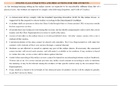
, Sampling terminology
• A sample is a subset of a larger population.
– The purpose of sampling is to estimate an unknown
characteristic of a population.
• A population is any complete group—for example, of people,
sales territories, stores, or college students.
– Shares some common set of characteristics.
• Census survey is the complete enumeration of all items or
objects in a population under study.
• Sample survey is the enumeration of a portion of all objects
under any study
2
, Distinction between Census and Sample survey
• Enumeration
• Time and Cost needed
• Quality of personnel
• Quality of data
• Special purpose
3
, Merits of sample survey
• Accurate and Reliable Results: Sample may on occasion be
more accurate than a census since non sampling errors may
increase during because of the increased volume of work.
• Destruction of Test Units: Especially those in quality-control
testing, require the destruction of the items being tested. For
example, testing bulbs, blood count.
4
, Sampling terminology
• A sample is a subset of a larger population.
– The purpose of sampling is to estimate an unknown
characteristic of a population.
• A population is any complete group—for example, of people,
sales territories, stores, or college students.
– Shares some common set of characteristics.
• Census survey is the complete enumeration of all items or
objects in a population under study.
• Sample survey is the enumeration of a portion of all objects
under any study
2
, Distinction between Census and Sample survey
• Enumeration
• Time and Cost needed
• Quality of personnel
• Quality of data
• Special purpose
3
, Merits of sample survey
• Accurate and Reliable Results: Sample may on occasion be
more accurate than a census since non sampling errors may
increase during because of the increased volume of work.
• Destruction of Test Units: Especially those in quality-control
testing, require the destruction of the items being tested. For
example, testing bulbs, blood count.
4