Brand management – summary
Slides 1 (Peeter):
What is a brand?
- Identification
- Differentiation
- Mental construct
- Relationship partner
- Driving force
Brand = identification: a name, term, sign, symbol, design, or any combination of those, used
to identify the goods and services of one seller or group of sellers (Kotler).
Brand = differentiation: a distinguishing name or symbol intended to identify the goods or
services of one seller, and to differentiate those goods and services from those of the
competitors (Aaker).
Brand = mental construct: brand are mental containers of meaning and serer as internal
information sources for buyers (Franzen). Brands are networks of associations (John et al.
2006).
Brand = relationship partner. “… brands can and do serve as viable relationship partners
[and] consumer brand relationships are valid at the level of lived experience…” (Susan
Fournier).
Brand = driving force: Brand are the mechanism that connects organizations and people…
they are also the cultural forms that allow us to express who we are … [and] the soul of
corporations, organizations and movements (Martin Kornberger).
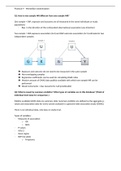
Customer Based Brand Equity (CBBE) pyramid
1. Who are you? (identity)
2. What are you? (meaning)
3. How do I think and feel about you?
4. What is our relationship?
,Layer 1: brand salience
Before anything else, you need to create brand salience (=the brand must come to
mind easily). This means you have to build brand awareness: the ability to recall and
recognize the brand (in relation to the needs it satisfies).
Two types of brand awareness: recall vs. recognition
- Recall = the brand comes to mind spontanesouly a.k.a. “top of mind awareness”
(TOMA), “what brand(s) of [category] can you think of?”
- Recognition = the brand is recognized from relevant cues (e.g., name, logo,
packaging, design) a.k.a. “aided recall” “which of these brands do you
know/recognize?”
- Depth: How easily do you recall/recognize the brand?
- Breadth: In which situation does the brand come to mind?
Tip for building awareness:
- More exposure is better
- Be consistent
- Always establish a link to the product need
- Ensure sufficient exposure to package (two second rule) for recognition
- Create a personal connection
- Use mnemonic devices (music, sound, imagery)
Layer 2: brand meaning
The associations with a brand, built by: own experience, experience of others (WOM)
and advertising.
Good associations: favorable, strong link to the brand, unique (distinct form other
brands in category)
Two types of associations:
- Functional, performance related
- Imagery-related (often more abstract)
Brand performance:
1. Primary characteristics and secondary features
2. Product reliability (consistency), durability and serviceability
3. Service effectiveness (level of satisfaction), efficiency (speedy and responsive) and
empathy (trusting and caring)
4. Style and design
5. Price
Brand imagery:
1. User profile(s): what kind of person(s) use(s) the brand?
2. Purchase and usage situation: when do you buy/use the brand?
3. Personality and values
4. History, heritage and experience (both shared and individual)
Layer 3: consumer responses to the brand
How do customers think and feel about the brand?
Judgements: quality, credibility, consideration, superiority
, Feelings: warmth, fun, excitement
Security, social approval, self-respect
Layer 4: consumer-brand relationships
What relationships doc consumers (want to_ have with the brand? Does the brand
“resonate” with customers? (brand resonance)
- Loyalty (behavioral loyalty and attitudinal attachment)
- Sense of community
- Active engagement
Two dimensions:
- Intensity: how strong are the feelings?
- Activity: do consumers act on their feeling? (purchase frequency, frequency of
engagement)
Brand positioning template:
1. Who do you serve (target customers)?
2. What is their need?
3. What do you offer them?
4. How do you offer it? (this is your point of differentiation)
5. Why do you do this?
For [1:___], who [2:___], we offer [3:___], that is [4:___], because we believe in [5:___].
Slides 1 (Chantal):
Brand strategy in different levels: developing campaigns, (re)defining the brand, (re)defining
the vision, mission and culture.
Brand management with purpose:
1. Need to – rules, regulations = corporate responsibility
2. Want to – charity, Tony Chocolonely, Patagonia = start from purpose
3. Profitable – creating extra value
Basic strategic process:
1. Where are we?
a. Data knowledge, general consumer insights
2. Why are we there?
a. Internal: history and heritage of the compaby, and brand, portfolio
b. Who are we? Internal drivers and values
c. External: markets/competitors, consumers, trends, culture,
brand/communication
d. SWOT
3. Where could we be?
a. Find your purpose
b. Vision and mission development, values and personality
c. Get inspired! – look at other markers, categories, brand
d. Develop concepts and scenario’s
e. KPI’s
4. How are we going to get there?
Slides 1 (Peeter):
What is a brand?
- Identification
- Differentiation
- Mental construct
- Relationship partner
- Driving force
Brand = identification: a name, term, sign, symbol, design, or any combination of those, used
to identify the goods and services of one seller or group of sellers (Kotler).
Brand = differentiation: a distinguishing name or symbol intended to identify the goods or
services of one seller, and to differentiate those goods and services from those of the
competitors (Aaker).
Brand = mental construct: brand are mental containers of meaning and serer as internal
information sources for buyers (Franzen). Brands are networks of associations (John et al.
2006).
Brand = relationship partner. “… brands can and do serve as viable relationship partners
[and] consumer brand relationships are valid at the level of lived experience…” (Susan
Fournier).
Brand = driving force: Brand are the mechanism that connects organizations and people…
they are also the cultural forms that allow us to express who we are … [and] the soul of
corporations, organizations and movements (Martin Kornberger).
Customer Based Brand Equity (CBBE) pyramid
1. Who are you? (identity)
2. What are you? (meaning)
3. How do I think and feel about you?
4. What is our relationship?
,Layer 1: brand salience
Before anything else, you need to create brand salience (=the brand must come to
mind easily). This means you have to build brand awareness: the ability to recall and
recognize the brand (in relation to the needs it satisfies).
Two types of brand awareness: recall vs. recognition
- Recall = the brand comes to mind spontanesouly a.k.a. “top of mind awareness”
(TOMA), “what brand(s) of [category] can you think of?”
- Recognition = the brand is recognized from relevant cues (e.g., name, logo,
packaging, design) a.k.a. “aided recall” “which of these brands do you
know/recognize?”
- Depth: How easily do you recall/recognize the brand?
- Breadth: In which situation does the brand come to mind?
Tip for building awareness:
- More exposure is better
- Be consistent
- Always establish a link to the product need
- Ensure sufficient exposure to package (two second rule) for recognition
- Create a personal connection
- Use mnemonic devices (music, sound, imagery)
Layer 2: brand meaning
The associations with a brand, built by: own experience, experience of others (WOM)
and advertising.
Good associations: favorable, strong link to the brand, unique (distinct form other
brands in category)
Two types of associations:
- Functional, performance related
- Imagery-related (often more abstract)
Brand performance:
1. Primary characteristics and secondary features
2. Product reliability (consistency), durability and serviceability
3. Service effectiveness (level of satisfaction), efficiency (speedy and responsive) and
empathy (trusting and caring)
4. Style and design
5. Price
Brand imagery:
1. User profile(s): what kind of person(s) use(s) the brand?
2. Purchase and usage situation: when do you buy/use the brand?
3. Personality and values
4. History, heritage and experience (both shared and individual)
Layer 3: consumer responses to the brand
How do customers think and feel about the brand?
Judgements: quality, credibility, consideration, superiority
, Feelings: warmth, fun, excitement
Security, social approval, self-respect
Layer 4: consumer-brand relationships
What relationships doc consumers (want to_ have with the brand? Does the brand
“resonate” with customers? (brand resonance)
- Loyalty (behavioral loyalty and attitudinal attachment)
- Sense of community
- Active engagement
Two dimensions:
- Intensity: how strong are the feelings?
- Activity: do consumers act on their feeling? (purchase frequency, frequency of
engagement)
Brand positioning template:
1. Who do you serve (target customers)?
2. What is their need?
3. What do you offer them?
4. How do you offer it? (this is your point of differentiation)
5. Why do you do this?
For [1:___], who [2:___], we offer [3:___], that is [4:___], because we believe in [5:___].
Slides 1 (Chantal):
Brand strategy in different levels: developing campaigns, (re)defining the brand, (re)defining
the vision, mission and culture.
Brand management with purpose:
1. Need to – rules, regulations = corporate responsibility
2. Want to – charity, Tony Chocolonely, Patagonia = start from purpose
3. Profitable – creating extra value
Basic strategic process:
1. Where are we?
a. Data knowledge, general consumer insights
2. Why are we there?
a. Internal: history and heritage of the compaby, and brand, portfolio
b. Who are we? Internal drivers and values
c. External: markets/competitors, consumers, trends, culture,
brand/communication
d. SWOT
3. Where could we be?
a. Find your purpose
b. Vision and mission development, values and personality
c. Get inspired! – look at other markers, categories, brand
d. Develop concepts and scenario’s
e. KPI’s
4. How are we going to get there?