Plant Responses
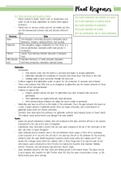
16.1 Plant Hormones and Growth in Plants
16.1 Plant hormones and growth in plants
- Plants respond to abiotic factors such as temperature and
water as well as biotic adaptations to protect them against 16.2 plant responses to abiotic stress
herbivores. 16.3 plant response to herbivory
- Plants have no nervous system and are not mobile, but they
can still communicate between cells and between different 16.4 plant tropisms in plants
plants. 16.5 the commercial use of plant hormones
Hormone Roles
Auxin Cell elongation, preventing abscission, maintaining apical
dominance, tropisms, releasing ethene, fruit ripening
Gibberellin Stem elongation, triggers mobilisation of food stores in a
seed at germination, stimulates pollen tube growth in
fertilisation
Ethene Causes fruit ripening, promotes abscission in deciduous
trees
ABA (abscisic Maintains dormancy of seeds and buds, stimulates
acid) antifreeze production, stimulates stomatal closing
Gibberellins:
- Germination:
o Seed absorbs water and the embryo is activated and begins to produce gibberellins
o Gibberellins stimulate the production of enzymes that break down food stores in the cells
o Seedlings begin to grow and break through the seed coat.
- Evidence suggests that gibberellins switch on genes for the production of amylases and proteases.
- There is also evidence that ABA acts as an antagonist to gibberellins and the relative amounts of these
hormones affect seed germination.
- Evidence to support this:
o Mutant varieties without the gene for gibberellins have been produced that cannot be
germinated.
o When gibberellins are applied externally seeds germinate.
o When photosynthesis inhibitors are added the seed is unable to germinate
- Gibberellins also have an effect on the length of the internodes. This is the gaps between the leaves on
a stem. A larger amount of gibberellin means there are longer internodes, and a small amount of
gibberellin means there are shorter internodes.
- Scientists have interrupted the pathways for gibberellin synthesis and produced species of dwarf plants.
This reduces waste and prevents crop damage from bad weather
Auxins:
- Auxins are growth stimulants in plants, they are produced at the apex, and they diffuse or are actively
transported to the cells in the zone of elongation.
- Experiments show when light is shone from one side, auxin produced at the tip of the shoot goes to the
dark side where it causes elongation.
- Auxin molecules bind to receptor sites in the cell membrane which causes a fall in pH by promoting
active transport of H+ ions into the cell wall. H+ ions decrease the pH to the optimum for the enzymes
needed to keep the walls flexible (expansins). Expansins break bonds within the cellulose and H+ ions
disrupt the hydrogen bonds within the cellulose, both of these things lead to les rigid cell walls. As the
cells mature, auxin is destroyed so the pH levels rise, making the enzymes that maintain flexibility
inactive. Therefore, the wall becomes rigid and more fixed in shape
- Auxin stimulates growth in the main shoot and inhibits growth in the lateral shoots. This allows the tip
to grow quicker and compete for light. Further down the step the auxin concentration is lower, so the
lateral shoots grow more strongly.
16.1 Plant Hormones and Growth in Plants
16.1 Plant hormones and growth in plants
- Plants respond to abiotic factors such as temperature and
water as well as biotic adaptations to protect them against 16.2 plant responses to abiotic stress
herbivores. 16.3 plant response to herbivory
- Plants have no nervous system and are not mobile, but they
can still communicate between cells and between different 16.4 plant tropisms in plants
plants. 16.5 the commercial use of plant hormones
Hormone Roles
Auxin Cell elongation, preventing abscission, maintaining apical
dominance, tropisms, releasing ethene, fruit ripening
Gibberellin Stem elongation, triggers mobilisation of food stores in a
seed at germination, stimulates pollen tube growth in
fertilisation
Ethene Causes fruit ripening, promotes abscission in deciduous
trees
ABA (abscisic Maintains dormancy of seeds and buds, stimulates
acid) antifreeze production, stimulates stomatal closing
Gibberellins:
- Germination:
o Seed absorbs water and the embryo is activated and begins to produce gibberellins
o Gibberellins stimulate the production of enzymes that break down food stores in the cells
o Seedlings begin to grow and break through the seed coat.
- Evidence suggests that gibberellins switch on genes for the production of amylases and proteases.
- There is also evidence that ABA acts as an antagonist to gibberellins and the relative amounts of these
hormones affect seed germination.
- Evidence to support this:
o Mutant varieties without the gene for gibberellins have been produced that cannot be
germinated.
o When gibberellins are applied externally seeds germinate.
o When photosynthesis inhibitors are added the seed is unable to germinate
- Gibberellins also have an effect on the length of the internodes. This is the gaps between the leaves on
a stem. A larger amount of gibberellin means there are longer internodes, and a small amount of
gibberellin means there are shorter internodes.
- Scientists have interrupted the pathways for gibberellin synthesis and produced species of dwarf plants.
This reduces waste and prevents crop damage from bad weather
Auxins:
- Auxins are growth stimulants in plants, they are produced at the apex, and they diffuse or are actively
transported to the cells in the zone of elongation.
- Experiments show when light is shone from one side, auxin produced at the tip of the shoot goes to the
dark side where it causes elongation.
- Auxin molecules bind to receptor sites in the cell membrane which causes a fall in pH by promoting
active transport of H+ ions into the cell wall. H+ ions decrease the pH to the optimum for the enzymes
needed to keep the walls flexible (expansins). Expansins break bonds within the cellulose and H+ ions
disrupt the hydrogen bonds within the cellulose, both of these things lead to les rigid cell walls. As the
cells mature, auxin is destroyed so the pH levels rise, making the enzymes that maintain flexibility
inactive. Therefore, the wall becomes rigid and more fixed in shape
- Auxin stimulates growth in the main shoot and inhibits growth in the lateral shoots. This allows the tip
to grow quicker and compete for light. Further down the step the auxin concentration is lower, so the
lateral shoots grow more strongly.