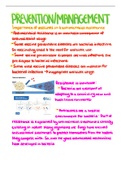
PREVENTIONMANAGEMENT
Importanceof vaccines in antimicrobial resistance
Antimicrobial resistance is an inevitable consequence of
antimicrobial usage
Somevaccine preventable diseases are bacterial infections
so vaccinating couldthe need for antibiotic use
Some vacine preventable diseases are viral infections the
pre dispose to bacterial infections
Some viral vaccine preventablediseases are mistaken for
bacterialinfections inappropriateantibioticusage
Resistance is inevitable
Bacteria are excellent at
adaptingto a colonising new and
hosti l environments
Antibiotics are a hostile
environment for bacteria Part of
resistance is explained by antimicrobial substances already
existing in nature Manyorganisms in c fungi have evolved
antimicrobial substances to protect themselves from the bacteria
theycompete with So over theyearsantimicrobialmechanisms
havedeveloped in bacteria
, Resistance encouraged by sub lethal dose of a b x In
many cases we exposepatients to low levels of antibiotic
too low to kill the bacteria but quite possiblyenough to
trigger the bacteria to express resistantgenes that have been
inactive in their genomes We can do this in the lab togenerate
an antibiotic resistant strain from one that was sensitive
Expose the organism to repeated low doses of ab x
Microbiome organisms exposed to a bx are encouraged to
express resistant genes
Antibiotic resistant genes will express avariety of proteins
and
enzymes that change the bacterial cell to render it
resistant This material can be shared easily between
bacteria exchange of extra chromosomal material like
plasmids
Vaccine preventable bacterial infection
Manyorganismsvaccinated against in the UK schedule are
bacterial Many cause severe infection with the 3 main causes
for meningitis being Neisseria meningitidis
Haemophilus influenzae B
Streptococcus pnemoniae
Importanceof vaccines in antimicrobial resistance
Antimicrobial resistance is an inevitable consequence of
antimicrobial usage
Somevaccine preventable diseases are bacterial infections
so vaccinating couldthe need for antibiotic use
Some vacine preventable diseases are viral infections the
pre dispose to bacterial infections
Some viral vaccine preventablediseases are mistaken for
bacterialinfections inappropriateantibioticusage
Resistance is inevitable
Bacteria are excellent at
adaptingto a colonising new and
hosti l environments
Antibiotics are a hostile
environment for bacteria Part of
resistance is explained by antimicrobial substances already
existing in nature Manyorganisms in c fungi have evolved
antimicrobial substances to protect themselves from the bacteria
theycompete with So over theyearsantimicrobialmechanisms
havedeveloped in bacteria
, Resistance encouraged by sub lethal dose of a b x In
many cases we exposepatients to low levels of antibiotic
too low to kill the bacteria but quite possiblyenough to
trigger the bacteria to express resistantgenes that have been
inactive in their genomes We can do this in the lab togenerate
an antibiotic resistant strain from one that was sensitive
Expose the organism to repeated low doses of ab x
Microbiome organisms exposed to a bx are encouraged to
express resistant genes
Antibiotic resistant genes will express avariety of proteins
and
enzymes that change the bacterial cell to render it
resistant This material can be shared easily between
bacteria exchange of extra chromosomal material like
plasmids
Vaccine preventable bacterial infection
Manyorganismsvaccinated against in the UK schedule are
bacterial Many cause severe infection with the 3 main causes
for meningitis being Neisseria meningitidis
Haemophilus influenzae B
Streptococcus pnemoniae