Benzene
Structure of Benzene
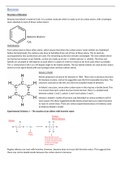
Benzene has Kekule’s model of C6H6. It is a planar molecule which is made up of six carbon atoms, with a hydrogen
atom attached to each of those carbon atoms.
Hybridisation
Each carbon joins to three other atoms, which means that when the carbon atoms’ outer orbitals are hybridised
before forming bonds, the carbons only have to hybridise three out of four of these atoms. The 2s electron,
accompanied by two 2p electrons are used. The remaining 2p electron remains unchanged. The new orbitals which
are formed are known as sp2 hybrids, as they are made up of one ‘s’ orbital and two ‘p’ orbitals. The three sp2
hybrids are arranged at 120 degrees to each other in a plane in order to remain as far from each other as possible.
The ’p’ orbital that is left is at a 90-degree angle to the hybrid orbitals. The sp2 hybrid orbitals are used by the carbon
atoms to form sigma bonds with one hydrogen atom and two carbon atoms.
Kekule’s Model
Kekule proposed a structure for benzene in 1865. There was no previous structure
for benzene in place, and so his suggestion was the first reasonable structure. The
structure, pictured on the left, was the first accepted model of benzene.
In Kekule’s structure, every other carbon atom in the ring has a double bond. This
is to ensure that each carbon has four bonds formed. There is a double bond
between carbon 1 and 2, carbon 3 and 4 and carbon 5 and 6.
However, Kekule’s model of benzene was debunked as various problems with it
were raised. The three suggested double bonds would lead us to expect benzene
to react in certain ways. There are various experimental pieces of evidence used
to disprove Kekule’s model.
Experimental Evidence 1 – The reaction of an alkene with bromine water
Regular alkenes can react with bromine. However, benzene does not react with bromine water. This suggests that
there may not be double bonds between the carbon atoms in benzene.
, Experimental Evidence 2 – X-Ray Crystallography Studies of Bond Lengths
Crystallography is a technique which is used to determine the length of covalent bonds. Carbon – carbon single
bonds have a bond length of 0.154 micrometres. Carbon – carbon double bonds have a bond length of 0.134
micrometres, which is slightly shorter than those of single carbon bonds. Crystallography was used to measure the
bond lengths in benzene. The bond length was 0.14 micrometres. This suggested that there were no single carbon
bonds or double carbon bonds within benzene.
Experimental Evidence 3 – Infrared Spectroscopy
Infrared spectroscopy is another technique used which relates to the bonds within a compound. Each bond within a
compound stores energy, and each have different energy levels. Electromagnetic waves pass through the sample.
Each type of electromagnetic wave also has different energy levels. When uninterrupted waves pass through the
sample and come into contact with a bond with the same energy level, the bond absorbs the energy. The sample will
vibrate as it now has increased energy levels and the wave will now have less energy, as the majority has been
absorbed. When benzene was tested, the infrared spectrums did not show the standard single carbon bond energy
absorption, but also did not show the standard double carbon bond energy absorption.
Experimental Evidence 4 – Hydrogenation – Reactions of alkenes with hydrogen
The energy change of hydrogenating benzene is 152kJ/mol. The hydrogenation of benzene was less than the
expected energy from an open chain alkene. This further backed up previous evidence that there are no double
carbon bonds within benzene.
Delocalised Pi Bonding in Benzene
Delocalisation is the term for when electrons and/or bonds are impermanent. When two sets of electron orbitals
overlap, a pi bond is formed. Therefore, a delocalised pi bond is a bond which can exist in various conformations. It is
not considered to be in a particular conformation, but rather all of them at one time. There are three double bonds
inside a six membered ring within benzene (an alternating pi bond formation). The three double bonds can be in two
separate locations if the six carbons and hydrogens in benzene are motionless. That is why it is considered to be in all
conformations and is known as being delocalised. The molecule is stabilised because of the delocalised electrons.
Industrial Uses of Benzene
Painting and Printing – Industrial printing facilities often use an ink that contains benzene. Topcoat and base coat
paints as well as lacquers, spray paints, stains and sealers also can contain benzene. The majority of these listed
above contain a solvent which has benzene in it. This is to ensure the products are kept in liquid form up until use.
Indirect to printing and painting, products used for the maintenance of printing machinery and equipment also
contain benzene.
Chemicals and Plastics – Resins, synthetic products nylon and Styrofoam and adhesives (such as the adhesives used
on shoes) are examples of products that involve the use of benzene throughout the manufacturing process.
Chemicals containing benzene include pesticides and insecticides as well as dyes and herbicides.
Tyres and Rubber – When tyres are produced, manufacturers use products which contain benzene as solvents.
Another example of where benzene is used is in the adhesive which attaches soles to the bottoms of shoes.
Structure of Benzene
Benzene has Kekule’s model of C6H6. It is a planar molecule which is made up of six carbon atoms, with a hydrogen
atom attached to each of those carbon atoms.
Hybridisation
Each carbon joins to three other atoms, which means that when the carbon atoms’ outer orbitals are hybridised
before forming bonds, the carbons only have to hybridise three out of four of these atoms. The 2s electron,
accompanied by two 2p electrons are used. The remaining 2p electron remains unchanged. The new orbitals which
are formed are known as sp2 hybrids, as they are made up of one ‘s’ orbital and two ‘p’ orbitals. The three sp2
hybrids are arranged at 120 degrees to each other in a plane in order to remain as far from each other as possible.
The ’p’ orbital that is left is at a 90-degree angle to the hybrid orbitals. The sp2 hybrid orbitals are used by the carbon
atoms to form sigma bonds with one hydrogen atom and two carbon atoms.
Kekule’s Model
Kekule proposed a structure for benzene in 1865. There was no previous structure
for benzene in place, and so his suggestion was the first reasonable structure. The
structure, pictured on the left, was the first accepted model of benzene.
In Kekule’s structure, every other carbon atom in the ring has a double bond. This
is to ensure that each carbon has four bonds formed. There is a double bond
between carbon 1 and 2, carbon 3 and 4 and carbon 5 and 6.
However, Kekule’s model of benzene was debunked as various problems with it
were raised. The three suggested double bonds would lead us to expect benzene
to react in certain ways. There are various experimental pieces of evidence used
to disprove Kekule’s model.
Experimental Evidence 1 – The reaction of an alkene with bromine water
Regular alkenes can react with bromine. However, benzene does not react with bromine water. This suggests that
there may not be double bonds between the carbon atoms in benzene.
, Experimental Evidence 2 – X-Ray Crystallography Studies of Bond Lengths
Crystallography is a technique which is used to determine the length of covalent bonds. Carbon – carbon single
bonds have a bond length of 0.154 micrometres. Carbon – carbon double bonds have a bond length of 0.134
micrometres, which is slightly shorter than those of single carbon bonds. Crystallography was used to measure the
bond lengths in benzene. The bond length was 0.14 micrometres. This suggested that there were no single carbon
bonds or double carbon bonds within benzene.
Experimental Evidence 3 – Infrared Spectroscopy
Infrared spectroscopy is another technique used which relates to the bonds within a compound. Each bond within a
compound stores energy, and each have different energy levels. Electromagnetic waves pass through the sample.
Each type of electromagnetic wave also has different energy levels. When uninterrupted waves pass through the
sample and come into contact with a bond with the same energy level, the bond absorbs the energy. The sample will
vibrate as it now has increased energy levels and the wave will now have less energy, as the majority has been
absorbed. When benzene was tested, the infrared spectrums did not show the standard single carbon bond energy
absorption, but also did not show the standard double carbon bond energy absorption.
Experimental Evidence 4 – Hydrogenation – Reactions of alkenes with hydrogen
The energy change of hydrogenating benzene is 152kJ/mol. The hydrogenation of benzene was less than the
expected energy from an open chain alkene. This further backed up previous evidence that there are no double
carbon bonds within benzene.
Delocalised Pi Bonding in Benzene
Delocalisation is the term for when electrons and/or bonds are impermanent. When two sets of electron orbitals
overlap, a pi bond is formed. Therefore, a delocalised pi bond is a bond which can exist in various conformations. It is
not considered to be in a particular conformation, but rather all of them at one time. There are three double bonds
inside a six membered ring within benzene (an alternating pi bond formation). The three double bonds can be in two
separate locations if the six carbons and hydrogens in benzene are motionless. That is why it is considered to be in all
conformations and is known as being delocalised. The molecule is stabilised because of the delocalised electrons.
Industrial Uses of Benzene
Painting and Printing – Industrial printing facilities often use an ink that contains benzene. Topcoat and base coat
paints as well as lacquers, spray paints, stains and sealers also can contain benzene. The majority of these listed
above contain a solvent which has benzene in it. This is to ensure the products are kept in liquid form up until use.
Indirect to printing and painting, products used for the maintenance of printing machinery and equipment also
contain benzene.
Chemicals and Plastics – Resins, synthetic products nylon and Styrofoam and adhesives (such as the adhesives used
on shoes) are examples of products that involve the use of benzene throughout the manufacturing process.
Chemicals containing benzene include pesticides and insecticides as well as dyes and herbicides.
Tyres and Rubber – When tyres are produced, manufacturers use products which contain benzene as solvents.
Another example of where benzene is used is in the adhesive which attaches soles to the bottoms of shoes.