PYC2602_Child and Adolescent Development_Study notes and summary
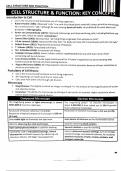
PYC2602_CHILD AND ADOLESCENT DEVELOPMENT Unit 1: Basic concepts of child and adolescent development 1.6 Theories of development Theories are essential for understanding children’s development because they provide the whyof development. In child development, a theory is an organized set of ideas that is designed to explain and make predictions about development. Function and advantages of theories: o A theory summarizes and explains the presently known facts o A theory aims to predict future behavior o A theory stimulates new research 5 major theoretical perspectives of child development: o biological o psychodynamic o learning o cognitive development o contextual perspectives 1.6.1 The biological perspective The biological perspective emphasizes the role of heredity (especially genes), the nervous system (especially the brain) and the endocrine system (especially the hormones) Maturational theory o Arnold Gesell o Child development reflects a specific and prearranged scheme or plan within the body o Theory was regarded to have little say because it did not take the environment into account Ethological theory o Behaviors are adaptive and have survival value o A critical period is the stage in development when a specific type of learning can take place before or after the critical period, the same learning is difficult or even impossible o Konrad Lorenz (Nobel prize) – goslings followed whatever movement they saw first. Behavior manifestation by goslings is called imprinting. Evolutionary theory
Written for
- Institution
- Rasmussen College
- Module
- PYC 2602
Document information
- Uploaded on
- March 5, 2022
- Number of pages
- 73
- Written in
- 2021/2022
- Type
- Lecture notes
- Professor(s)
- Ukwown
- Contains
- All classes
Subjects
-
pyc2602child and adolescent developmentstudy notes and summary
-
pyc2602
-
16 theories of development
-
theories are essential for understanding children’s development because they provide the whyof dev