

Priya Willkhu
Alkaline Battery
Task 6
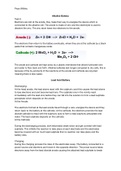
Electrons are lost at the anode, they make their way to energise the device which is
connected to the alkaline cell. The anode is made of zinc and the electrolyte is used to
dissolve the zinc. The zinc atom loses two electrons to the anode.
The electrons then return to the battery eventually, where they are at the cathode by a black
paste that contains manganese oxide.
The anode and cathode are kept away by a plastic membrane that allows hydroxide ions
and water to flow back and forth. Alkaline batteries last longer compared to dry cells, this is
because of the by-products of the reactions at the anode and cathode are recycled
meaning there is less waste.
Lead Acid Battery
Discharging-
At the head anode, the lead atoms react with the sulphuric acid this causes the lead atoms
to lose electrons and and become lead ions. The sulphate ions in the vicinity react
immediately with the lead ions before they can fall into the solution to form a lead sulphate
precipitate which deposits on the anode.
At the Anode:
The electrons formed at the lead anode travel through a wire, energise the device and they
return back to the battery at the cathode. At the cathode, the electrons promote the lead
dioxide cathode to react with the sulphuric acid to form a lead sulphuric precipitate and
water. The lead sulphate deposits on the cathode.
At the Cathode:
During the discharging process, both electrodes break down and get covered with lead
sulphate. This inhibits the reaction to take place at each electrode and the electrodes
become covered with so much lead sulphate that no reaction can take place and the
battery dies.
Charging-
During the charging process the roles of the electrodes swap. The battery connected to a
power source and electrons are forced in the opposite direction. The power source takes
electrons away from the lead dioxide anode causing the attached lead sulphate to break
Alkaline Battery
Task 6
Electrons are lost at the anode, they make their way to energise the device which is
connected to the alkaline cell. The anode is made of zinc and the electrolyte is used to
dissolve the zinc. The zinc atom loses two electrons to the anode.
The electrons then return to the battery eventually, where they are at the cathode by a black
paste that contains manganese oxide.
The anode and cathode are kept away by a plastic membrane that allows hydroxide ions
and water to flow back and forth. Alkaline batteries last longer compared to dry cells, this is
because of the by-products of the reactions at the anode and cathode are recycled
meaning there is less waste.
Lead Acid Battery
Discharging-
At the head anode, the lead atoms react with the sulphuric acid this causes the lead atoms
to lose electrons and and become lead ions. The sulphate ions in the vicinity react
immediately with the lead ions before they can fall into the solution to form a lead sulphate
precipitate which deposits on the anode.
At the Anode:
The electrons formed at the lead anode travel through a wire, energise the device and they
return back to the battery at the cathode. At the cathode, the electrons promote the lead
dioxide cathode to react with the sulphuric acid to form a lead sulphuric precipitate and
water. The lead sulphate deposits on the cathode.
At the Cathode:
During the discharging process, both electrodes break down and get covered with lead
sulphate. This inhibits the reaction to take place at each electrode and the electrodes
become covered with so much lead sulphate that no reaction can take place and the
battery dies.
Charging-
During the charging process the roles of the electrodes swap. The battery connected to a
power source and electrons are forced in the opposite direction. The power source takes
electrons away from the lead dioxide anode causing the attached lead sulphate to break


