Chapter 15 – Creating and pricing Products that satisfy
customers
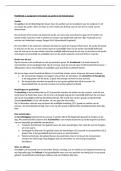
Classification of products
Customers
Convenience Product – frequently purchased at low price.
Buyer exerts minimum effort e.g. bread, gasoline, soft drinks
Shopping Product – buyers willing to expend large amount of
effort for purchases. Comparing different brands and stores
e.g. furniture, curtains.
Specialty Product – product possesses one or more unique
characteristics. No substitute will be accepted and brands are
not compared. E.g. specific sports car, antique dining table,
rare imported beer.
Businesses
Raw Material – Basic material that forms part of another
product
Major Equipment – Large tools and machines used for
production
Accessory equipment – Standard equipment used for
production and in office
Component part – forms part of product that requires very
little to be assembled
Process Material – Used directly in production of another
product e.g. glue
Supply – Facilitates production but not part of finished product
Business Service – intangible product that business uses in
operations e.g. janitorial
The Product Life Cycle
1. Introduction – customer awareness is low. Sales gradually
increase as awareness increases
2. Growth – Sales rapidly increase, as product becomes well
known. Competitors develop and lower cost due to mass
production. Thus less profit per unit.
3. Maturity – Sales still increasing but at slower rate at start then
peaks and decreases towards the end of the period. Price
competition increases thus weaker competitors leave
industries.
4. Decline – Sales volume decreases sharply. Profits thus
decreases sharply. Production and marketing costs main
factors determining profit. Usually caused by technological
advances or environmental changes.
5. Using Product life cycle – estimate how long product is
expected to remain profitable
Product Line and Product Mix
, Product line – group of similar products that differ only in
minor characteristics
Product Mix – all the products a firm offers for sale
1. Width of mix – number of product lines
2. Depth of mix – average amount of products each
product line contains
Managing the Product Mix
Managing existing products
1. Can be changed by deriving new products from existing
ones
Product modification – changing one or more
product characteristics
Line extensions – developing a closing related
product
Deleting Products
Developing new products
1. Expensive, time consuming and risky to produce new
products but not producing new products at all is just as
risky.
2. New product can either be innovation, adaptation or
imitation.
7 steps to a new product
1. Idea generation
2. Screening – products that don’t suit organizations
resources and objectives are rejected
3. Concept testing – product is presented to small
group of potential buyers
4. Business Analysis – provides ideas about possible
financial performance of product
5. Product Development – Company must determine
if product can be produced at low enough cost to
have reasonable price
6. Test Marketing – limited introduction in several
towns or cities, which represent intended target
market.
7. Commercialization – Plans and budgets must be
set up for full scale production
Why do products fail?
1. Product is not planned and tested as completely as it should
be
2. Firm picks up problems with product but continues anyway in
order to try cover costs
3. Inadequate financing
customers
Classification of products
Customers
Convenience Product – frequently purchased at low price.
Buyer exerts minimum effort e.g. bread, gasoline, soft drinks
Shopping Product – buyers willing to expend large amount of
effort for purchases. Comparing different brands and stores
e.g. furniture, curtains.
Specialty Product – product possesses one or more unique
characteristics. No substitute will be accepted and brands are
not compared. E.g. specific sports car, antique dining table,
rare imported beer.
Businesses
Raw Material – Basic material that forms part of another
product
Major Equipment – Large tools and machines used for
production
Accessory equipment – Standard equipment used for
production and in office
Component part – forms part of product that requires very
little to be assembled
Process Material – Used directly in production of another
product e.g. glue
Supply – Facilitates production but not part of finished product
Business Service – intangible product that business uses in
operations e.g. janitorial
The Product Life Cycle
1. Introduction – customer awareness is low. Sales gradually
increase as awareness increases
2. Growth – Sales rapidly increase, as product becomes well
known. Competitors develop and lower cost due to mass
production. Thus less profit per unit.
3. Maturity – Sales still increasing but at slower rate at start then
peaks and decreases towards the end of the period. Price
competition increases thus weaker competitors leave
industries.
4. Decline – Sales volume decreases sharply. Profits thus
decreases sharply. Production and marketing costs main
factors determining profit. Usually caused by technological
advances or environmental changes.
5. Using Product life cycle – estimate how long product is
expected to remain profitable
Product Line and Product Mix
, Product line – group of similar products that differ only in
minor characteristics
Product Mix – all the products a firm offers for sale
1. Width of mix – number of product lines
2. Depth of mix – average amount of products each
product line contains
Managing the Product Mix
Managing existing products
1. Can be changed by deriving new products from existing
ones
Product modification – changing one or more
product characteristics
Line extensions – developing a closing related
product
Deleting Products
Developing new products
1. Expensive, time consuming and risky to produce new
products but not producing new products at all is just as
risky.
2. New product can either be innovation, adaptation or
imitation.
7 steps to a new product
1. Idea generation
2. Screening – products that don’t suit organizations
resources and objectives are rejected
3. Concept testing – product is presented to small
group of potential buyers
4. Business Analysis – provides ideas about possible
financial performance of product
5. Product Development – Company must determine
if product can be produced at low enough cost to
have reasonable price
6. Test Marketing – limited introduction in several
towns or cities, which represent intended target
market.
7. Commercialization – Plans and budgets must be
set up for full scale production
Why do products fail?
1. Product is not planned and tested as completely as it should
be
2. Firm picks up problems with product but continues anyway in
order to try cover costs
3. Inadequate financing