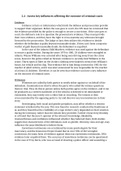
2.4 - Assess key influences affecting the outcome of criminal cases
Evidence
Evidence is facts or information which both the defense and prosecution provide
to support their argument. Before the case goes to court, the CPS must be convinced that
the evidence provided by the police is enough to secure a conviction. If the case goes to
court, the defense’s role is to question the prosecution's evidence. They must provide
their own evidence, and they have the right to cross-examine any witnesses brought
forward by the prosecution. The Judge or Jury then utilises this evidence to decide
whether the defendant is guilty beyond reasonable doubt. If they can’t form a majority
verdict of guilt beyond reasonable doubt, the defendant is acquitted.
In the case of the Atlanta Child Murders, evidence was used against the defendant
to secure a guilty verdict. During the years 1979 to 1981, 29 children were strangled in
Atlanta. Wayne Williams was arrested after being seen driving away from the crime
scene, however the police relied on forensic evidence to securely link Williams to the
crime. Thirty types of fiber on the victim's clothing were linked to items from William’s
house, his vehicle and his dog. This evidence led to him being convicted in 1982 for the
murder of adult victims, and it was later announced he was responsible for the murder
of at least 22 children. Therefore, it can be seen that evidence can have a key influence
on the outcome of criminal cases.
Witnesses
Witnesses are called by both parties to testify either against or on behalf of the
defendant. Examination-in-chief is when the party who called the witness questions
them in trial. They do this in person unless both parties agree on the evidence, and it can
be produced as a written statement or if the witness is deemed to be intimidated or
vulnerable, they may testify over a video link or recording. The witness is then
cross-examined by the opposing party to try and discover any inconsistencies in their
story.
Stereotyping, both racial and gender prejudices, may affect whether a witness
statement is believed by the jury. This was found in research conducted by Kaufmann et
al, and they found that the credibility of a rape victim’s story depended on their emotion
during the testmony, rather than the details they provided. Further research by Brodsky
et al found that the juror’s opinion of the witness’s knowledge, likeability,
trustworthiness and confidence influenced whether they believed them. Both studies
suggest that characteristics of the defendant, such as gender, ethnicity, class and age, may
influence the jurys likelihood to believe them.
Eyewitness testimonies are scrutinized by many psychologists for their
inaccuracy, and the Innocence Project found that in over 70% of 352 wrongful
convictions, the main form of evidence against them was eyewitness testimonies. DNA
evidence later acquitted them. The accuracy of eyewitness testimony can be questioned
in the case of Troy Davis, who was accused of shooting a police officer and assaulting a
Evidence
Evidence is facts or information which both the defense and prosecution provide
to support their argument. Before the case goes to court, the CPS must be convinced that
the evidence provided by the police is enough to secure a conviction. If the case goes to
court, the defense’s role is to question the prosecution's evidence. They must provide
their own evidence, and they have the right to cross-examine any witnesses brought
forward by the prosecution. The Judge or Jury then utilises this evidence to decide
whether the defendant is guilty beyond reasonable doubt. If they can’t form a majority
verdict of guilt beyond reasonable doubt, the defendant is acquitted.
In the case of the Atlanta Child Murders, evidence was used against the defendant
to secure a guilty verdict. During the years 1979 to 1981, 29 children were strangled in
Atlanta. Wayne Williams was arrested after being seen driving away from the crime
scene, however the police relied on forensic evidence to securely link Williams to the
crime. Thirty types of fiber on the victim's clothing were linked to items from William’s
house, his vehicle and his dog. This evidence led to him being convicted in 1982 for the
murder of adult victims, and it was later announced he was responsible for the murder
of at least 22 children. Therefore, it can be seen that evidence can have a key influence
on the outcome of criminal cases.
Witnesses
Witnesses are called by both parties to testify either against or on behalf of the
defendant. Examination-in-chief is when the party who called the witness questions
them in trial. They do this in person unless both parties agree on the evidence, and it can
be produced as a written statement or if the witness is deemed to be intimidated or
vulnerable, they may testify over a video link or recording. The witness is then
cross-examined by the opposing party to try and discover any inconsistencies in their
story.
Stereotyping, both racial and gender prejudices, may affect whether a witness
statement is believed by the jury. This was found in research conducted by Kaufmann et
al, and they found that the credibility of a rape victim’s story depended on their emotion
during the testmony, rather than the details they provided. Further research by Brodsky
et al found that the juror’s opinion of the witness’s knowledge, likeability,
trustworthiness and confidence influenced whether they believed them. Both studies
suggest that characteristics of the defendant, such as gender, ethnicity, class and age, may
influence the jurys likelihood to believe them.
Eyewitness testimonies are scrutinized by many psychologists for their
inaccuracy, and the Innocence Project found that in over 70% of 352 wrongful
convictions, the main form of evidence against them was eyewitness testimonies. DNA
evidence later acquitted them. The accuracy of eyewitness testimony can be questioned
in the case of Troy Davis, who was accused of shooting a police officer and assaulting a