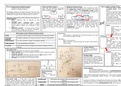
Why do animals need a transport system? Single circulatory system: Double circulatory system: Open circulatory system, insects:
- Supply of oxygen and nutrients Fish have this system, the blood Mammals have this system, with 2 separate circuits. - Blood not held in vessels
- Removal of waste products flows through the heart once for The pulmonary circuit delivers blood to the lungs the body cavity. “Tissue
each circuit of the body. (to collect oxygen). The systematic circuit carries blood”.
The diffusion distance for larger animals is too long, this HEAR oxygen to the tissues. The blood flows through the - There is a muscular pump
makes diffusion through the layers of cells too slow, thus T heart twice for each circuit of the body. muscular tube lies under
insufficient to supply all the requirements for survival. Blood enters the heart t
TISSUE heart pumps this bloo
GILLS TISSUE HEAR circulation continues.
There are 3 main factors which influence the need for a S LUNGS
transport system: Blood pressure drops as it passes S T - Movements of the body he
1) Size – diffusion rate is reduced as size through tiny gill capillaries, making In the pulmonary circuit, blood pressure does not get continue the transportatio
increases. the transport slow, though fish too high, preventing damaging delicate capillaries in - Blood pressure is low an
2) (Surface Area : Volume) ratio – larger aren’t extremely active, so there is the lungs. Pressure increases once past the heart circulation may be affe
animals have a smaller SA:V ratio, so tissues less of a demand for oxygen. The (systematic circuit) to enable quicker blood flow.
have smaller surfaces for exchange to take single circulatory system delivers Mammals are more active than fish and are Artery:
place. sufficient nutrients for the needs of endotherms, so there is greater demand for - Carries blood aw
3) Metabolic activity – to move around, animals a fish. nutrients and oxygen. heart.
must release energy by aerobic respiration, - High pressure, so
meaning a greater demand of oxygen. - Small lumen
pressure.
What makes a good, efficient transport system? THICK WALL: - Inner wall is fo
Pump A pump creates pressure to push fluid around the body. (Heart) - Left ventricle = high pressure to pump the blood to the rest
of the body through the aorta. Arterioles:
Exchange Enabling substances to leave and enter the blood. (Capillaries) - Carries blood away from
surfaces THIN WALL: the arteries to the
Fluid/medium To carry nutrients, oxygen, and wastes. (Blood) - Atria = low pressure capillaries.
- Right ventricle = would damage the alveoli if the pressure - The wall contains a laye
Tubes/vessels Carry the blood by mass flow. was too high. of smooth muscle
contraction of this wil
2 circuits One circuit to pick up oxygen and another to deliver it to the constrict the diameter
tissues. Cardiac Muscle = creating resistance to the
myogenic, it initiates its
The cardiac cycle:
own contraction, ‘from
This describes the sequence of events in a full heartbeat.
within’. Capillary:
1) Atrial systole: atria contract together, small increase in pressure, pushes
blood into ventricles. - Thin walls for th
2) Ventricle systole: ventricles contract from the apex (bottom of the materials betwe
The Bohr effect:
heart), blood is pushed up towards the arteries. tissue fluid.
CO2 enters RBCs , making the
3) Diastole: muscle walls of all 4 chambers relax. - Narrow lumen, pu
cells very acidic. The 3° structure
walls to help o
of the protein is affected, affinity
(short diffusion p
for O2 is reduced. Oxyhemoglobin
is increased to re
releases more oxygen, but
flow.
hemoglobin is less saturated with
- Single layer of
O2.
cells.
Carbon dioxide:
- 5% dissolved in plasma
Electrocardiogram - 10% combined with haemoglobin carbaminohaemo
(ECG): - 85% transported in the form of hydrogen carbonate ions
P = atrial systole
QRS = ventricle With carbonic anhydrases catalysing, CO2 + H2O H2CO3 (carbon
systole Carbonic acid dissociates: H2CO3 HCO3- + H+ (HCO3- diffuses
T = diastole plasma)
Sino-atrial node = in the wall of the right Bradycardia Slow heart rate: greater distance between each
atrium, where electrical activity is generated. Charge in the RBC is maintained by chloride ions moving = the c
(PQRST).
The ‘wave of excitation’ spreads across the atria Hydrogen ions build up, making the environment acidic so the
Tachycardia Fast heart rate: smaller distance between each
walls and the muscle tissue membranes. This with hemoglobin, forming haemoglobonic acid, which acts as a
(PQRST).
causes contraction of muscle cells, an atrial Atrial Atria beat more frequently than ventricles: no clear P
- Supply of oxygen and nutrients Fish have this system, the blood Mammals have this system, with 2 separate circuits. - Blood not held in vessels
- Removal of waste products flows through the heart once for The pulmonary circuit delivers blood to the lungs the body cavity. “Tissue
each circuit of the body. (to collect oxygen). The systematic circuit carries blood”.
The diffusion distance for larger animals is too long, this HEAR oxygen to the tissues. The blood flows through the - There is a muscular pump
makes diffusion through the layers of cells too slow, thus T heart twice for each circuit of the body. muscular tube lies under
insufficient to supply all the requirements for survival. Blood enters the heart t
TISSUE heart pumps this bloo
GILLS TISSUE HEAR circulation continues.
There are 3 main factors which influence the need for a S LUNGS
transport system: Blood pressure drops as it passes S T - Movements of the body he
1) Size – diffusion rate is reduced as size through tiny gill capillaries, making In the pulmonary circuit, blood pressure does not get continue the transportatio
increases. the transport slow, though fish too high, preventing damaging delicate capillaries in - Blood pressure is low an
2) (Surface Area : Volume) ratio – larger aren’t extremely active, so there is the lungs. Pressure increases once past the heart circulation may be affe
animals have a smaller SA:V ratio, so tissues less of a demand for oxygen. The (systematic circuit) to enable quicker blood flow.
have smaller surfaces for exchange to take single circulatory system delivers Mammals are more active than fish and are Artery:
place. sufficient nutrients for the needs of endotherms, so there is greater demand for - Carries blood aw
3) Metabolic activity – to move around, animals a fish. nutrients and oxygen. heart.
must release energy by aerobic respiration, - High pressure, so
meaning a greater demand of oxygen. - Small lumen
pressure.
What makes a good, efficient transport system? THICK WALL: - Inner wall is fo
Pump A pump creates pressure to push fluid around the body. (Heart) - Left ventricle = high pressure to pump the blood to the rest
of the body through the aorta. Arterioles:
Exchange Enabling substances to leave and enter the blood. (Capillaries) - Carries blood away from
surfaces THIN WALL: the arteries to the
Fluid/medium To carry nutrients, oxygen, and wastes. (Blood) - Atria = low pressure capillaries.
- Right ventricle = would damage the alveoli if the pressure - The wall contains a laye
Tubes/vessels Carry the blood by mass flow. was too high. of smooth muscle
contraction of this wil
2 circuits One circuit to pick up oxygen and another to deliver it to the constrict the diameter
tissues. Cardiac Muscle = creating resistance to the
myogenic, it initiates its
The cardiac cycle:
own contraction, ‘from
This describes the sequence of events in a full heartbeat.
within’. Capillary:
1) Atrial systole: atria contract together, small increase in pressure, pushes
blood into ventricles. - Thin walls for th
2) Ventricle systole: ventricles contract from the apex (bottom of the materials betwe
The Bohr effect:
heart), blood is pushed up towards the arteries. tissue fluid.
CO2 enters RBCs , making the
3) Diastole: muscle walls of all 4 chambers relax. - Narrow lumen, pu
cells very acidic. The 3° structure
walls to help o
of the protein is affected, affinity
(short diffusion p
for O2 is reduced. Oxyhemoglobin
is increased to re
releases more oxygen, but
flow.
hemoglobin is less saturated with
- Single layer of
O2.
cells.
Carbon dioxide:
- 5% dissolved in plasma
Electrocardiogram - 10% combined with haemoglobin carbaminohaemo
(ECG): - 85% transported in the form of hydrogen carbonate ions
P = atrial systole
QRS = ventricle With carbonic anhydrases catalysing, CO2 + H2O H2CO3 (carbon
systole Carbonic acid dissociates: H2CO3 HCO3- + H+ (HCO3- diffuses
T = diastole plasma)
Sino-atrial node = in the wall of the right Bradycardia Slow heart rate: greater distance between each
atrium, where electrical activity is generated. Charge in the RBC is maintained by chloride ions moving = the c
(PQRST).
The ‘wave of excitation’ spreads across the atria Hydrogen ions build up, making the environment acidic so the
Tachycardia Fast heart rate: smaller distance between each
walls and the muscle tissue membranes. This with hemoglobin, forming haemoglobonic acid, which acts as a
(PQRST).
causes contraction of muscle cells, an atrial Atrial Atria beat more frequently than ventricles: no clear P