

Psychology Week 5 Year 3
Cognitive approaches to understanding anxiety in critical moments
Aims:
● To explore how stress models help us to explain the occurrence of anxiety experienced
in transition and critical moments in sport.
● To explore the anxiety experiences of the transitioning athlete in critical moments
● To establish how athletes cope effectively with transition related anxiety.
Cognitive approaches to anxiety in sport
● Stress and anxiety in sport research - grounded in cognitive psychology
● The literature base underpinning this lecture is cognitive psychology based
● This cognitive literature is based on the assumption that anxiety occurs as a result of a
transactional stress process involving the person, the environment, and their cognitive
appraisal of it - this includes athlete (cultural) transitions and critical moments
Anxiety: Theory Development
● Considered to be a “negative” emotional state and is often associated with feelings of
fear and worry.
● Multidimensional anxiety – Clinical and Educational Psychology (Davidson & Schwartz,
1976; Liebert & Morris, 1967)
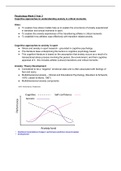
● Multidimensional anxiety components
, Anxiety and Critical moments in sport
● Stress - The intense pressures placed on individuals operating within performance sport
means they are exposed to, and have to practice under, intense competitive and
organisational stress.
● Anxiety (and identity) - A critical moment related stressor will invoke an emotional
response and always involve anxiety, where the anxiety is associated with an important
change in identity.
● Coping - An ability to deal with the range of stressors encountered, which generally
occur as individuals transit through the often unstable and unpredictable sport
environment is necessary.
What is stress?
Perceived imbalance between demands and coping resources
Summary - Stress as a transaction
● Emphasis on the “process” - the meaning an individual constructs about their
relationship with the environment is pivotal in their experience of stress.
● Appraising
Primary appraisal: goal commitments, values and self beliefs
Secondary appraisal: evaluation of coping options
● Coping - "constantly changing cognitive and behavioural efforts to manage specific
external and/or internal demands that are appraised as taxing or exceeding the
resources of the person." - Lazarus and Folkman (1984, p.141)
Cognitive approaches to understanding anxiety in critical moments
Aims:
● To explore how stress models help us to explain the occurrence of anxiety experienced
in transition and critical moments in sport.
● To explore the anxiety experiences of the transitioning athlete in critical moments
● To establish how athletes cope effectively with transition related anxiety.
Cognitive approaches to anxiety in sport
● Stress and anxiety in sport research - grounded in cognitive psychology
● The literature base underpinning this lecture is cognitive psychology based
● This cognitive literature is based on the assumption that anxiety occurs as a result of a
transactional stress process involving the person, the environment, and their cognitive
appraisal of it - this includes athlete (cultural) transitions and critical moments
Anxiety: Theory Development
● Considered to be a “negative” emotional state and is often associated with feelings of
fear and worry.
● Multidimensional anxiety – Clinical and Educational Psychology (Davidson & Schwartz,
1976; Liebert & Morris, 1967)
● Multidimensional anxiety components
, Anxiety and Critical moments in sport
● Stress - The intense pressures placed on individuals operating within performance sport
means they are exposed to, and have to practice under, intense competitive and
organisational stress.
● Anxiety (and identity) - A critical moment related stressor will invoke an emotional
response and always involve anxiety, where the anxiety is associated with an important
change in identity.
● Coping - An ability to deal with the range of stressors encountered, which generally
occur as individuals transit through the often unstable and unpredictable sport
environment is necessary.
What is stress?
Perceived imbalance between demands and coping resources
Summary - Stress as a transaction
● Emphasis on the “process” - the meaning an individual constructs about their
relationship with the environment is pivotal in their experience of stress.
● Appraising
Primary appraisal: goal commitments, values and self beliefs
Secondary appraisal: evaluation of coping options
● Coping - "constantly changing cognitive and behavioural efforts to manage specific
external and/or internal demands that are appraised as taxing or exceeding the
resources of the person." - Lazarus and Folkman (1984, p.141)


