

Unit 8: Physiology of the Human Body Systems:
P1 - Explain the functional role of the musculoskeletal system in the human body:
Introduction:
The Musculoskeletal system is why the human body is able to move, keep stable and keep upright. This
includes bones (the whole skeleton), muscles, tendons, ligaments, cartilage, joints, and other connective
tissue. Connective tissue is made up of collagen and elastic fibres which are made up of different proteins.
The bones in the skeletal system protect organs, give the body its shape and support the weight of the
body. Muscles in the muscular system attach bones together and allow for movement. This is the number
one contribution to disabilities. Because of the population increasing and aging musculoskeletal disorders
are increasing. The musculoskeletal system works together to support your body's weight and help you
move. In this report I will be looking at 3 different musculoskeletal disorders and finding out the symptoms
and preventions of the disorders.
The skeleton:
The bones in the body's primary function is to provide rigid, stable internal structure for the body to
support it against the weight of gravity and to provide a place for muscles to attach to. The lower portion
of the body skeleton is used for walking or running stability and the upper portion is used for lifting and
carrying objects with their greater range of movement. The skeleton is also used to protect and store
minerals. The bones protect internal organs such as the lungs or heart as well as serve as a storage place
for calcium and phosphate as well as bone marrow which stores fat and houses blood-cell producing
tissues.
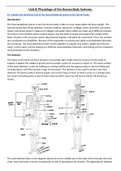
The axial skeleton (blue on the diagram above) forms the middle axis of the body which includes the neck,
chest, back and head. It serves as protection as well as attachment for muscles. The appendicular skeleton
, includes all the bones in the upper and lower limbs. Also these bones attach to the axial skeleton. Bones
are made up of proteins called collagen and minerals such as calcium which ensures the bones are strong
and hard. The bone consists of two tissue types; compact, which is known as the hard outer layer (cortical)
and the spongy inner layer of trabecular bone which is a lot lighter and less dense than compact bone.
Types of bones:
Flat bones - the function of these bones is to protect the internal organs such as the brain, heart and pelvic
organs. They are somehow flat and allow for protection. Examples would be the skull, sternum, ribs as well
as bones in the pelvis.
Long bones - these are more long than they are wide and the functions are to support the weight of the
body and facilitate movement. They are normally located in the appendicular skeleton with examples
being the tibia, fibula, femur, and phalanges as well as humerus, radius and ulna.
Short bones - these bones are short which means they are as long as they are wide. They provide stability
and some movement. Examples of short bones are trapezium, calcaneus, cuboid and trapezoid.
Irregular bone - these bones are different shapes and structures but don't fit into other categories they are
fairly complex shapes, which helps protect internal organs. Examples would be the vertebral column, as
well as pelvic bones.
sesamoid bone - these are small, round bones commonly found in the tendons of the hands, knees, and
feet. Their function is to protect tendons from stress and wear.
P1 - Explain the functional role of the musculoskeletal system in the human body:
Introduction:
The Musculoskeletal system is why the human body is able to move, keep stable and keep upright. This
includes bones (the whole skeleton), muscles, tendons, ligaments, cartilage, joints, and other connective
tissue. Connective tissue is made up of collagen and elastic fibres which are made up of different proteins.
The bones in the skeletal system protect organs, give the body its shape and support the weight of the
body. Muscles in the muscular system attach bones together and allow for movement. This is the number
one contribution to disabilities. Because of the population increasing and aging musculoskeletal disorders
are increasing. The musculoskeletal system works together to support your body's weight and help you
move. In this report I will be looking at 3 different musculoskeletal disorders and finding out the symptoms
and preventions of the disorders.
The skeleton:
The bones in the body's primary function is to provide rigid, stable internal structure for the body to
support it against the weight of gravity and to provide a place for muscles to attach to. The lower portion
of the body skeleton is used for walking or running stability and the upper portion is used for lifting and
carrying objects with their greater range of movement. The skeleton is also used to protect and store
minerals. The bones protect internal organs such as the lungs or heart as well as serve as a storage place
for calcium and phosphate as well as bone marrow which stores fat and houses blood-cell producing
tissues.
The axial skeleton (blue on the diagram above) forms the middle axis of the body which includes the neck,
chest, back and head. It serves as protection as well as attachment for muscles. The appendicular skeleton
, includes all the bones in the upper and lower limbs. Also these bones attach to the axial skeleton. Bones
are made up of proteins called collagen and minerals such as calcium which ensures the bones are strong
and hard. The bone consists of two tissue types; compact, which is known as the hard outer layer (cortical)
and the spongy inner layer of trabecular bone which is a lot lighter and less dense than compact bone.
Types of bones:
Flat bones - the function of these bones is to protect the internal organs such as the brain, heart and pelvic
organs. They are somehow flat and allow for protection. Examples would be the skull, sternum, ribs as well
as bones in the pelvis.
Long bones - these are more long than they are wide and the functions are to support the weight of the
body and facilitate movement. They are normally located in the appendicular skeleton with examples
being the tibia, fibula, femur, and phalanges as well as humerus, radius and ulna.
Short bones - these bones are short which means they are as long as they are wide. They provide stability
and some movement. Examples of short bones are trapezium, calcaneus, cuboid and trapezoid.
Irregular bone - these bones are different shapes and structures but don't fit into other categories they are
fairly complex shapes, which helps protect internal organs. Examples would be the vertebral column, as
well as pelvic bones.
sesamoid bone - these are small, round bones commonly found in the tendons of the hands, knees, and
feet. Their function is to protect tendons from stress and wear.


