

Check out Elliot Nicholson for clearer explanations
Introduction to CRISPR-Cas
Ecosystems on the micro-scale:
- Bacteria and Archaea are micro-sized single celled
members of often complex ecosystems (e.g. human
microbiota)
- Both are under constant “attack” by bacteriophages
(phages).
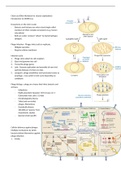
Phage infection - Phages infect cells to replicate.
- Obligate parasites
- Require cellular machinery
Infection cycle
1. Phage virion attach to cell receptors
2. Eject viral genome into cell
3. Transcribe phage genes
4. Lytic- Genome replication and assembly of new viral
particles Release of virions via lysis.
5. Lysogenic- phage establishes semi-permanent state as
prophage - may switch to lytic cycle depending on
conditions
Phage biology - phage are viruses that infect bacteria and
archaea.
- Ubiquitous
- Highly abundant Seawater 1031 viruses ml -1
Outnumber host cells 1-10 fold
- Morphologically diverse
- Tailed and non-tailed
phages, filamentous
- Genetically diverse
100,000s of ‘species’ from
metaviromic studies
- Species/strain specific
Cellular defences against phages
Multiple mechanisms by which
bacteria defend themselves against
phage infection:
1. Innate:
, a. Restriction-modification systems (enzymes, endonucleases)
b. Bacteriophage Exclusion (BREX: six gene cassette action of products blocks phage replication)
2. Adaptive:
a. CRISPR-Cas systems
3. Abortive infection:
a. Toxin/antitoxin systems
- Evolution of theses systems continuous e.g. mutation conferring resistance via change in receptors
CRISPR-Cas system function
- Provides an adaptive immunity mechanism in bacteria and archaea
- CRISPR-Cas system is a form of bacterial adaptive immunity.
- CRISPR-Cas functions to target and cut invading DNA/RNA sequences.
1. targeted via CRISPR RNA (crRNA)
2. cut (nucleases) DNA /RNA sequences (Cas proteins).
- Adaptive because it changes via incorporation of new spacers (adapts to circulating viruses).
- DNA-encoded -> RNA-mediated -> nucleic-acid targeting.
- Immunity conferred specifically - recognition via complementary base pairing between CRISPR RNA (crRNA) and
target.
CRISPR-Cas9 overview of function
A. CRISPR loci with Cas genes, CRISPR array, tracrRNA shown
B. Transcription
C. Processing of precursor-crRNA (pre-crRNA) with RNAse III
D. Targeting and binding to site with Protospacer Adjacent Motif (PAM) (red is crRNA, green is tracrRNA )
E. Resulting nuclease activity of Cas9 with Double Strand Break (DSB)s
Introduction to CRISPR-Cas
Ecosystems on the micro-scale:
- Bacteria and Archaea are micro-sized single celled
members of often complex ecosystems (e.g. human
microbiota)
- Both are under constant “attack” by bacteriophages
(phages).
Phage infection - Phages infect cells to replicate.
- Obligate parasites
- Require cellular machinery
Infection cycle
1. Phage virion attach to cell receptors
2. Eject viral genome into cell
3. Transcribe phage genes
4. Lytic- Genome replication and assembly of new viral
particles Release of virions via lysis.
5. Lysogenic- phage establishes semi-permanent state as
prophage - may switch to lytic cycle depending on
conditions
Phage biology - phage are viruses that infect bacteria and
archaea.
- Ubiquitous
- Highly abundant Seawater 1031 viruses ml -1
Outnumber host cells 1-10 fold
- Morphologically diverse
- Tailed and non-tailed
phages, filamentous
- Genetically diverse
100,000s of ‘species’ from
metaviromic studies
- Species/strain specific
Cellular defences against phages
Multiple mechanisms by which
bacteria defend themselves against
phage infection:
1. Innate:
, a. Restriction-modification systems (enzymes, endonucleases)
b. Bacteriophage Exclusion (BREX: six gene cassette action of products blocks phage replication)
2. Adaptive:
a. CRISPR-Cas systems
3. Abortive infection:
a. Toxin/antitoxin systems
- Evolution of theses systems continuous e.g. mutation conferring resistance via change in receptors
CRISPR-Cas system function
- Provides an adaptive immunity mechanism in bacteria and archaea
- CRISPR-Cas system is a form of bacterial adaptive immunity.
- CRISPR-Cas functions to target and cut invading DNA/RNA sequences.
1. targeted via CRISPR RNA (crRNA)
2. cut (nucleases) DNA /RNA sequences (Cas proteins).
- Adaptive because it changes via incorporation of new spacers (adapts to circulating viruses).
- DNA-encoded -> RNA-mediated -> nucleic-acid targeting.
- Immunity conferred specifically - recognition via complementary base pairing between CRISPR RNA (crRNA) and
target.
CRISPR-Cas9 overview of function
A. CRISPR loci with Cas genes, CRISPR array, tracrRNA shown
B. Transcription
C. Processing of precursor-crRNA (pre-crRNA) with RNAse III
D. Targeting and binding to site with Protospacer Adjacent Motif (PAM) (red is crRNA, green is tracrRNA )
E. Resulting nuclease activity of Cas9 with Double Strand Break (DSB)s


