TD CIVILISATION
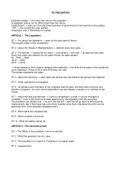
Electoral college -> the ones that vote for the president.
A president cannot run for office more than two terms.
Impitchment -> when sm from the three branches of government is removed from his position.
1787 -> the constitution was drafted.
Americans vote in November on tueday.
ARTICLE 1 : The Legislative
ST 1 : It is about the legislative -> seen as the save gard of liberty.
The longest article in the constitution
ST 2 : About the House of Representative -> election every two years.
ST 3 : The Senate -> elected for six years -> one senator = one vote -> at least two per state.
Every two years new election for six years of term for each senator.
Ex : 2016 -> 2022
2014 -> 2020
2012 -> 2018
-> those elected in 2012 need to prepare their reelection = one third of the seats of the senate are
up to reelection. Those of 2014 and 2016 they can wait.
The senate represents the state.
ST 4 : About the elections -> each state can decide how the election are going to be organize.
ST 5 : Other regulations of Congress
ST 6 : All senators and members of the congress shall be paid, and they have immunity and
freedom of speech. You can’t serve elsewhere if you are already a senator or a member of the
house.
ST 7 : About the bills and the laws -> a bill is a proposition, a draft, it can be changed or
modified // a law is bill which have been approved by the legislative and the executive.
The president can refuse a bill -> he can veto the bill -> and the bill go back to the house for
improvement. But if the house has a two third majority when they vote about the bill it can be
approved even if the president dissapproved it.
ST 8 : What rights the congress has.
ST 9 : What congress cannot do.
ST 10 : What the states cannot do.
ARTICLE 2 : The executive power
ST 1: The Office of the president, how he is elected.
ST 2 : What the president can do, roles.
ST 3 : The president is to report to Congress on a regular basis.
ST 4 : Impeachment
Electoral college -> the ones that vote for the president.
A president cannot run for office more than two terms.
Impitchment -> when sm from the three branches of government is removed from his position.
1787 -> the constitution was drafted.
Americans vote in November on tueday.
ARTICLE 1 : The Legislative
ST 1 : It is about the legislative -> seen as the save gard of liberty.
The longest article in the constitution
ST 2 : About the House of Representative -> election every two years.
ST 3 : The Senate -> elected for six years -> one senator = one vote -> at least two per state.
Every two years new election for six years of term for each senator.
Ex : 2016 -> 2022
2014 -> 2020
2012 -> 2018
-> those elected in 2012 need to prepare their reelection = one third of the seats of the senate are
up to reelection. Those of 2014 and 2016 they can wait.
The senate represents the state.
ST 4 : About the elections -> each state can decide how the election are going to be organize.
ST 5 : Other regulations of Congress
ST 6 : All senators and members of the congress shall be paid, and they have immunity and
freedom of speech. You can’t serve elsewhere if you are already a senator or a member of the
house.
ST 7 : About the bills and the laws -> a bill is a proposition, a draft, it can be changed or
modified // a law is bill which have been approved by the legislative and the executive.
The president can refuse a bill -> he can veto the bill -> and the bill go back to the house for
improvement. But if the house has a two third majority when they vote about the bill it can be
approved even if the president dissapproved it.
ST 8 : What rights the congress has.
ST 9 : What congress cannot do.
ST 10 : What the states cannot do.
ARTICLE 2 : The executive power
ST 1: The Office of the president, how he is elected.
ST 2 : What the president can do, roles.
ST 3 : The president is to report to Congress on a regular basis.
ST 4 : Impeachment