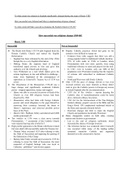
To what extent was religion in England significantly changed during the reign of Henry VIII?
How successful were Edward and Mary in implementing religious change?
To what extent did Mary succeed in changing the English Church 1553-58?
How successful was religious change 1509-88?
Henry VIII
Successful Not as Successful
● The Break with Rome 1533/34 split England from the ● Popular Catholic practices which had gone on for
Roman Catholic Church and started the English centuries were difficult to stamp out
Reformation ○ Evidence from wills suggest that there was still a
○ England has been reformed by the end of the 1530s strong popular belief in traditional Catholic doctrine -
though this is a very English reformation 85% of wills made in 1530s in London, where
○ Making Henry the supreme head of England Protestantism took root more quickly, were using
transferred papal powers to him and gave him traditional reference to saints and prayers for the soul
authority over the Church and all clergy ○ In 1547, even in London, only one fifth of the
○ Uses Parliament as a tool which makes gives his population were Protestant meaning that the majority
actions legitimacy in law and difficult to challenge - of citizens still subscribed to traditional Catholic
many were frightened of the consequences of views
opposition as Cromwell’s Treason Act of 1534 was ○ North and West were still firmly Catholic
severe ● After 1539 the pace of change slowed or was even
● The Dissolution of the Monasteries 1536-40 was a reversed (reform was more limited) as Henry didn’t
huge change and significantly weakened Catholic want to give the Catholic powers in Europe any excuse
power - stopped opposition, money and support to invade England after his excommunication
○ Henry was able to exercise his power as Head of the ○ 1539 Act of Six Articles - anyone denying the
Church as over 800 religious houses had been Catholic idea of transubstantiation could be burnt
dissolved by 1540 alive, enforced celibacy for priests
○ Monasteries often had links with foreign Catholic ○ 1543 Act for the Advancement of the True Religion
powers and owed allegiance to the pope himself so limited ordinary people’s access to the Bible and the
removing their existence lessened the threat to King’s Book 1543 emphasised traditional beliefs in
Henry’s supremacy and removed possible power the Mass and rejected reformist beliefs
bases of the Pope ○ Doctrinal changes did little to make the English
○ March 1540 - Waltham Abbey surrendered and 8,000 Church and population doctrinally Protestant
monks pensioned off ● Henry disappoints zealots on both sides, creating
● Ten Articles of 1536 were a clear move towards tension and factions in government
Protestantism - 7 sacraments of the Catholic Church ○ Led to the end of religious uniformity which
were rejected leaving only a belief in 3 increased the chance of foreign invasion
● High profile opponents to the Break with Rome existed ○ The reformist faction was weakened when Cromwell
but were dealt with successfully under the Treason Act was executed while many of the leading nobles
○ Thomas More executed 1535 after refusing to take remained staunchly Catholic and organised
the Oath of Succession and opposing the passing of themselves in the conservative faction
the Submission of the Clergy
○ Bishop John Fisher arrested and executed in 1535 for
refusing to swear the Oath of Succession, the most
respected of English bishops who was loyal to
Catherine - published 7 anti-divorce papers
, Edward VI
Successful Not as Successful
● Under the rule of Northumberland and Somerset, ● The effects of government policy were felt differently
England took a dramatic step towards Protestantism in different regions
○ While this caused a Catholic reaction in the Western ○ In London and Kent Protestantism gained in
Revolt in 1549, in other parts of the country popularity but in Sussex 40% of the gentry
Protestantism began to take hold, making it difficult remained Catholic until well into Elizabeth’s reign
for Mary to return to Catholicism ○ The north of England, especially Lancashire,
○ Encouraged growth through the repeal of the Act of remained mostly Catholic as only 10% of clergy got
Six Articles and laws controlling the censorship of married compared to one third in London
books e.g. 159 radical Protestant works were ○ Fundamental beliefs of people unlikely to change in
published compared to 1 Catholic so short a time therefore traditional practices often
● Limited opposition to religious change and no real remain - although a majority of the landed elites and
persecution - period of Edwardian Reformation is those in government circles seemed to favour
notable for its lack of opposition moderate Protestantism, many didn’t find it difficult
○ Only serious organised resistance was successfully to conform under Mary
suppressed in 1549 ○ Even in the counties circling London and East
○ Act for the Dissolution of the Chantries in 1547 was Anglia, where there appeared to have been
achieved without any opposition as popular belief in widespread enthusiasm for Protestantism, a study of
purgatory had been undermined to such an extent Essex indicates more enthusiasm among the
under Henry authorities in enforcing it than among the general
● By 1549 the liturgy and appearance of the English public in accepting it
parish church was fundamentally different from that ● Most radical changes come at the end of the reign (42
of 1547 e.g. July 1547 injunctions were issued to Articles) and not in force for long
remove all remaining Catholic practices in parish ○ This phase of the English Reformation was brought
churches e.g. images to an abrupt end and these Articles never became
○ Second Prayer Book 1552 moved away from the law
idea of transubstantiation and towards an even more ● Conservatives still influential and Mary, a Catholic, is
Protestant interpretation which denied the real still heir to throne - no Protestant heir so
presence Protestantism couldn’t continue
○ 1553 - 42 Articles which clarified the English faith
as Calvinist Protestant and would form the basis for
Elizabeth’s 39 Articles
● Apparent openness to radical views led to the
formation of a group of radical thinkers who had been
exiled from their own countries
○ Included two prominent theologians, Martin Bucer
and Peter Martyr whose lectures and writings
attracted large audiences and influenced two future
Elizabethan archbishops - Parker and Grindal
● Nearly 300 men and women were prepared to martyr
themselves for their faith under Mary and a further
800 went into exile but this was a minority of the
population
How successful were Edward and Mary in implementing religious change?
To what extent did Mary succeed in changing the English Church 1553-58?
How successful was religious change 1509-88?
Henry VIII
Successful Not as Successful
● The Break with Rome 1533/34 split England from the ● Popular Catholic practices which had gone on for
Roman Catholic Church and started the English centuries were difficult to stamp out
Reformation ○ Evidence from wills suggest that there was still a
○ England has been reformed by the end of the 1530s strong popular belief in traditional Catholic doctrine -
though this is a very English reformation 85% of wills made in 1530s in London, where
○ Making Henry the supreme head of England Protestantism took root more quickly, were using
transferred papal powers to him and gave him traditional reference to saints and prayers for the soul
authority over the Church and all clergy ○ In 1547, even in London, only one fifth of the
○ Uses Parliament as a tool which makes gives his population were Protestant meaning that the majority
actions legitimacy in law and difficult to challenge - of citizens still subscribed to traditional Catholic
many were frightened of the consequences of views
opposition as Cromwell’s Treason Act of 1534 was ○ North and West were still firmly Catholic
severe ● After 1539 the pace of change slowed or was even
● The Dissolution of the Monasteries 1536-40 was a reversed (reform was more limited) as Henry didn’t
huge change and significantly weakened Catholic want to give the Catholic powers in Europe any excuse
power - stopped opposition, money and support to invade England after his excommunication
○ Henry was able to exercise his power as Head of the ○ 1539 Act of Six Articles - anyone denying the
Church as over 800 religious houses had been Catholic idea of transubstantiation could be burnt
dissolved by 1540 alive, enforced celibacy for priests
○ Monasteries often had links with foreign Catholic ○ 1543 Act for the Advancement of the True Religion
powers and owed allegiance to the pope himself so limited ordinary people’s access to the Bible and the
removing their existence lessened the threat to King’s Book 1543 emphasised traditional beliefs in
Henry’s supremacy and removed possible power the Mass and rejected reformist beliefs
bases of the Pope ○ Doctrinal changes did little to make the English
○ March 1540 - Waltham Abbey surrendered and 8,000 Church and population doctrinally Protestant
monks pensioned off ● Henry disappoints zealots on both sides, creating
● Ten Articles of 1536 were a clear move towards tension and factions in government
Protestantism - 7 sacraments of the Catholic Church ○ Led to the end of religious uniformity which
were rejected leaving only a belief in 3 increased the chance of foreign invasion
● High profile opponents to the Break with Rome existed ○ The reformist faction was weakened when Cromwell
but were dealt with successfully under the Treason Act was executed while many of the leading nobles
○ Thomas More executed 1535 after refusing to take remained staunchly Catholic and organised
the Oath of Succession and opposing the passing of themselves in the conservative faction
the Submission of the Clergy
○ Bishop John Fisher arrested and executed in 1535 for
refusing to swear the Oath of Succession, the most
respected of English bishops who was loyal to
Catherine - published 7 anti-divorce papers
, Edward VI
Successful Not as Successful
● Under the rule of Northumberland and Somerset, ● The effects of government policy were felt differently
England took a dramatic step towards Protestantism in different regions
○ While this caused a Catholic reaction in the Western ○ In London and Kent Protestantism gained in
Revolt in 1549, in other parts of the country popularity but in Sussex 40% of the gentry
Protestantism began to take hold, making it difficult remained Catholic until well into Elizabeth’s reign
for Mary to return to Catholicism ○ The north of England, especially Lancashire,
○ Encouraged growth through the repeal of the Act of remained mostly Catholic as only 10% of clergy got
Six Articles and laws controlling the censorship of married compared to one third in London
books e.g. 159 radical Protestant works were ○ Fundamental beliefs of people unlikely to change in
published compared to 1 Catholic so short a time therefore traditional practices often
● Limited opposition to religious change and no real remain - although a majority of the landed elites and
persecution - period of Edwardian Reformation is those in government circles seemed to favour
notable for its lack of opposition moderate Protestantism, many didn’t find it difficult
○ Only serious organised resistance was successfully to conform under Mary
suppressed in 1549 ○ Even in the counties circling London and East
○ Act for the Dissolution of the Chantries in 1547 was Anglia, where there appeared to have been
achieved without any opposition as popular belief in widespread enthusiasm for Protestantism, a study of
purgatory had been undermined to such an extent Essex indicates more enthusiasm among the
under Henry authorities in enforcing it than among the general
● By 1549 the liturgy and appearance of the English public in accepting it
parish church was fundamentally different from that ● Most radical changes come at the end of the reign (42
of 1547 e.g. July 1547 injunctions were issued to Articles) and not in force for long
remove all remaining Catholic practices in parish ○ This phase of the English Reformation was brought
churches e.g. images to an abrupt end and these Articles never became
○ Second Prayer Book 1552 moved away from the law
idea of transubstantiation and towards an even more ● Conservatives still influential and Mary, a Catholic, is
Protestant interpretation which denied the real still heir to throne - no Protestant heir so
presence Protestantism couldn’t continue
○ 1553 - 42 Articles which clarified the English faith
as Calvinist Protestant and would form the basis for
Elizabeth’s 39 Articles
● Apparent openness to radical views led to the
formation of a group of radical thinkers who had been
exiled from their own countries
○ Included two prominent theologians, Martin Bucer
and Peter Martyr whose lectures and writings
attracted large audiences and influenced two future
Elizabethan archbishops - Parker and Grindal
● Nearly 300 men and women were prepared to martyr
themselves for their faith under Mary and a further
800 went into exile but this was a minority of the
population