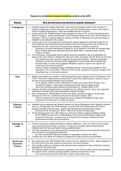
Reasons for the decline of popular resistance (rebellion) after 1570
Reason Why did this lead to the decline of popular resistance?
Propaganda ● Elizabeth tapped into English nationalism and pride by portraying herself as the champion of
English Protestantism and the defender of the realm from hostile Catholic powers who posed a
threat to English independence - pope was identified with the ‘Antichrist’
● Events such as the St Bartholomew’s Day massacre in France 1572, in which Protestants were
killed by Catholics, and the assassination of the Protestant leader of the Dutch Revolt (William of
Orange) in 1584 by a Catholic helped to reinforce this fear of Catholicism and promote loyalty to
Elizabeth as the defender of the reakm
● Events such as her ‘Accession Day’ reinforced her popular appeal and promoted loyalty to her -
most important royal tournament where members of the court would joust to win her favour, an
opportunity to honour royal power and enhance its prestige in England and abroad
○ Sermons in churches emphasised Elizabeth’s role as defender of the faith and replaced gap
left by Catholic feast days abolished during the Reformation - lessened anger towards
religious changes
● Cult of Gloriana - emphasised that all subjects should be obedient to her and celebrated her
status as the Virgin Queen to distract from the issue of the succession and the threat to her throne
○ Her chastity and purity were the things that would protect England - depicted as goddess
Astraea by poets such as Davies which suggested her rule brought about a golden age
○ Humanist idea of ‘courtly love’ suggested Elizabeth would be loved by her subjects but
remain pure and above corruption
○ Aimed to create an idealised image of Elizabeth and her rule and was successful in that
opposition to her rule declines - Hilliard’s mask of youth, symbolism in portraits, images of her
everywhere e.g. on coins and woodcuts
Fear ● Rebels were treated very harshly in 1569 and Catholics were targeted in Acts of Parliament in the
1570s - those who missed church services (£20 a month fine), aided priests or owned a copy of
the bull excommunicating Elizabeth were punished
○ An Act against Catholic priests ordered them to leave the country within 40 days or be
executed for treason - those guilty of helping would also face the death penalty
○ Jesuit and seminary priests captured and executed e.g. Cuthbert Mayne 1577
● Catholics tended to see themselves as English first and Catholic second - those who supported
Catholicism and Mary QOS were presented as dangerous traitors
● Bond of Association 1584 pledged to protect the Queen and take revenge on anyone who
attempted to harm her - reinforced by the Act for the Queen’s Safety 1585
○ Acted as a deterrent but also showed the level of support for Elizabeth as they were
introduced and backed by her nobility and gentry
Effective ● Elizabeth had an elaborate spy network headed by Francis Walsingham which helped to discover
Control plots e.g. the Babington Plot 1586 although it was fear that meant these plots didn’t lead to
popular uprisings in the first place - plotters were tortured and punished when caught
○ Discovery of the Throckmorton Plot in 1583 led to the Bond of Association
● The developing power of the JPs helped as a first line of defence against rebellious activity
○ By the 1580s the role of JPs in administering Tudor law and controlling the regions had
expanded enormously - acquired powers to deal with new felonies introduced by the
government including riots and recusancy
Passage of ● People increasingly accepted Elizabeth’s religious settlement - those who didn’t were punished
Time more harshly, Acts forced them to conform - suspicious of loyalties being divided between
Elizabeth and the Pope and therefore being possible traitors
● The older generation of committed Catholics was gradually dying out and replaced by those who
had only known the Elizabethan Settlement
○ By 1603 only 50,000 Catholics remained in a population of about four million
● Coupled with more effective Protestant propaganda through preaching and pamphlets
Social and ● By avoiding war until 1585 Elizabeth didn’t need to tax her subjects too much - earlier rebellions of
Economic the Tudor period had been sparked by grievances over heavy taxation
Factors ● She avoided making any changes to the way taxes were assessed so that contributions made by
taxpayers fell during the reign
● The relatively stable social and economic conditions in the 1570s and 80s reduced the possibility
of a popular revolt - previous uprisings partially caused by lack of food or work
○ Few bad harvests and government didn’t need to pass further laws
Reason Why did this lead to the decline of popular resistance?
Propaganda ● Elizabeth tapped into English nationalism and pride by portraying herself as the champion of
English Protestantism and the defender of the realm from hostile Catholic powers who posed a
threat to English independence - pope was identified with the ‘Antichrist’
● Events such as the St Bartholomew’s Day massacre in France 1572, in which Protestants were
killed by Catholics, and the assassination of the Protestant leader of the Dutch Revolt (William of
Orange) in 1584 by a Catholic helped to reinforce this fear of Catholicism and promote loyalty to
Elizabeth as the defender of the reakm
● Events such as her ‘Accession Day’ reinforced her popular appeal and promoted loyalty to her -
most important royal tournament where members of the court would joust to win her favour, an
opportunity to honour royal power and enhance its prestige in England and abroad
○ Sermons in churches emphasised Elizabeth’s role as defender of the faith and replaced gap
left by Catholic feast days abolished during the Reformation - lessened anger towards
religious changes
● Cult of Gloriana - emphasised that all subjects should be obedient to her and celebrated her
status as the Virgin Queen to distract from the issue of the succession and the threat to her throne
○ Her chastity and purity were the things that would protect England - depicted as goddess
Astraea by poets such as Davies which suggested her rule brought about a golden age
○ Humanist idea of ‘courtly love’ suggested Elizabeth would be loved by her subjects but
remain pure and above corruption
○ Aimed to create an idealised image of Elizabeth and her rule and was successful in that
opposition to her rule declines - Hilliard’s mask of youth, symbolism in portraits, images of her
everywhere e.g. on coins and woodcuts
Fear ● Rebels were treated very harshly in 1569 and Catholics were targeted in Acts of Parliament in the
1570s - those who missed church services (£20 a month fine), aided priests or owned a copy of
the bull excommunicating Elizabeth were punished
○ An Act against Catholic priests ordered them to leave the country within 40 days or be
executed for treason - those guilty of helping would also face the death penalty
○ Jesuit and seminary priests captured and executed e.g. Cuthbert Mayne 1577
● Catholics tended to see themselves as English first and Catholic second - those who supported
Catholicism and Mary QOS were presented as dangerous traitors
● Bond of Association 1584 pledged to protect the Queen and take revenge on anyone who
attempted to harm her - reinforced by the Act for the Queen’s Safety 1585
○ Acted as a deterrent but also showed the level of support for Elizabeth as they were
introduced and backed by her nobility and gentry
Effective ● Elizabeth had an elaborate spy network headed by Francis Walsingham which helped to discover
Control plots e.g. the Babington Plot 1586 although it was fear that meant these plots didn’t lead to
popular uprisings in the first place - plotters were tortured and punished when caught
○ Discovery of the Throckmorton Plot in 1583 led to the Bond of Association
● The developing power of the JPs helped as a first line of defence against rebellious activity
○ By the 1580s the role of JPs in administering Tudor law and controlling the regions had
expanded enormously - acquired powers to deal with new felonies introduced by the
government including riots and recusancy
Passage of ● People increasingly accepted Elizabeth’s religious settlement - those who didn’t were punished
Time more harshly, Acts forced them to conform - suspicious of loyalties being divided between
Elizabeth and the Pope and therefore being possible traitors
● The older generation of committed Catholics was gradually dying out and replaced by those who
had only known the Elizabethan Settlement
○ By 1603 only 50,000 Catholics remained in a population of about four million
● Coupled with more effective Protestant propaganda through preaching and pamphlets
Social and ● By avoiding war until 1585 Elizabeth didn’t need to tax her subjects too much - earlier rebellions of
Economic the Tudor period had been sparked by grievances over heavy taxation
Factors ● She avoided making any changes to the way taxes were assessed so that contributions made by
taxpayers fell during the reign
● The relatively stable social and economic conditions in the 1570s and 80s reduced the possibility
of a popular revolt - previous uprisings partially caused by lack of food or work
○ Few bad harvests and government didn’t need to pass further laws