[ALL WEEK 11 LECTURES]
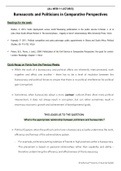
Bureaucrats and Politicians in Comparative Perspectives
Readings for the week:
Naidoo, V. 2013. Cadre deployment versus merit? Reviewing politicisation in the public service. In Daniel, J. et al
(eds.) New South African Review 3: The second phase – tragedy or farce? Johannesburg: Wits University Press. VULA
ü Kopecký, P. 2011. Political competition and party patronage: public appointments in Ghana and South Africa. Political
Studies, 59: 713-732. VULA
ü Peters, B.G., Pierre, J. (eds.). 2004. Politicization of the Civil Service in Comparative Perspective: the quest for control.
London: Routledge. Chapter 1. VULA
Quick Recap on Points from the Previous Weeks:
® While the work of a bureaucracy and political affairs are inherently interconnected, work
together and affect one another – there has to be a level of insulation between the
bureaucracy and political forces to ensure that there is no political interference for political
gain (corruption).
® Sometimes, when bureaucrats adopt a more ‘partisan’ outlook (there allow more political
intervention), it does not always result in corruption, but can rather sometimes result in
enormous economic growth and achievement of developmental goals.
THIS LEADS US TO THE QUESTION:
What is the appropriate relationship between politicians and bureaucrats ?
® Political Capture: when the political control over a bureaucracy actually undermines the work,
efficiency and fairness of the administrative system.
- For example, politicians putting relatives of friends in high positions within a bureaucracy.
This placement is based on personal relationships rather than capability and ability –
therefore undermining the efficiency and effectiveness of the bureaucracy.
[Intellectual Property of Ayanda Sadek]
, [ALL WEEK 11 LECTURES]
- This usually occurs when politicians do not trust the bureaucrats, or they want to maximize
their personal gain.
The relationship between bureaucrats before the rational model:
• The relationship between bureaucrats and politicians were blurred
• Bureaucrats did not perform disguisable tasks
• Bureaucrats were merely personal servants to political leaders
• There was no clear distinction between political and administrative roles and functions
• There was little insulation from political interference
- Because of all of this, there was a lot of political interference, a lack of professionalism, no
constructive operational boundaries between the roles and responsibilities of bureaucrats
and politicians, as well as political manipulation, lack of job security, instability and
corruption.
The relationship between bureaucrats during the rational model:
® While the rational model favor high levels of political insulation and none involvement in the
bureaucracy, it is impossible to fully disconnect the work of a bureaucracy from politics
because the two are inherently interconnected. However:
- there were boundaries in place to clearly distinguish between political roles and
responsibilities & bureaucratic roles and responsibilities (e.g. job descriptions, hierarchy,
merit, rules and procedures of conduct that were instilled in law)
® Politicization: the acknowledgement that in most bureaucracies across the globe, there is still
a level of direct political involvement in the recruitment of bureaucrats, which is considered
‘appropriate’ (maintains the balance between professional integrity of the bureaucrat such
as merit, but at the same time ensures that public servants will be responsive to the policy
objectives of elected politicians)
[Intellectual Property of Ayanda Sadek]
Bureaucrats and Politicians in Comparative Perspectives
Readings for the week:
Naidoo, V. 2013. Cadre deployment versus merit? Reviewing politicisation in the public service. In Daniel, J. et al
(eds.) New South African Review 3: The second phase – tragedy or farce? Johannesburg: Wits University Press. VULA
ü Kopecký, P. 2011. Political competition and party patronage: public appointments in Ghana and South Africa. Political
Studies, 59: 713-732. VULA
ü Peters, B.G., Pierre, J. (eds.). 2004. Politicization of the Civil Service in Comparative Perspective: the quest for control.
London: Routledge. Chapter 1. VULA
Quick Recap on Points from the Previous Weeks:
® While the work of a bureaucracy and political affairs are inherently interconnected, work
together and affect one another – there has to be a level of insulation between the
bureaucracy and political forces to ensure that there is no political interference for political
gain (corruption).
® Sometimes, when bureaucrats adopt a more ‘partisan’ outlook (there allow more political
intervention), it does not always result in corruption, but can rather sometimes result in
enormous economic growth and achievement of developmental goals.
THIS LEADS US TO THE QUESTION:
What is the appropriate relationship between politicians and bureaucrats ?
® Political Capture: when the political control over a bureaucracy actually undermines the work,
efficiency and fairness of the administrative system.
- For example, politicians putting relatives of friends in high positions within a bureaucracy.
This placement is based on personal relationships rather than capability and ability –
therefore undermining the efficiency and effectiveness of the bureaucracy.
[Intellectual Property of Ayanda Sadek]
, [ALL WEEK 11 LECTURES]
- This usually occurs when politicians do not trust the bureaucrats, or they want to maximize
their personal gain.
The relationship between bureaucrats before the rational model:
• The relationship between bureaucrats and politicians were blurred
• Bureaucrats did not perform disguisable tasks
• Bureaucrats were merely personal servants to political leaders
• There was no clear distinction between political and administrative roles and functions
• There was little insulation from political interference
- Because of all of this, there was a lot of political interference, a lack of professionalism, no
constructive operational boundaries between the roles and responsibilities of bureaucrats
and politicians, as well as political manipulation, lack of job security, instability and
corruption.
The relationship between bureaucrats during the rational model:
® While the rational model favor high levels of political insulation and none involvement in the
bureaucracy, it is impossible to fully disconnect the work of a bureaucracy from politics
because the two are inherently interconnected. However:
- there were boundaries in place to clearly distinguish between political roles and
responsibilities & bureaucratic roles and responsibilities (e.g. job descriptions, hierarchy,
merit, rules and procedures of conduct that were instilled in law)
® Politicization: the acknowledgement that in most bureaucracies across the globe, there is still
a level of direct political involvement in the recruitment of bureaucrats, which is considered
‘appropriate’ (maintains the balance between professional integrity of the bureaucrat such
as merit, but at the same time ensures that public servants will be responsive to the policy
objectives of elected politicians)
[Intellectual Property of Ayanda Sadek]