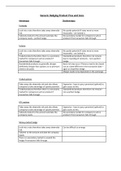
Generic Hedging Product Pros and Cons
Advantages Disadvantages
Forwards
Lock into a rate therefore takes away downside No upside potential if rates were to move
risk. favourably – are locked in.
Tailored product to the amount and date the No secondary market for company to sell on
company needs – perfect hedge. product if the transaction falls through.
Futures
Lock into a rate therefore takes away downside No upside potential if rates were to move
risk. favourably – are locked in.
Traded products therefore there is a secondary Standardised products therefore risk remains
market for company to sell on product if due to rounding of contracts – not a perfect
transaction falls through. hedge.
Standardised products so generally cheaper Basis risk may occur if futures need to be closed
(definitely cheaper than options as no premium out at a date different to the transaction date –
needs to be paid) again an imperfect hedge.
Margin needs to be deposited on the exchange
Traded options
Takes away the downside risk and also allows Expensive – have to pay a premium (upfront) to
company to take advantage of upside potential. gain access to this.
Traded products therefore there is a secondary Standardised products therefore risk remains–
market for company to sell on product if not a perfect hedge.
transaction falls through.
OTC options
Takes away the downside risk and also allows Expensive – have to pay a premium (upfront) to
company to take advantage of upside potential. gain access to this.
Tailored product to the amount and date the No secondary market for company to sell on
company needs. product if the transaction falls through.
Money market hedge
Lock into a rate therefore takes away downside Can be difficult to arrange
risk.
Tailored to the amount and date the company
needs
There is a secondary market to unwind the
hedge if transaction falls through.
Advantages Disadvantages
Forwards
Lock into a rate therefore takes away downside No upside potential if rates were to move
risk. favourably – are locked in.
Tailored product to the amount and date the No secondary market for company to sell on
company needs – perfect hedge. product if the transaction falls through.
Futures
Lock into a rate therefore takes away downside No upside potential if rates were to move
risk. favourably – are locked in.
Traded products therefore there is a secondary Standardised products therefore risk remains
market for company to sell on product if due to rounding of contracts – not a perfect
transaction falls through. hedge.
Standardised products so generally cheaper Basis risk may occur if futures need to be closed
(definitely cheaper than options as no premium out at a date different to the transaction date –
needs to be paid) again an imperfect hedge.
Margin needs to be deposited on the exchange
Traded options
Takes away the downside risk and also allows Expensive – have to pay a premium (upfront) to
company to take advantage of upside potential. gain access to this.
Traded products therefore there is a secondary Standardised products therefore risk remains–
market for company to sell on product if not a perfect hedge.
transaction falls through.
OTC options
Takes away the downside risk and also allows Expensive – have to pay a premium (upfront) to
company to take advantage of upside potential. gain access to this.
Tailored product to the amount and date the No secondary market for company to sell on
company needs. product if the transaction falls through.
Money market hedge
Lock into a rate therefore takes away downside Can be difficult to arrange
risk.
Tailored to the amount and date the company
needs
There is a secondary market to unwind the
hedge if transaction falls through.